

10 Fast Ways to Remove Stains On Clothes Today
You just sat down to eat and somehow the sauce ended up on your shirt instead of your plate. Or maybe your kid came home from recess with grass stains covering both knees. That sinking feeling when you spot a stain on clothes you actually like is real, and it usually hits right when you have zero time to deal with it.
The good news is you do not need a fancy stain remover or a trip to the dry cleaner for most everyday messes. With a few things already sitting in your kitchen or laundry room, you can treat most stains before they set in for good. Here are 10 easy, tested ways to handle the most common stains fast, so your clothes get a second chance instead of a spot in the donation pile.
1. Treat the Stain While It Is Still Fresh
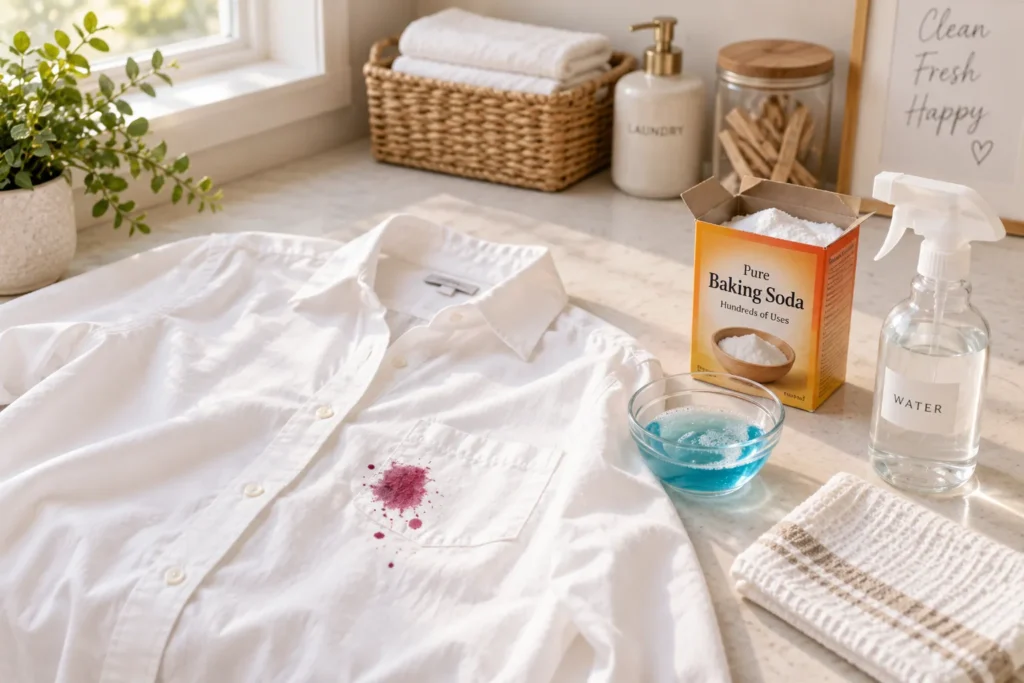
The single biggest mistake people make with a stain on clothes is waiting. A fresh stain sits on top of the fabric fibers, but the longer it sits, the deeper it soaks in and the harder it becomes to lift out later.
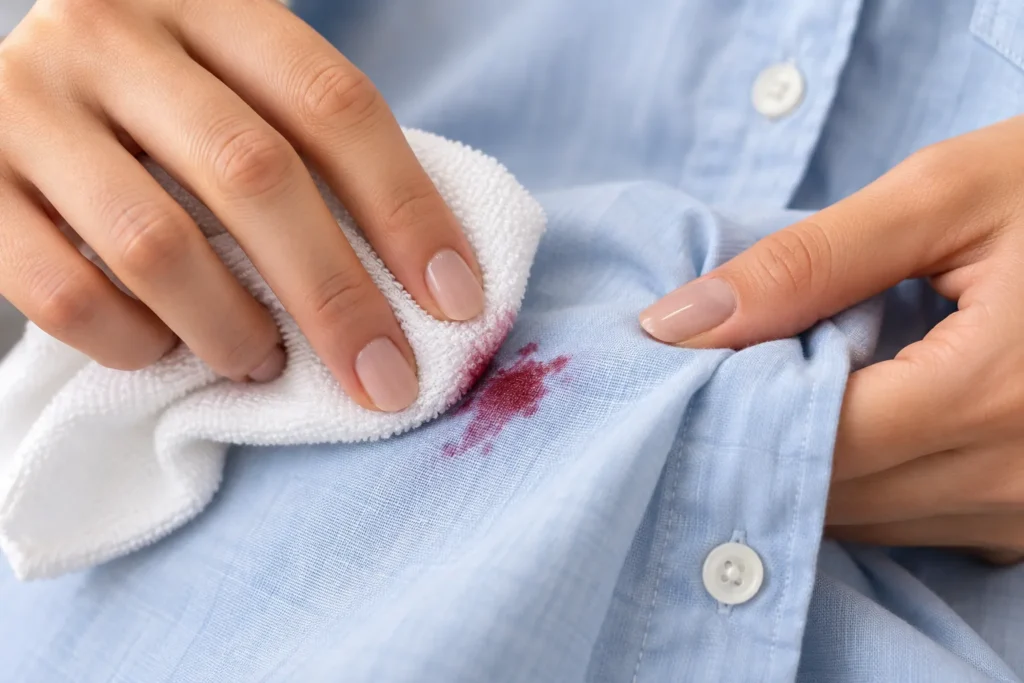
The moment you notice a spill, blot it gently with a clean paper towel or cloth. Do not rub, since rubbing pushes the stain deeper and can spread it wider. If you are out and about, even rinsing the spot with cold water in a public restroom buys you time until you get home.
This matters most with oil based stains like salad dressing or butter, since heat and time bond oil to fabric fast. A stain treated within the first ten minutes is often gone with a simple rinse. One left overnight might need three rounds of treatment.
2. Use Dish Soap for Grease and Oil Stains
Grease stains from pizza, bacon, or salad dressing seem to laugh at regular laundry detergent. That is because most detergents are built for general dirt, not concentrated oil.
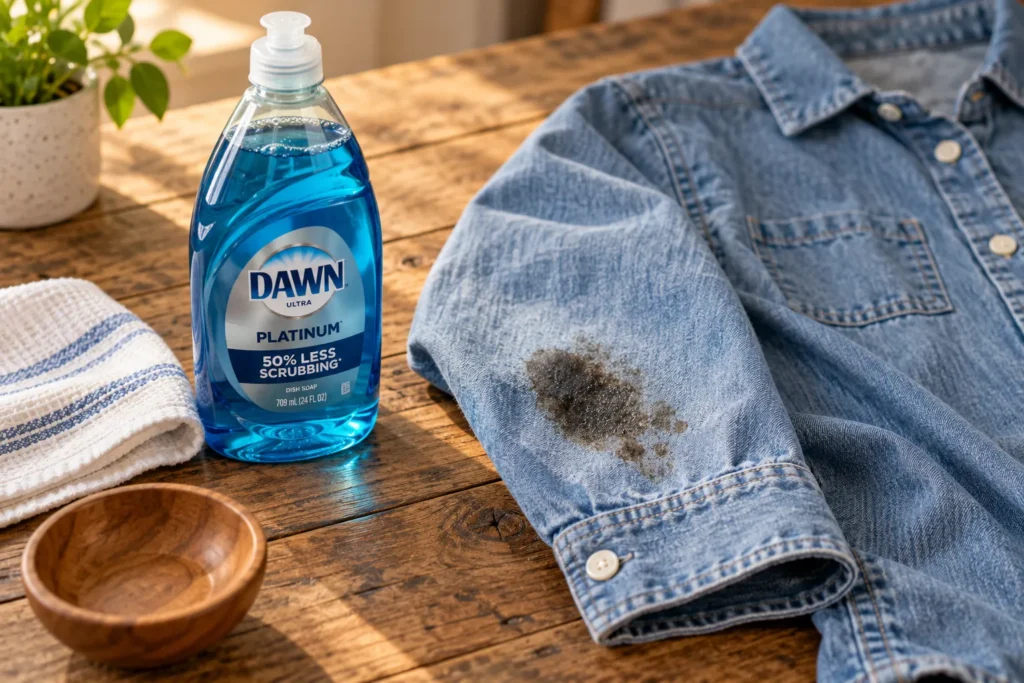
Grab the dish soap you use on greasy pans instead. Dish soap is designed to break down grease on contact, and it works the same way on fabric. Rub a small amount directly onto the stain, work it in gently with your fingers or an old toothbrush, then let it sit for about ten minutes before washing as usual.
This trick is a favorite for parents dealing with pizza night mishaps or anyone who works around a kitchen. A drop of blue dish soap on a grease spot before it hits the wash can save a favorite pair of jeans that would otherwise end up permanently marked.
[INTERNAL LINK OPPORTUNITY: budget friendly laundry hacks for busy families]
3. Reach for Baking Soda on Sweat and Body Odor Marks
Yellow underarm stains and lingering body odor come from a mix of sweat, oils, and the aluminum in some deodorants reacting with fabric over time. Regular washing often is not enough to fully clear it.
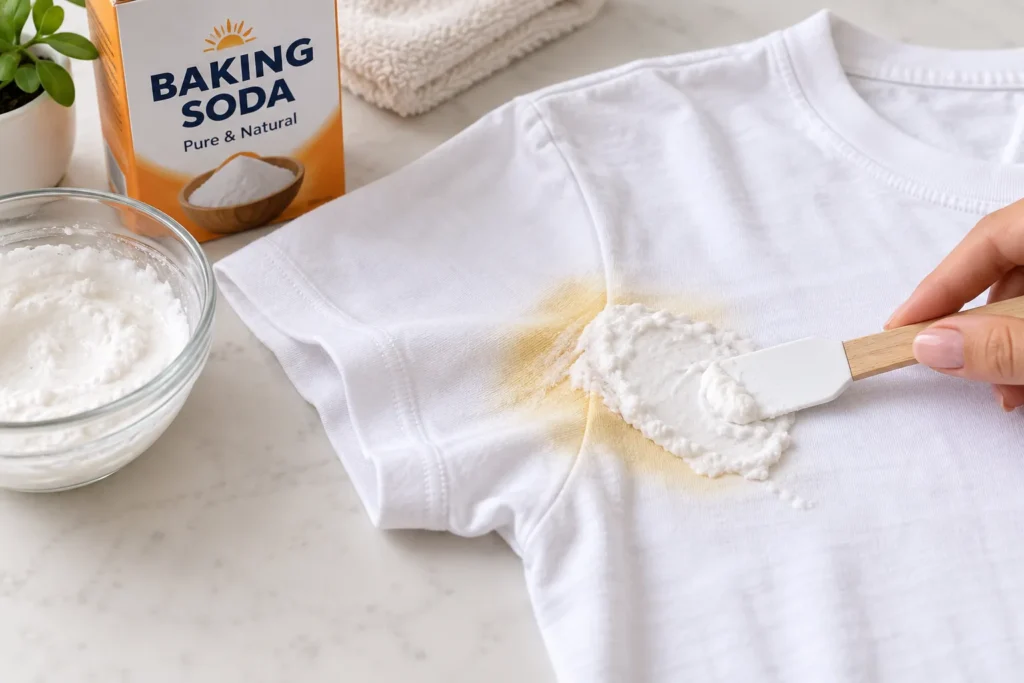
Make a thick paste using three parts baking soda to one part water. Spread it directly over the yellowed area and let it sit for at least thirty minutes before washing. Baking soda naturally absorbs odor and helps break down the buildup that causes discoloration.
This works especially well on white cotton t-shirts and workout gear, where sweat stains show up the most and tend to build up week after week if ignored. For stains that have been there for months, you may need to repeat this two or three times, but each round should show real improvement.
4. Cool Water Is Your Best Friend for Wine and Coffee
Here is something most people get wrong. When wine, coffee, or juice spills, the instinct is to grab whatever is closest, and that is often hot water. Hot water actually cooks the stain into the fibers, setting it instead of removing it.
Always rinse fresh liquid stains with cold water first, working from the back of the fabric so the stain pushes out rather than further in. For wine specifically, blot with cold water then apply a small amount of liquid dish soap mixed with a bit of white vinegar before washing.
This trick can save a dinner party outfit or a favorite blouse. Keep it in mind next time someone knocks over a glass of red wine at a holiday gathering, since acting fast with cold water in those first sixty seconds makes all the difference.
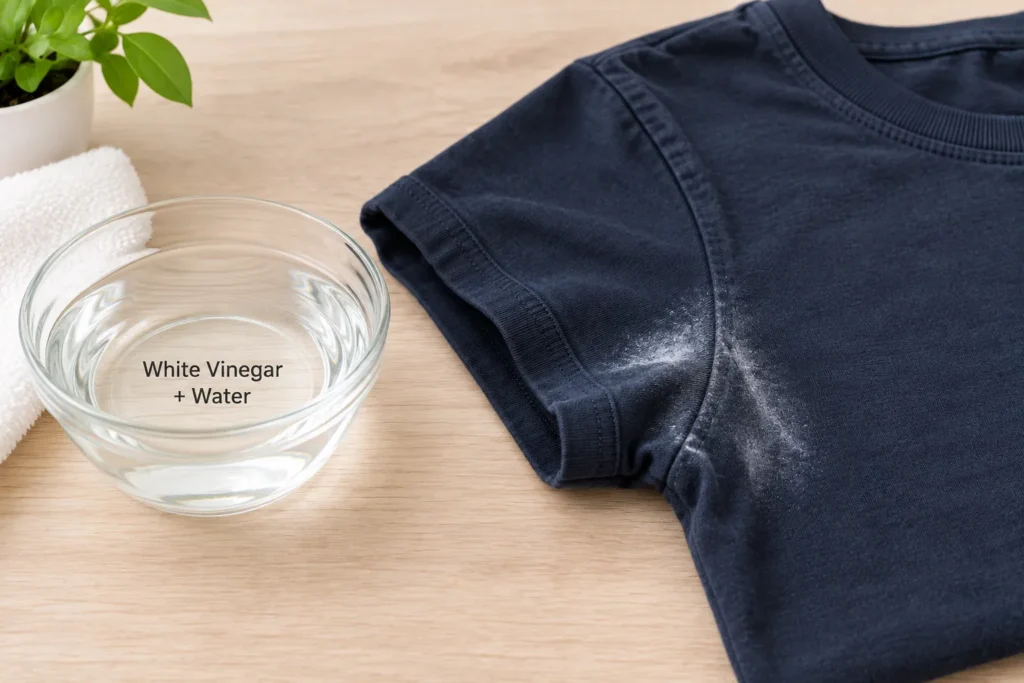
5. Use White Vinegar for Deodorant and Sweat Buildup
White vinegar is one of those quiet laundry heroes that most people overlook. It is mild enough for regular fabric but acidic enough to break down mineral deposits and deodorant residue that plain detergent leaves behind.
Soak the stained area in a mix of equal parts white vinegar and water for about fifteen minutes before tossing the item in the wash. For deodorant marks specifically, gently rubbing the fabric together under the vinegar mix helps loosen the white, chalky buildup you often see on darker shirts.
This is especially useful for anyone with a small closet of go to work shirts that get worn and washed often. Vinegar treatment once every few washes keeps deodorant buildup from becoming a permanent gray or white haze near the collar and underarms.

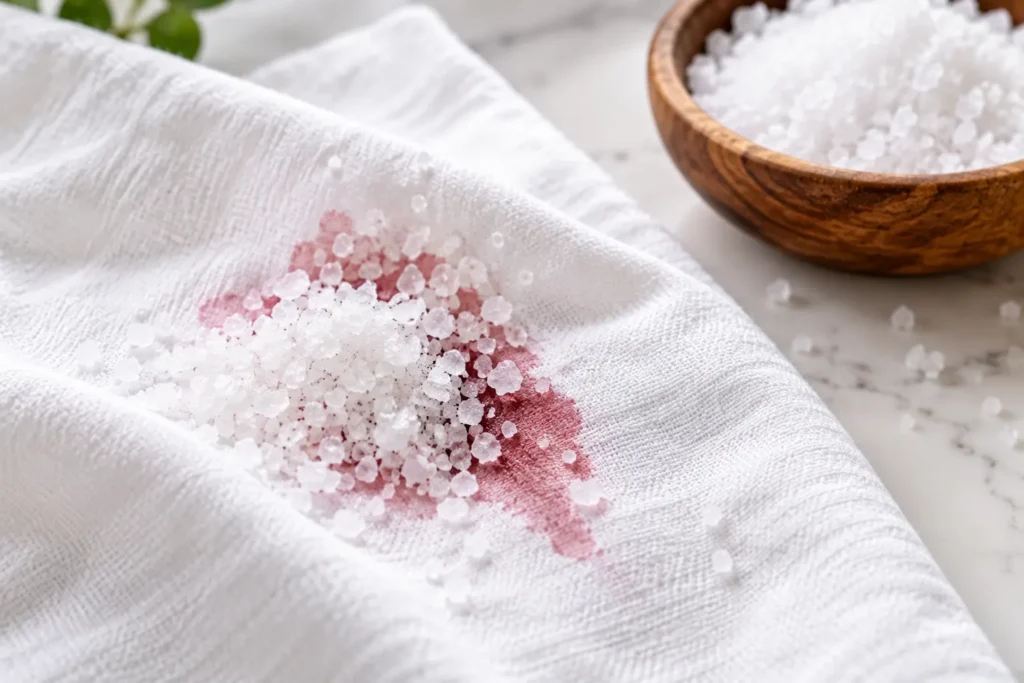
6. Salt Works Fast on Fresh Blood Stains
Blood stains feel intimidating, but the fix is simpler than most people expect as long as you act while the stain is still fresh. The trick here is temperature again, since heat sets protein based stains like blood almost instantly.
Rinse the area under cold running water right away, then rub a small handful of table salt directly into the damp fabric. Let it sit for a few minutes before rinsing again. The salt helps draw the blood out of the fibers without damaging the fabric.
This is a lifesaver for parents dealing with a scraped knee accident on a school uniform, or anyone who nicked themselves while getting ready. If the stain has already dried, soaking in cold water with a bit of salt for thirty minutes before washing still helps quite a bit.
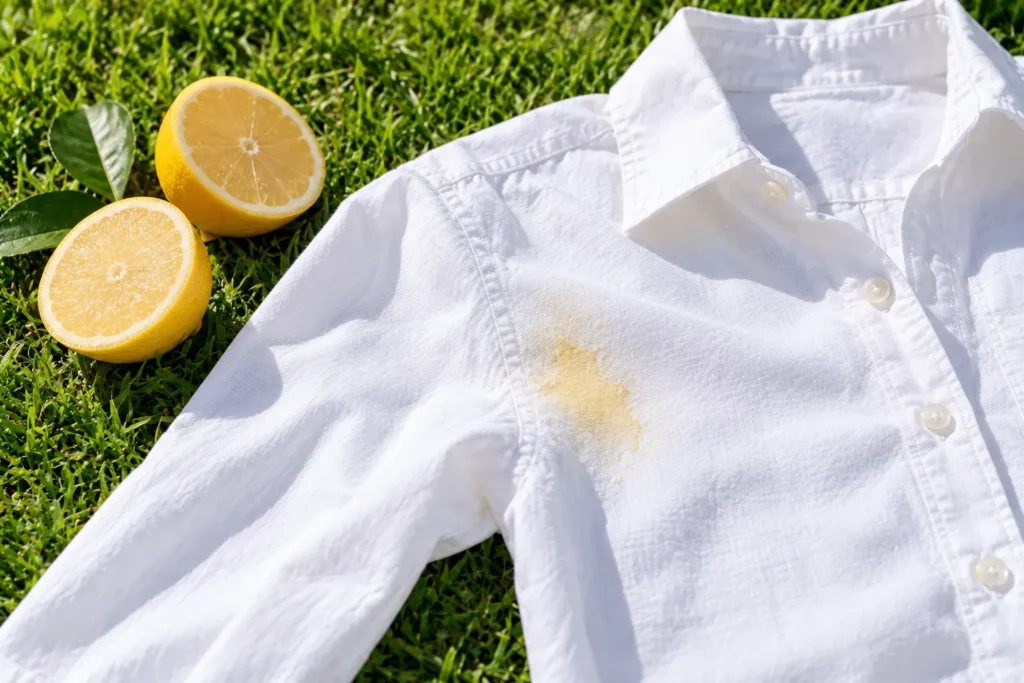
7. Lemon Juice and Sun Lift Mystery Yellow Stains
Sometimes a shirt comes out of storage with faint yellow stains that were not there when you packed it away. This happens when invisible sweat or lotion residue oxidizes over time in a dark closet or drawer.
Rub fresh lemon juice directly onto the yellowed spot, then lay the item flat outside in direct sunlight for one to two hours. The combination of the citric acid and natural sunlight works as a gentle, safe bleaching method that will not damage most white or light colored fabrics the way harsh chemical bleach can.
This trick works best on white cotton and linen pieces you plan to bring back into rotation for spring or summer. It is also a nice option for anyone trying to avoid harsh chemicals on clothing that touches sensitive skin.
[INTERNAL LINK OPPORTUNITY: natural ways to whiten clothes without bleach]
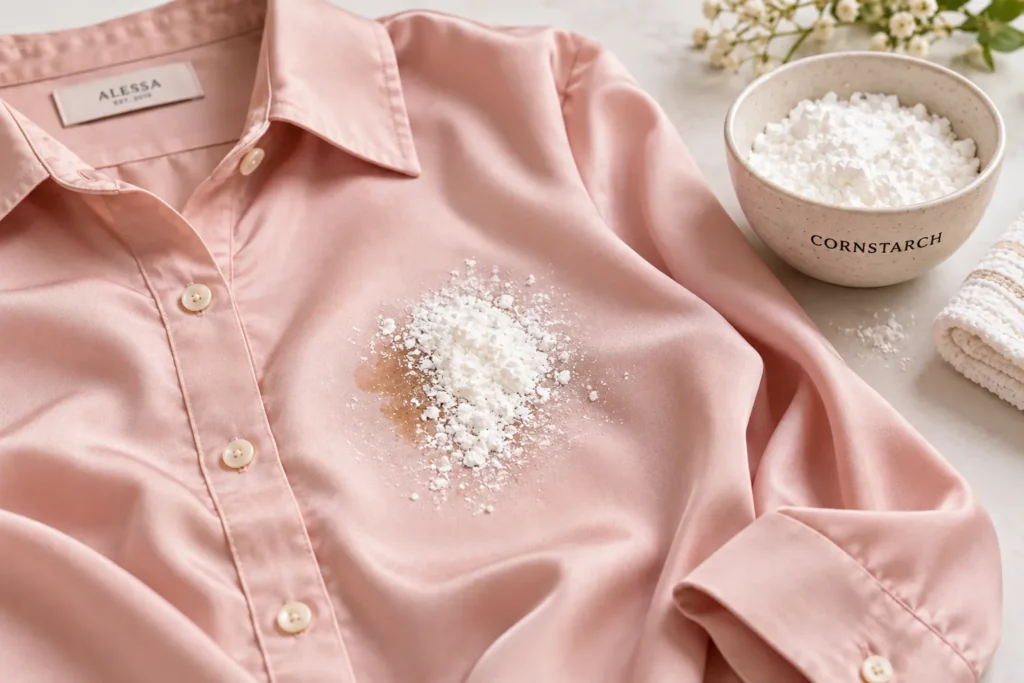
8. Cornstarch Pulls Fresh Oil Stains Off Delicate Fabrics
Delicate fabrics like silk or rayon cannot handle the scrubbing that tougher cotton can take, which makes an oil stain on a nice blouse feel extra stressful. Rubbing on these fabrics can leave a permanent water mark or damage the fibers.
Instead, sprinkle a generous layer of cornstarch directly over the fresh oil stain and let it sit for a few hours, or overnight if possible. The cornstarch absorbs the oil out of the fabric without any rubbing at all. Once it has fully absorbed, gently brush the powder away and treat any remaining trace with a small dab of dish soap before hand washing.
This method is worth remembering for special occasion clothing, since it protects delicate material while still getting real results. It also works well on ties, which are almost always dry clean only and tricky to treat with wetter methods.
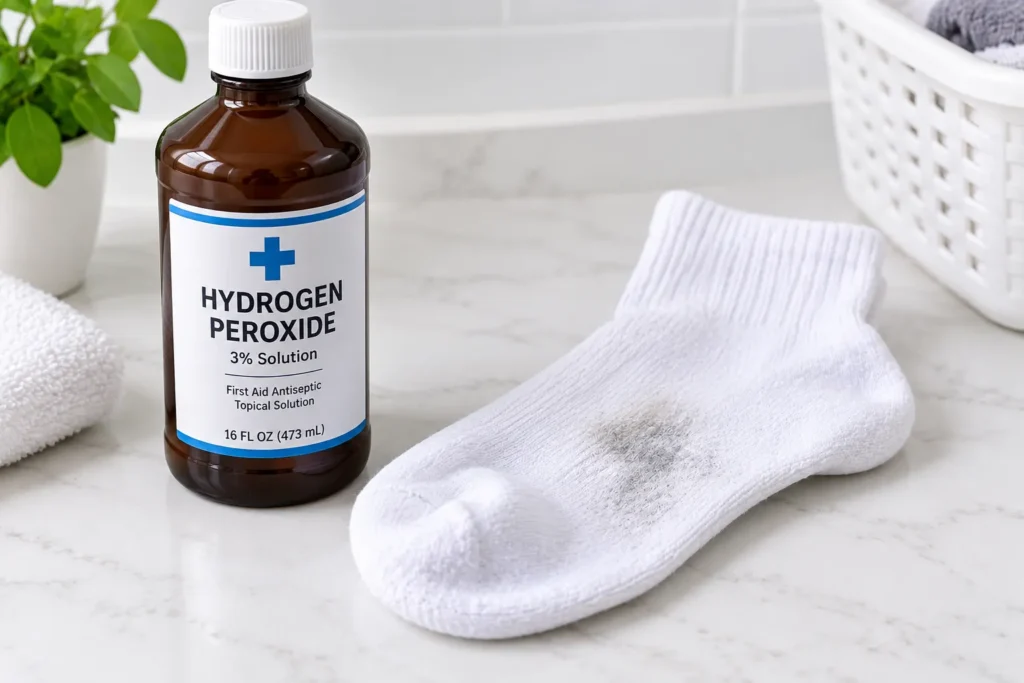
9. Hydrogen Peroxide Handles Tough Set In Stains
Once a stain has already been through the dryer, most people assume it is permanent. Heat from the dryer does make stains harder to remove, but it is not always game over, especially for lighter colored fabrics.
Mix one part hydrogen peroxide with one part water and apply it directly to the set in stain. Let it sit for about ten minutes, checking periodically, then wash as usual. Always test on a hidden seam first, since hydrogen peroxide can lighten some fabrics if left on too long.
This is the method to try before giving up on a favorite item that already went through a wash and dry cycle with the stain still visible. It works especially well on old grass stains, faded blood spots, and general everyday grime on white fabric.
10. Know When a Stain Needs Professional Help
Not every stain is a do it yourself situation, and knowing when to stop trying home methods can actually save your clothes. Ink, certain dyes, and old set in stains on structured fabrics like wool suits or upholstered furniture linings often need a professional touch.
If you have tried a home method twice without progress, or if the fabric is expensive, structured, or dry clean only, it is worth taking it to a professional cleaner before the fabric gets damaged from repeated home treatments. Mention exactly what caused the stain when you drop it off, since that detail changes which treatment they use.
This matters most for investment pieces like a wedding dress, a wool coat, or a work blazer you cannot easily replace. Spending a little on professional cleaning up front is almost always cheaper than replacing the item entirely.
A Stain Does Not Have to Be the End of the Story
That sinking feeling when you spot a fresh stain on clothes you love does not have to mean the item is ruined. Most everyday spills and marks respond well to simple things you likely already have at home, as long as you act before they set in. Keep this list somewhere handy, whether that is a screenshot on your phone or a saved pin, so you are never scrambling to remember what works. The next time life spills onto your favorite shirt, you will already know exactly what to do.
Image Alt Text Suggestions
- Laundry room counter with stained white shirt and natural stain removing supplies for treating a stain on clothes
- Hands blotting a fresh red stain on a cotton shirt with a white cloth
- Blue dish soap bottle next to a grease stained shirt sleeve for removing oil stains
- White cotton shirt with baking soda paste applied to underarm sweat stain
- Glass of red wine tipped over near a white tablecloth showing a fresh spill stain
- Bowl of white vinegar and water beside a dark shirt with deodorant marks
- Table salt on a damp cloth treating a faint pink blood stain
- White shirt drying in direct sunlight with lemon halves for natural stain lightening
- Silk blouse with cornstarch powder absorbing a fresh oil stain
- Brown bottle of hydrogen peroxide next to a white sock with a faded set in stain
- Structured blazer in a garment bag at a dry cleaner counter for professional stain removal
FAQ Section
What is the fastest way to remove a stain from clothes? Blot the stain right away with a clean cloth and cold water instead of rubbing it. Acting within the first few minutes almost always makes the stain much easier to remove during a normal wash.
Does hot water help remove stains on clothes? No, hot water usually sets stains rather than removing them, especially for blood, wine, and other liquid based marks. Cold water is the safer first step for almost every fresh stain.
Can baking soda really remove sweat stains? Yes, a paste of baking soda and water helps break down the sweat and oil buildup that causes yellow underarm stains. It may take a few applications on older, more stubborn marks.
Is it safe to use hydrogen peroxide on colored clothes? Hydrogen peroxide can lighten some dyed fabrics, so always test it on a hidden seam first. It works best and most safely on white or very light colored clothing.
What should I do if a stain has already gone through the dryer? Try a hydrogen peroxide and water mix on light fabrics, since dryer heat sets stains but does not always make them permanent. If there is no improvement after two attempts, a professional cleaner is worth considering.
How do I remove oil stains from delicate fabric like silk? Sprinkle cornstarch over the fresh oil stain and let it sit for several hours to absorb the oil without rubbing. Brush away the powder, then treat any leftover trace gently with a small amount of dish soap before hand washing.


