

10 Collagen Supplements for Glowing Skin and Hair
If you have stood in the supplement aisle staring at ten different collagen jars, feeling completely lost, you are not alone. One says marine, one says bovine, one is a gummy, and none of them explain what actually works for your skin or your hair. It is confusing, and it is easy to just grab whatever has the prettiest label and hope for the best. This guide breaks down 10 collagen supplement types, what makes each one different, and how to figure out which one actually fits your goals and your budget.
1. Marine Collagen Peptides
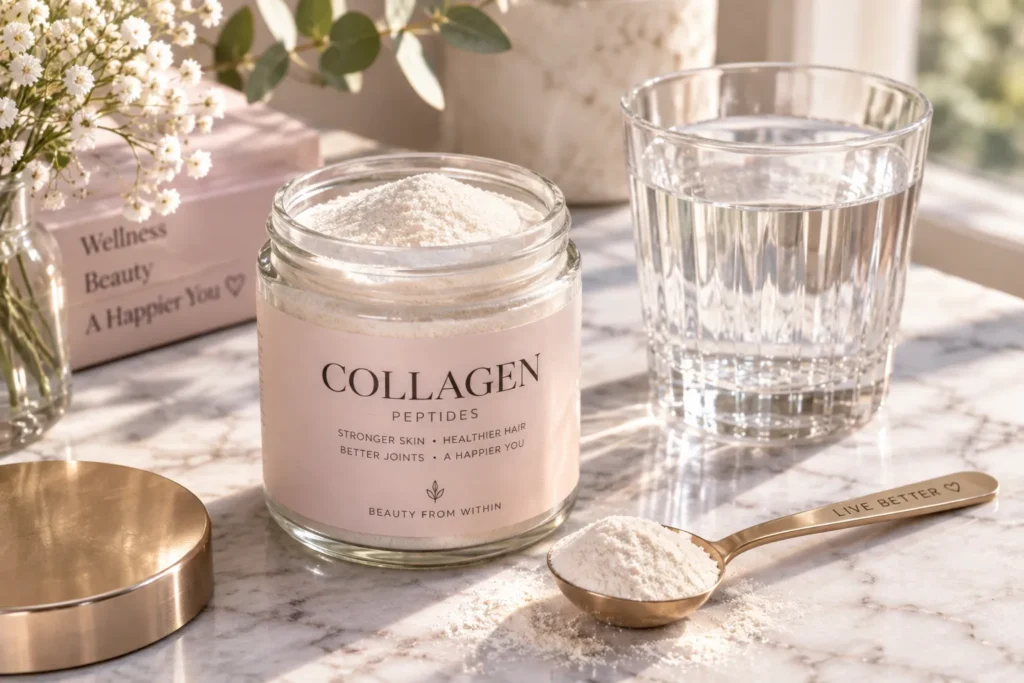
Marine collagen comes from fish skin and scales, and it is one of the most talked about options for skin texture. Its molecules are smaller than most other collagen types, so many people find it mixes into coffee or water without leaving a gritty texture behind. It is a good pick if you already eat fish and want a collagen source that is not from a cow. A common mistake is expecting overnight results. Collagen supplements work gradually, over weeks of steady use, not days. Pair it with a source of vitamin C, since your body needs vitamin C to help form new collagen. Marine collagen tends to sit at a mid to higher price point, but a little goes a long way since most servings are just one scoop a day.
2. Bovine Collagen Powder
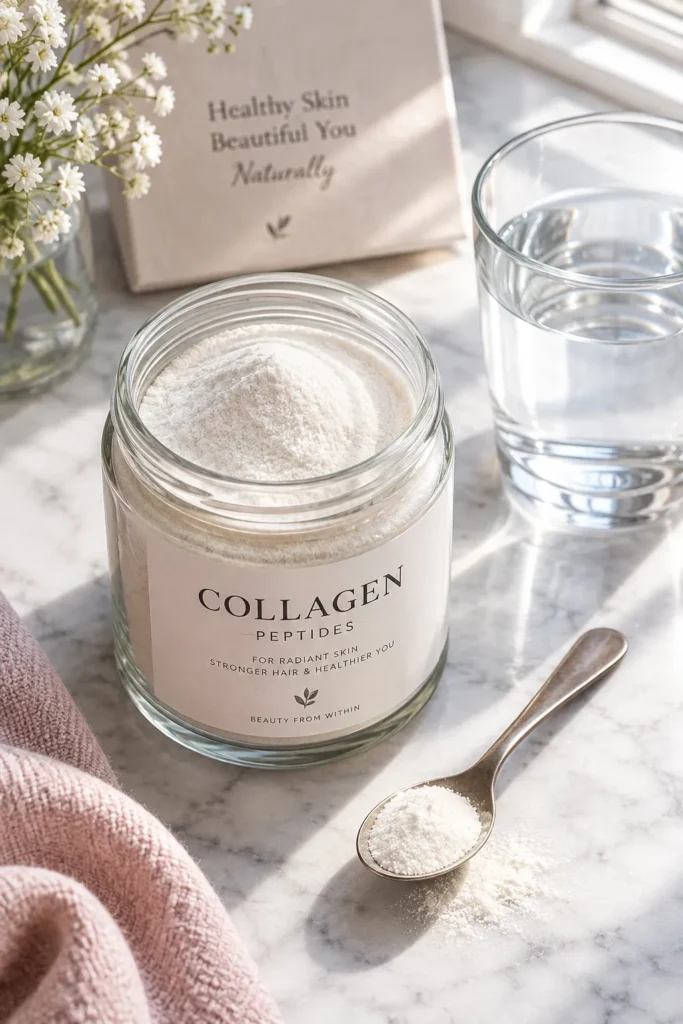
Bovine collagen is made from cow hide or connective tissue, and it is usually the most budget-friendly option on this list. It contains type 1 and type 3 collagen, which are the types most linked to skin firmness and elasticity. This works well for anyone who wants a basic, no-frills powder to stir into a morning smoothie. One thing people often get wrong is assuming all bovine collagen tastes the same. Quality and sourcing vary a lot, so a slightly higher price often means a cleaner taste and fewer fillers. If you are new to collagen supplements, this is often the easiest and most affordable place to start.
3. Collagen Peptide Capsules
For people who travel often or simply do not enjoy mixing powders, capsules are a simple way to fit collagen into a routine without changing your morning drink at all. They usually contain hydrolyzed collagen, which just means it has been broken down for easier absorption. Capsules can be a great use case for anyone who keeps forgetting their powder at home or wants something they can toss in a bag. The tradeoff is that you often need to take several capsules to match the dose found in a single scoop of powder, so check the label closely instead of assuming one capsule does the job.

4. Collagen Gummies
Collagen gummies are having a real moment, especially for people who find powders and pills unappealing. They are easy to remember since they feel more like a treat than a supplement, which is genuinely helpful if consistency has been your struggle. This is a good fit for beginners who are not sure they will stick with a routine yet. The thing to watch for here is added sugar. Some gummies pack in more sugar than you would expect, so it is worth checking the label rather than assuming a gummy is automatically the lighter option.

5. Collagen with Vitamin C Blends
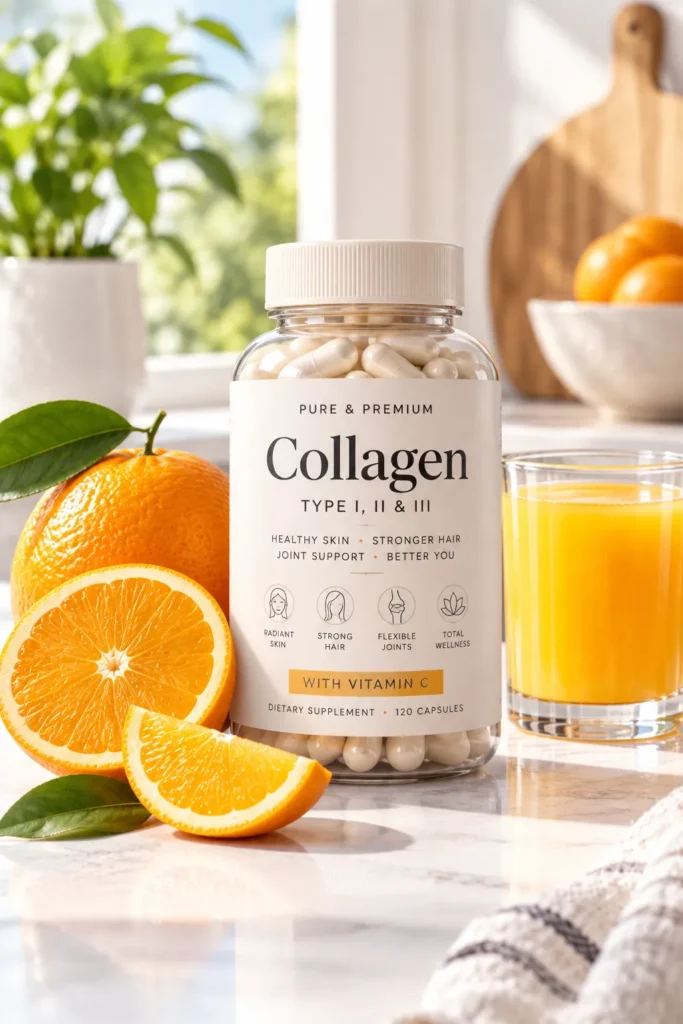
Since your body needs vitamin C to actually build collagen, some brands combine the two directly in one product. This saves you from juggling two separate supplements and makes sure you are getting both at the same time. It works especially well for people who do not eat a lot of citrus fruit or vitamin C rich foods on a regular basis. A useful thing to know here is that more vitamin C is not automatically better past a certain point, since your body can only use so much at once. A moderate daily amount alongside your collagen is usually enough to support the process.
6. Collagen with Biotin for Hair
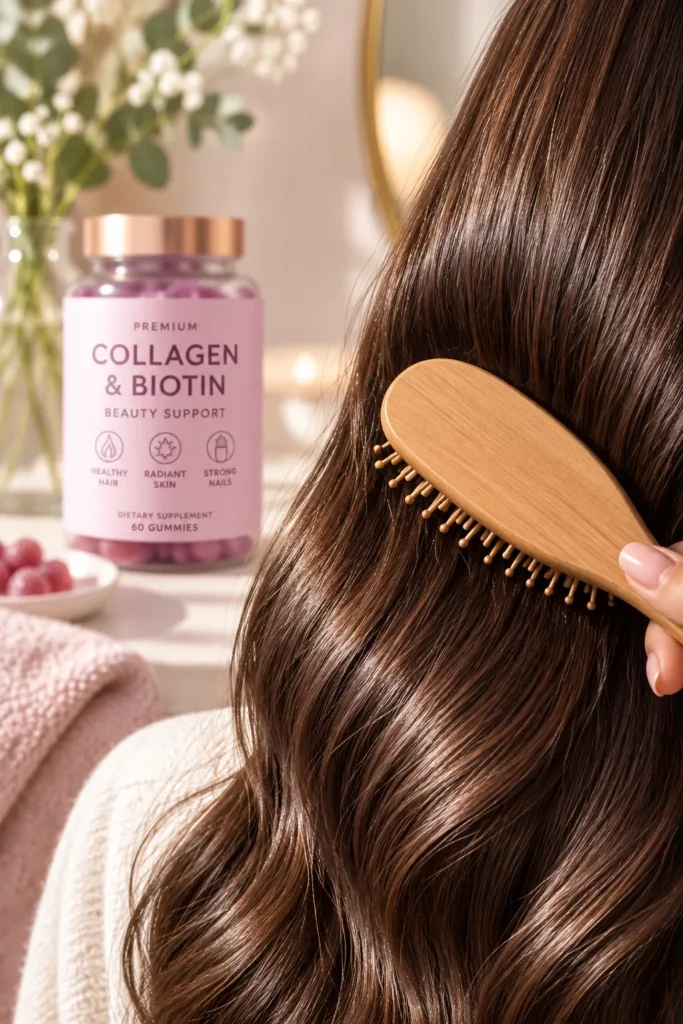
If hair thickness and shine are your main goal, look for a collagen blend that includes biotin. Collagen supports the structural protein in hair strands, while biotin is often linked to hair growth and strength. This combination is worth considering if thinning hair or slow growth has been bothering you, especially after stress, a big life change, or postpartum hair shedding. Save this one if hair health is your priority this year, since it is easy to scroll past collagen products assuming they are only for skin. Give it at least two to three months before judging results, since hair growth is naturally slow.
7. Unflavored Collagen Powder
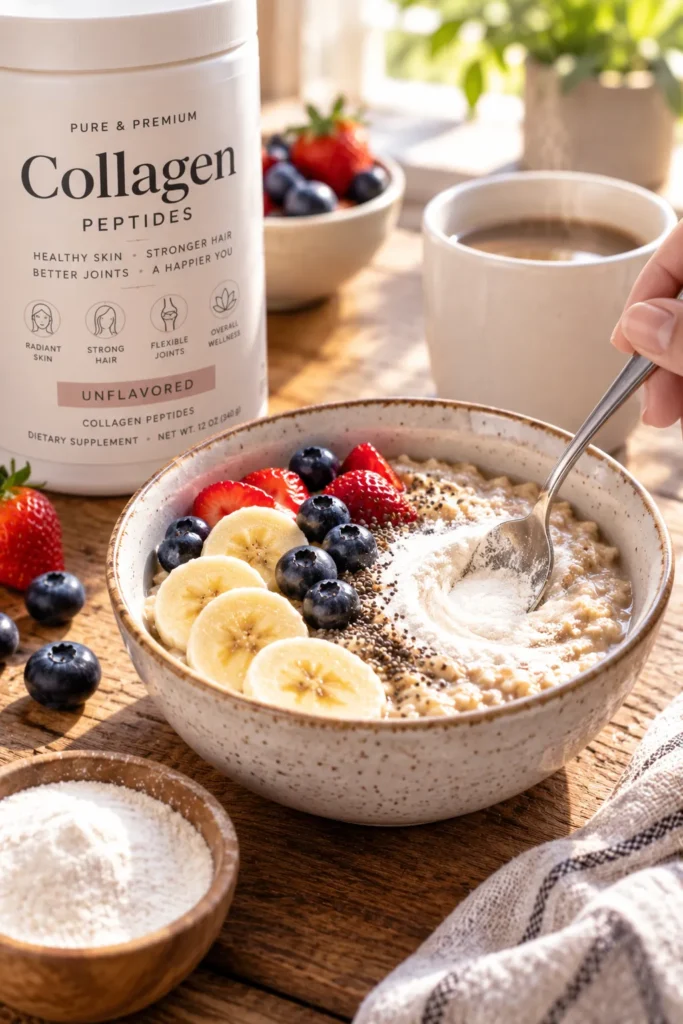
Unflavored collagen is the most flexible option because it blends into almost anything without changing the taste, whether that is soup, oatmeal, tea, or a smoothie. This is ideal for anyone who already has a food or drink routine they love and does not want a strong added flavor messing with it. A common mistake is adding it to something boiling hot, which can sometimes affect texture. Warm, not boiling, liquid usually works best. This is also a smart pick for households where more than one person wants to use the same tub without arguing over flavor preference.
8. Flavored Collagen Powder
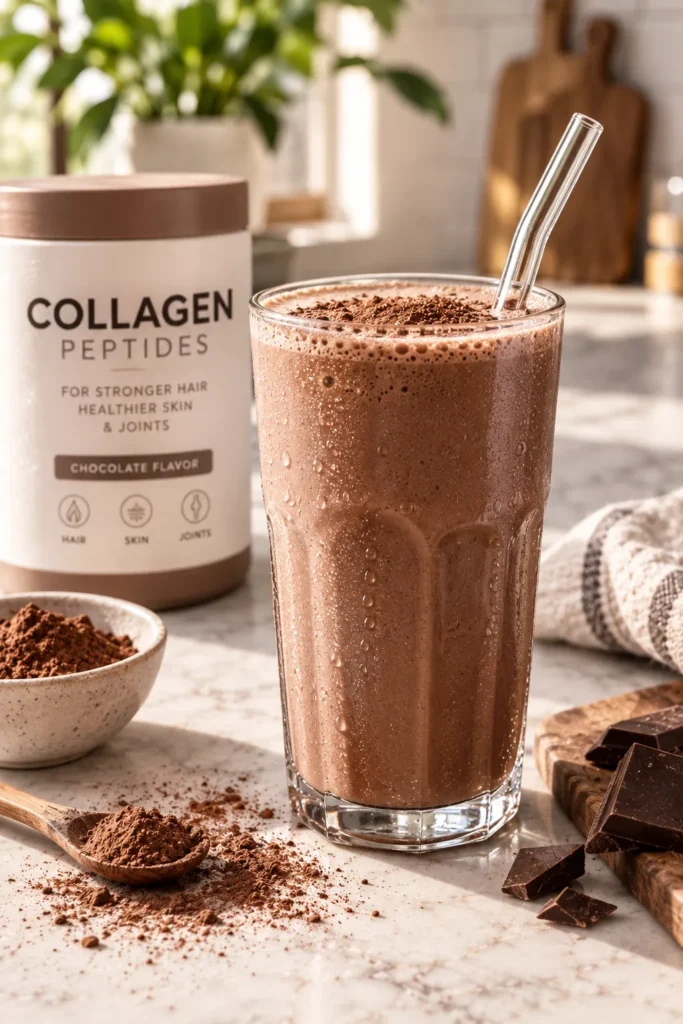
Flavored collagen, often in options like vanilla or chocolate, turns your daily scoop into something that tastes more like a treat and less like a chore. This is a great use case if you have tried unflavored powder before and struggled to get past the taste in plain water. Mixing it into milk, plant milk, or a smoothie usually gives the best texture. One detail worth knowing is that flavored versions sometimes include more added sugar or sweeteners than unflavored ones, so if you are watching sugar intake, a quick label check is worth the extra minute.
9. Plant Based Collagen Boosters
Technically, collagen itself only comes from animal sources, but plant based collagen boosters are formulated with ingredients like vitamin C, silica, and amino acids that support your body’s own collagen production instead of supplying collagen directly. This is the right choice if you follow a vegan or vegetarian lifestyle and still want to support skin and hair health. It is worth understanding that these work a little differently than animal derived collagen, since they encourage your body to build its own rather than adding collagen from an outside source. That difference does not make them less useful, just different in how they work.

10. Collagen Infused Skin Care
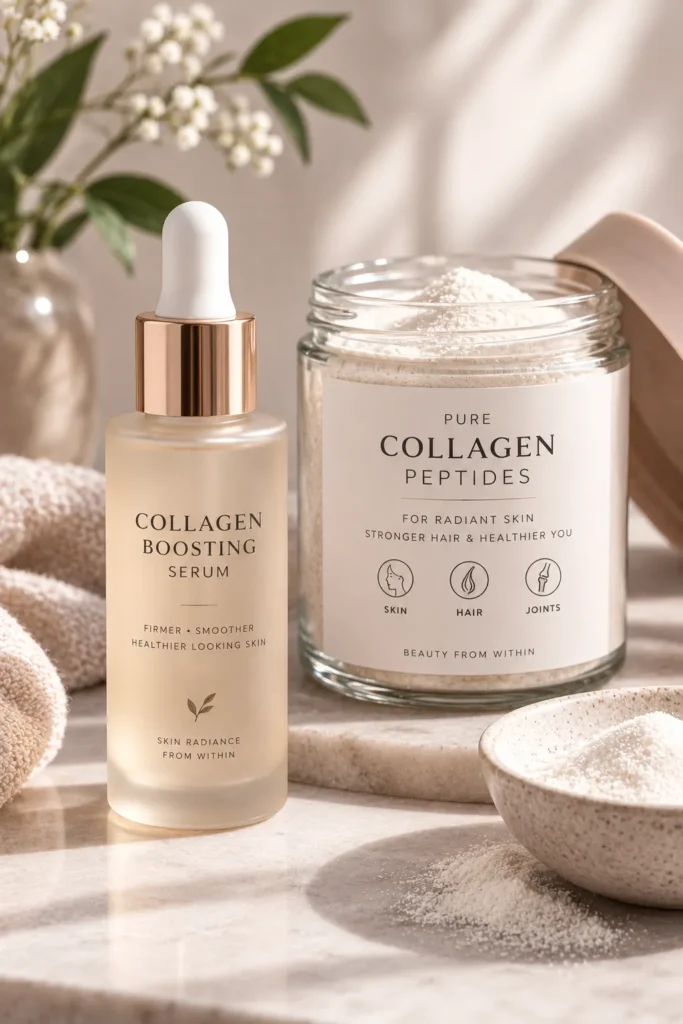
Beyond what you take internally, some skin care products, like serums and creams, are formulated with collagen or collagen boosting ingredients applied directly to the skin. Pairing an internal collagen supplement with a topical product can feel like a small daily ritual that reinforces the same goal from two directions. This works well for anyone who already enjoys a multi step skin care routine and wants their supplement habit to feel connected to it, rather than separate. Keep in mind that topical collagen molecules are generally too large to fully absorb into deeper skin layers, so think of this as a nice complement to your supplement, not a replacement for it.
[INTERNAL LINK OPPORTUNITY: healthy skin routine tips for glowing skin] [INTERNAL LINK OPPORTUNITY: best vitamin C serums for brighter skin]
How to Choose the Right Collagen Supplement for You
With so many options, it helps to narrow things down by what actually matters to you. If budget is the priority, bovine powder is usually your best starting point. If convenience matters most, capsules or gummies will fit into your day with the least effort. If hair is your main concern, look specifically for a biotin blend. And if you already have a food or drink routine you love, an unflavored powder will slide into it without any disruption. There is no single best collagen supplement for everyone. The best one is the one that actually fits your life closely enough that you will keep using it.
Conclusion
Standing in that supplement aisle does not have to feel overwhelming anymore. Once you know what marine, bovine, capsules, and gummies actually offer, picking the right collagen supplement becomes a lot less stressful and a lot more personal to your own goals. Give whichever one you choose a few months of steady use before deciding if it is working, since real change in skin and hair takes time. Save this list so you can come back to it next time you are comparing options, and pick just one to try this week.
Image Alt Text Suggestions
- Marine collagen powder in a glass jar with a spoon and water glass on marble counter
- Collagen powder being poured into a berry smoothie in a clear glass
- Travel pill case with collagen capsules next to a tote bag
- Chewable collagen gummies in a small glass bowl
- Collagen supplement bottle beside fresh orange slices and orange juice
- Shiny healthy hair being brushed with a collagen and biotin bottle nearby
- Bowl of oatmeal with unflavored collagen powder stirred in, topped with fruit
- Chocolate flavored collagen shake in a tall glass with a straw
- Plant based supplement capsules with leafy greens and citrus fruit
- Collagen boosting serum bottle next to a jar of collagen powder
FAQ Section
What is the best type of collagen supplement for skin? Marine collagen is often favored for skin texture because of its smaller molecule size, but bovine collagen also supports skin elasticity and is usually more budget-friendly. The best choice depends on your budget and preferences as much as the type itself.
How long does it take to see results from collagen supplements? Most people notice changes in skin or hair after 8 to 12 weeks of consistent daily use. Collagen supplements work gradually, so patience matters more than the specific brand or form you choose.
Can I take collagen supplements every day? Yes, collagen supplements are generally taken daily as part of a routine, similar to a vitamin. As with any new supplement, it is a good idea to check with a doctor first, especially if you take other medications or have a health condition.
Do collagen gummies work as well as powders? Gummies can be just as effective if they contain a meaningful dose of collagen, but portion sizes are usually smaller than a scoop of powder. Check the label to compare the actual collagen amount, not just the serving size.
Is plant based collagen the same as animal collagen? Not exactly. Plant based options do not contain collagen itself, since collagen only comes from animal sources, but they include ingredients that support your body’s natural collagen production. Both approaches can support skin and hair health in different ways.
Should I take collagen with vitamin C? Yes, vitamin C plays a role in how your body forms collagen, so pairing the two can be helpful. Some collagen supplements already include vitamin C in the blend, which makes this easier to manage.


