

10 Acne Skin Makeup Mistakes to Avoid for Clearer Skin
You cover a breakout in the morning, and by evening it looks bigger, drier, and somehow more obvious. It is frustrating when the very thing you use to feel confident seems to make your skin worse. The truth is that acne skin makeup is not the enemy. A few small habits are usually the real culprits. This guide walks you through ten common mistakes and the simple fixes that help your makeup sit smoothly while your skin heals.
1. Skipping Skin Prep Before Makeup
Picture foundation sliding across dry patches and settling into every little flake. That is what happens when makeup goes onto skin that has not been prepped.
The mistake: Going straight from washing your face to foundation, or using a heavy cream that never fully absorbs.
The fix: Use a light, oil-free gel moisturizer and wait two to three minutes before applying makeup. Dry skin that is stressed from acne treatments often makes oil production worse, and makeup clings to rough texture. A thin layer of hydration gives the base a smooth surface to rest on. This works especially well if you use a retinoid or benzoyl peroxide at night.

2. Using Heavy, Pore-Clogging Foundation
A thick, full-coverage formula can feel like a mask by lunchtime. On acne-prone skin, that heavy layer can trap oil and sweat in the pores.
The mistake: Choosing a foundation for coverage alone and never reading the label.
The fix: Look for words like “non-comedogenic,” “oil-free,” and “lightweight” on the bottle. Skin tints, light serum foundations, and thin liquid formulas often feel more comfortable on breakout-prone skin. Build coverage only where you need it instead of covering your whole face. A small note: “non-comedogenic” is not a regulated promise, so patch test a new formula along your jawline for a few days first.

3. Using Dirty Brushes and Sponges
Your brush touches your face every single day, and it picks up oil, dead skin, and leftover product. Think of it as a tiny sponge holding yesterday’s breakout.
The mistake: Washing brushes once in a while, or never washing a beauty sponge.
The fix: Wash face brushes weekly with a gentle cleanser or baby shampoo, rinse until the water runs clear, and let them dry flat on a clean towel. Wash sponges after every few uses and replace them every one to three months. If you cannot keep up with washing, switch to clean fingertips for cream products, which works well for tight schedules and travel bags.

4. Picking or Popping a Pimple Before Applying Makeup
It is tempting to squeeze that one bump before a big day. The result is usually a red, raw mark that makeup cannot hide.
The mistake: Popping a pimple and then packing concealer on top of the open spot.
The fix: Leave the spot alone and use a hydrocolloid pimple patch under your makeup. Patches flatten the bump, absorb fluid, and give concealer a smooth surface. Picking can push bacteria deeper and raise the chance of dark marks or scars that last far longer than the pimple itself. If a spot feels painful or deep, it is worth asking a dermatologist about it.

5. Over-Powdering to Hide Shine
Shine can feel stressful, so many people layer on powder. By afternoon, the face looks dull, cakey, and strangely dry.
The mistake: Pressing powder all over the face, again and again, to control oil.
The fix: Powder only the T-zone, and use a light touch with a fluffy brush. When skin gets stripped, it can respond by making even more oil. Blotting papers are a gentler option during the day because they lift oil without adding product. Keep a small pack in your bag and press, do not rub, so you do not move your makeup around.

6. Using the Wrong Concealer Technique
Concealer should melt into skin, not sit on top like a sticker. When it is dabbed on thick, it highlights texture and makes the spot look bigger.
The mistake: Swiping a large amount of concealer across a breakout and rubbing it in.
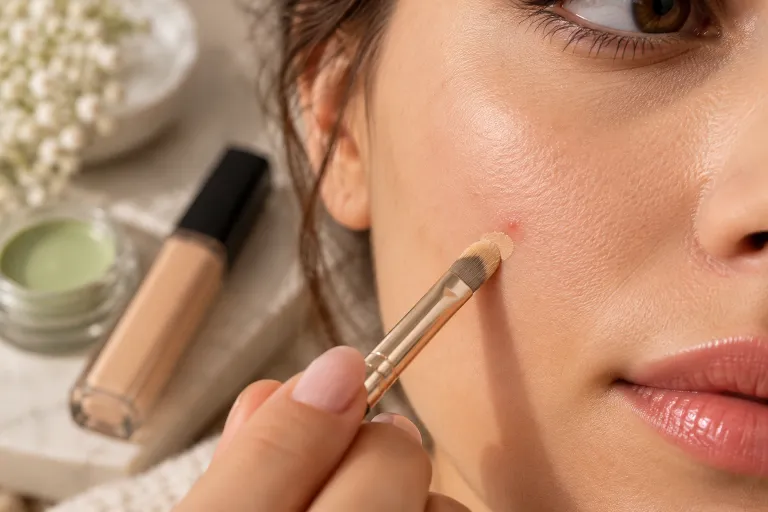
The fix: Apply foundation first, then dot a tiny amount of concealer on the center of the blemish with a small brush. Tap the edges gently so they blend into the skin around it. Choose a shade that matches your skin, because a lighter shade draws attention to the spot. For red marks, a thin layer of green-toned corrector under concealer can cancel redness, which is helpful on days when the redness bothers you most.
7. Going to Bed With Makeup On
You come home exhausted and fall asleep with your makeup still on. The next morning, your pores feel clogged and your skin looks tired.
The mistake: Skipping cleansing at night, even once in a while.
The fix: Keep makeup wipes by your bed for the sleepiest nights, then do a proper cleanse the next morning. On regular nights, use a gentle cleanser, or an oil-based cleanser first if you wear long-wear makeup, followed by your usual face wash. Cleansing removes oil, makeup, and sunscreen that collect through the day. Make this one a habit, and keep it saved for the days when you need a quick reminder.

8. Using Harsh Scrubs and Strong Products Under Makeup
When skin is breaking out, many people reach for the strongest product they own. Then makeup looks patchy because the skin underneath is irritated.
The mistake: Scrubbing hard, layering several strong actives, and then applying makeup over peeling skin.
The fix: Choose one active at a time, such as salicylic acid or benzoyl peroxide, and use it at night when possible. Skip rough scrubs, which can cause tiny tears and more redness. A gentle approach calms the skin, and calmer skin holds makeup far better. If your skin stings or flakes, take a break from actives for a few days and focus on moisturizer.

9. Skipping Sunscreen Under Makeup
Many people skip sunscreen because they think foundation covers it. Even tinted products rarely give enough protection on their own.
The mistake: Counting on foundation with SPF instead of wearing a real sunscreen.
The fix: Apply a lightweight, oil-free sunscreen before makeup and let it set for a few minutes. Sun exposure can darken acne marks and make them last much longer, so daily protection helps your skin heal evenly. Gel or fluid sunscreens tend to feel comfortable under makeup and are a good fit for oily or acne-prone skin. Use a generous amount for your face, not a tiny dab.

10. Using Old or Shared Makeup Products
That half-empty foundation or mascara in your drawer might be older than you think. Old products can hold bacteria, and sharing them adds even more.
The mistake: Keeping makeup far past its shelf life and letting friends dip into your products.
The fix: Look for the small open-jar symbol on the packaging, which shows how many months a product stays good after opening. Liquid foundation and concealer are often best replaced within about 6 to 12 months, and mascara within about 3 months. Never share products that touch the skin, and use a clean spatula for cream products in jars. A quick clear-out twice a year keeps your makeup bag fresh and safe.

Final Thoughts
Having acne and loving makeup can coexist, and you do not have to choose between feeling confident and caring for your skin. Most of the mistakes above are small habits that are easy to adjust once you notice them. Start with just one change this week, like washing your brushes or switching to a lighter foundation. Save this article so you can come back to it whenever your skin needs a reset.
6. Image Alt Text Suggestions
- Woman patting lightweight gel moisturizer onto her cheek before applying acne skin makeup
- Three lightweight oil-free foundation bottles beside a makeup sponge on a marble vanity
- Freshly washed makeup brushes drying on a white towel next to soapy water
- Hydrocolloid pimple patch on a chin with a concealer brush nearby
- Hand pressing a blotting paper onto the forehead to control shine without powder
- Small concealer brush tapping product onto a single blemish on a cheek
- Woman washing her face at a sink with foaming cleanser to remove makeup
- Gentle skincare shelf with a cleanser, salicylic acid, and moisturizer for acne-prone skin
- Woman applying lightweight sunscreen to her cheeks before makeup
- Open makeup bag with foundation bottle showing the expiry date for acne-prone skin
7. FAQ Section
Can I wear makeup if I have acne?
Yes, you can. Choose lightweight, oil-free, non-comedogenic products, and always remove them fully at night. Clean tools and gentle skin prep make a big difference.
What type of foundation is best for acne-prone skin?
Light liquid foundations, skin tints, and serum foundations are often comfortable because they feel less heavy on the skin. Pick a shade that matches your undertone, and test a new formula along your jawline first.
Does makeup cause acne?
Some products can clog pores or irritate skin, especially thick or old formulas. Dirty brushes and sleeping in makeup are common causes too. If you notice more breakouts after switching a product, stop using it and see how your skin responds.
How often should I wash my makeup brushes if I have acne?
Once a week is a good rule for face brushes, and sponges should be washed after a few uses. Clean tools reduce the amount of oil and bacteria that touch your skin.
Should I use concealer or a pimple patch on a breakout?
You can use both. Place a hydrocolloid patch on the spot first, then apply makeup around it, or use the patch overnight and concealer in the morning.
Is it okay to wear makeup every day with acne-prone skin?
It can be fine if you cleanse thoroughly at night and use gentle products. Giving your skin a makeup-free day now and then can also help it feel calmer.
Whenever you are ready, I can create the feature image prompt and the numbered image prompts for this article.


