

10 Water Flowers That Make Your Garden Look Magical
If you have ever stood next to a pond covered in floating blooms and felt your shoulders drop, you already know what water flowers can do. There is something about the way they sit on top of the water, catching light and drawing in bees, that makes a garden feel like it belongs in a storybook. Maybe your yard has a full pond, or maybe you just have a half barrel on the patio. Either way, water flowers can turn that space into the spot everyone wants to sit near. This list walks you through 10 of the most magical water flowers, how to care for them, and where each one works best.
1. Water Lily
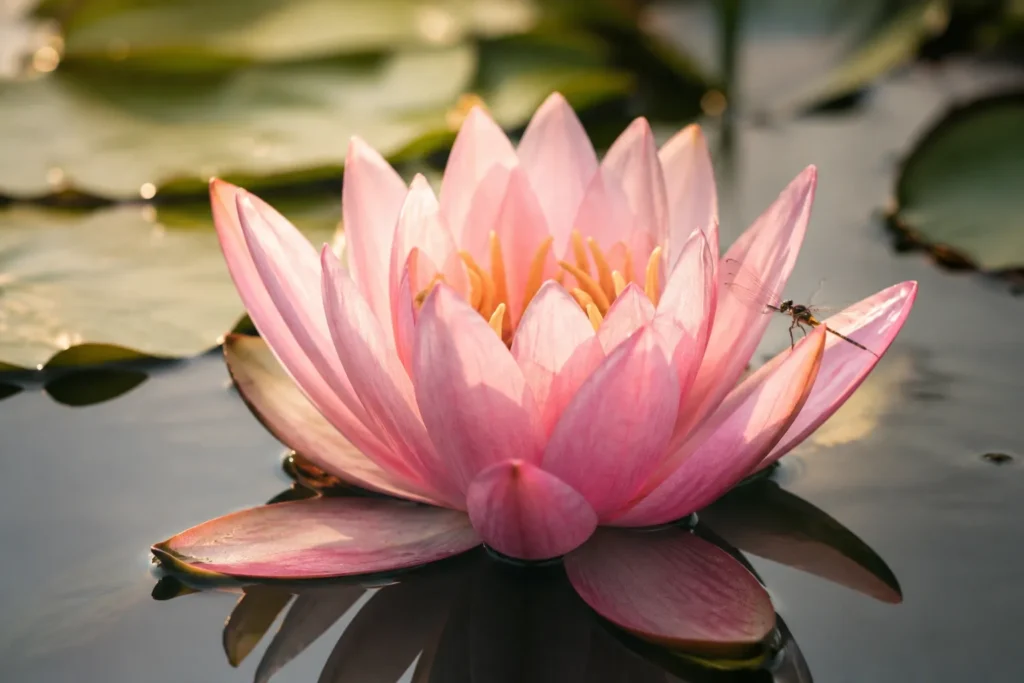
A garden pond without a water lily feels like it is missing something. The flat, round leaves spread across the surface while the blooms open in the morning and close again by late afternoon, almost like they are putting on a small show. Water lilies come in white, pink, yellow, and deep red, so you can match them to almost any garden color scheme.
They do best in still water with at least four to six hours of sun a day. A common mistake is planting them in a pot that is too small, which stunts the roots and leads to fewer blooms. Use a wide, shallow container filled with heavy garden soil, not potting mix, and top it with a layer of gravel so the soil stays put underwater.
Water lilies work beautifully in anything from a large backyard pond to a half whiskey barrel on a sunny patio.
2. Lotus
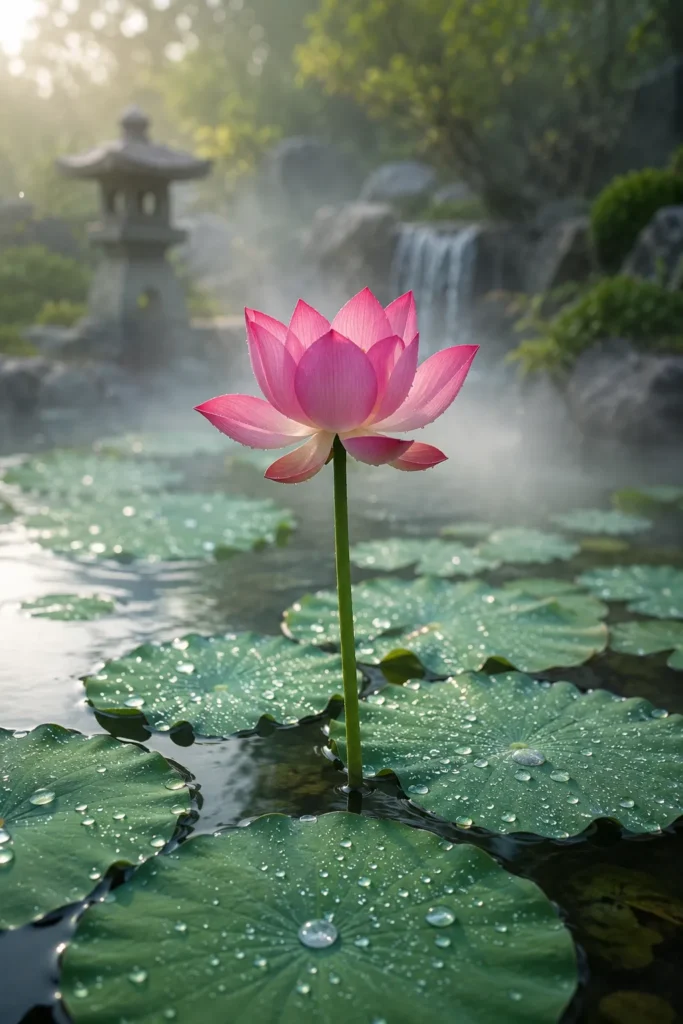
The lotus is the flower people picture when they imagine a peaceful, almost spiritual garden. The blooms rise well above the water on tall stems, and the round leaves seem to repel water completely, letting droplets roll across them like little beads of glass.
Lotus plants need more room than water lilies. They spread through underground runners, so a large container or a dedicated pond area works far better than a small tub. Give them full sun and rich soil, and expect the plant to take a full season to settle in before it blooms heavily.
A frequent mistake is expecting fast results. Lotus plants are slow to establish, so patience matters more than fertilizer here. Once settled, they come back reliably every year in most climates.
This flower shines in a dedicated pond corner where it has space to spread, rather than a tight balcony container.
[INTERNAL LINK OPPORTUNITY: how to start a backyard pond garden on a budget]
3. Pickerelweed
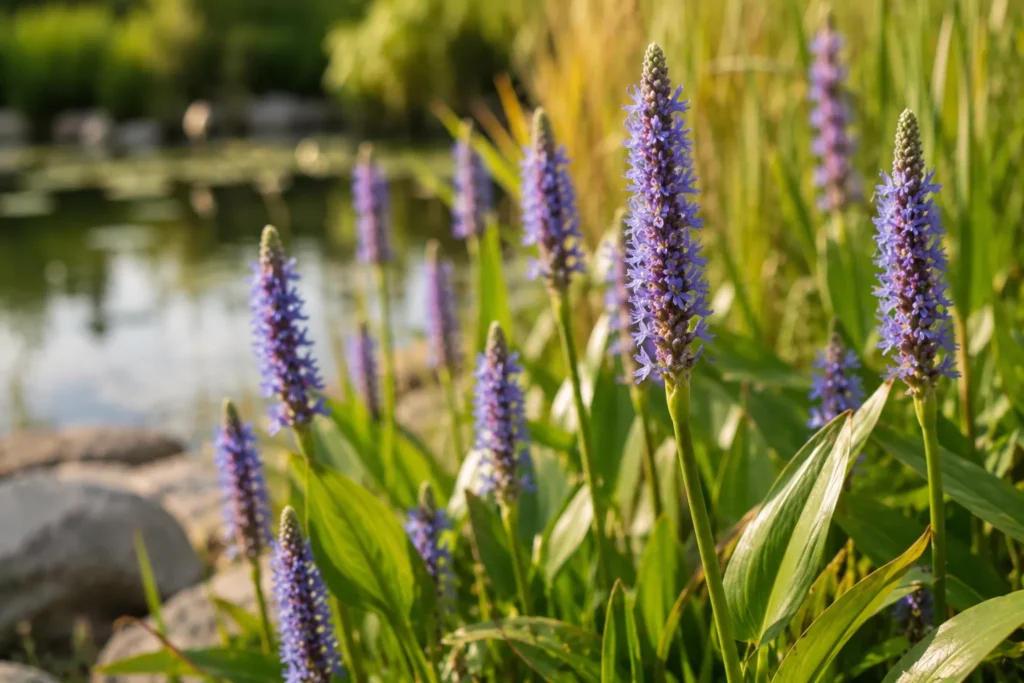
Pickerelweed is one of those plants most people walk past without noticing, which is a shame because it does a lot of quiet work in a pond garden. It grows tall spikes of purple blue flowers along the shallow edges of water, and it blooms for months longer than most other water flowers on this list.
Plant it in shallow water, about two to six inches deep, along the margins of a pond or in a submerged pot near the edge. It tolerates both full sun and light shade, which makes it more forgiving than many water plants.
One detail worth knowing is that pickerelweed also helps filter the water naturally, pulling out excess nutrients that would otherwise feed algae. That is a small practical win most gardeners do not expect from a flowering plant.
It works especially well along the natural, sloped edges of a backyard pond where you want movement and height without a lot of fuss.
4. Yellow Flag Iris
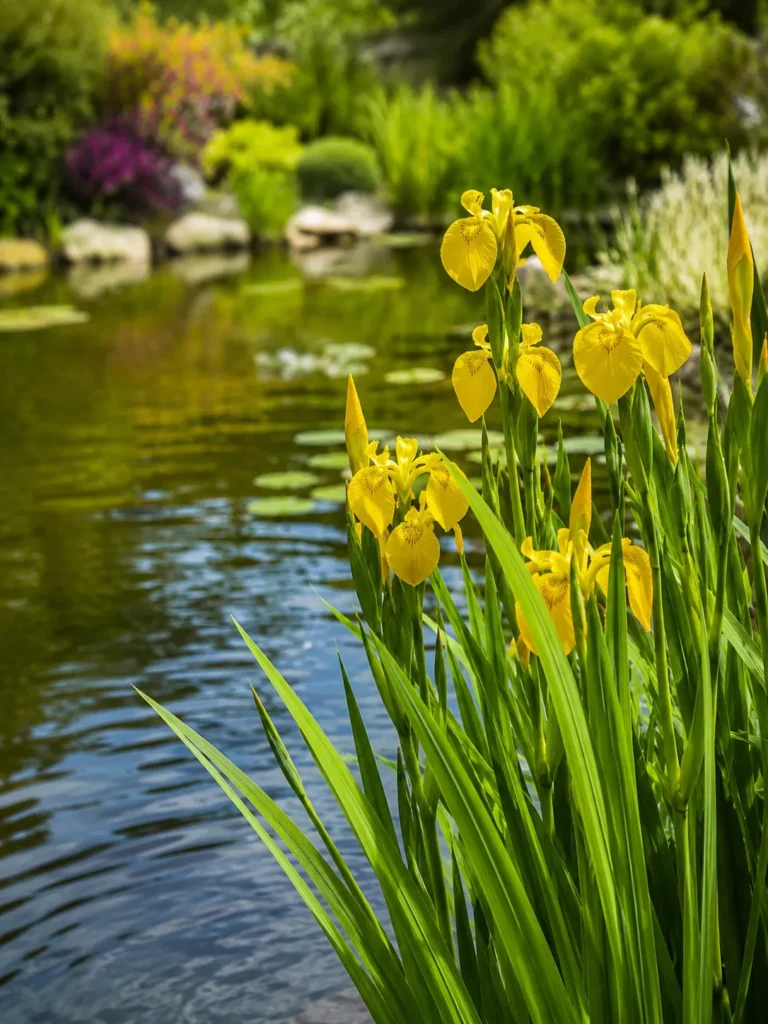
This iris brings a bold splash of yellow to the edge of any pond, and the sword shaped leaves add structure even when the plant is not in bloom. It flowers in late spring, right when a lot of other water plants are just waking up, which helps stretch out your garden’s color through more of the season.
Yellow flag iris grows in shallow water or consistently damp soil at the pond’s edge. It spreads over time, so give it room or plan to divide the clumps every few years to keep it in check.
A common mistake is planting it in a container that is too shallow for the roots, which leads to a weak, floppy plant. Choose a container at least eight inches deep with rich soil.
This one is a great use case for rental gardens too, since it grows well in a large tub that can move with you if you leave.
5. Marsh Marigold
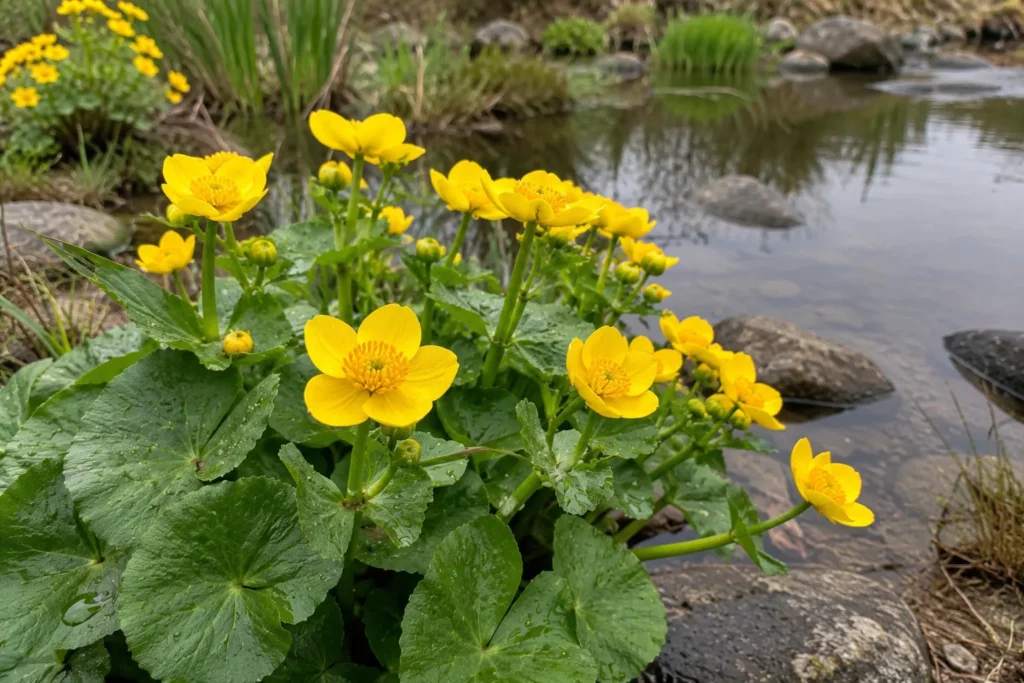
Marsh marigold is often the very first water flower to bloom each year, sometimes pushing up bright yellow, buttercup shaped flowers while there is still a chill in the air. If you want a pond that feels alive early in spring instead of bare, this plant earns its spot.
It grows best in shallow water or soggy soil right at the pond’s edge, and it prefers partial shade over harsh afternoon sun. Because it is compact, it fits neatly into small ponds or even a large, shallow dish garden on a patio.
Save this one for a spot near a walkway or window, somewhere you will actually notice those early blooms on your way past each morning.
6. Water Hyacinth
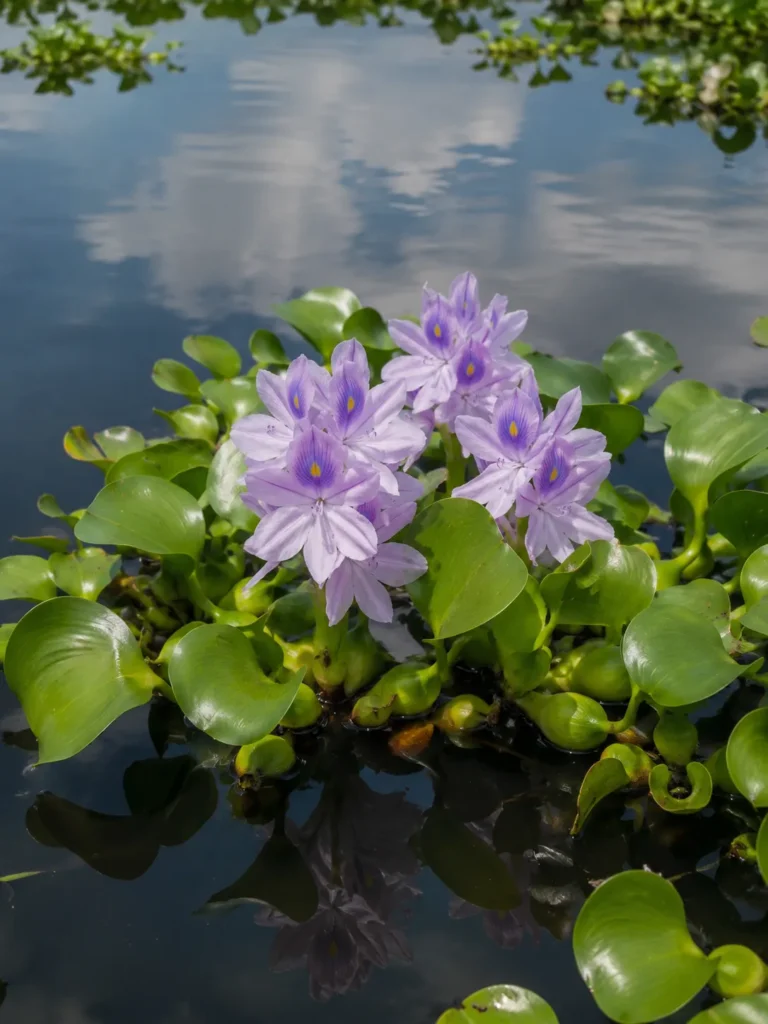
Water hyacinth floats freely on the surface, with soft lavender blue flowers and glossy, rounded leaves that puff up slightly at the base to keep the whole plant buoyant. It is one of the fastest growing water flowers you can add, which makes it satisfying if you want quick results.
Because it spreads so quickly, the real skill here is control, not care. Thin the plants regularly and never let them escape into natural waterways, since in many areas they are considered invasive outside of contained ponds. Stick to enclosed ponds or large tubs where you can manage the spread by hand.
This plant works especially well in a fresh, newly planted pond that needs quick coverage while slower growing plants like lotus get established.
7. Cardinal Flower
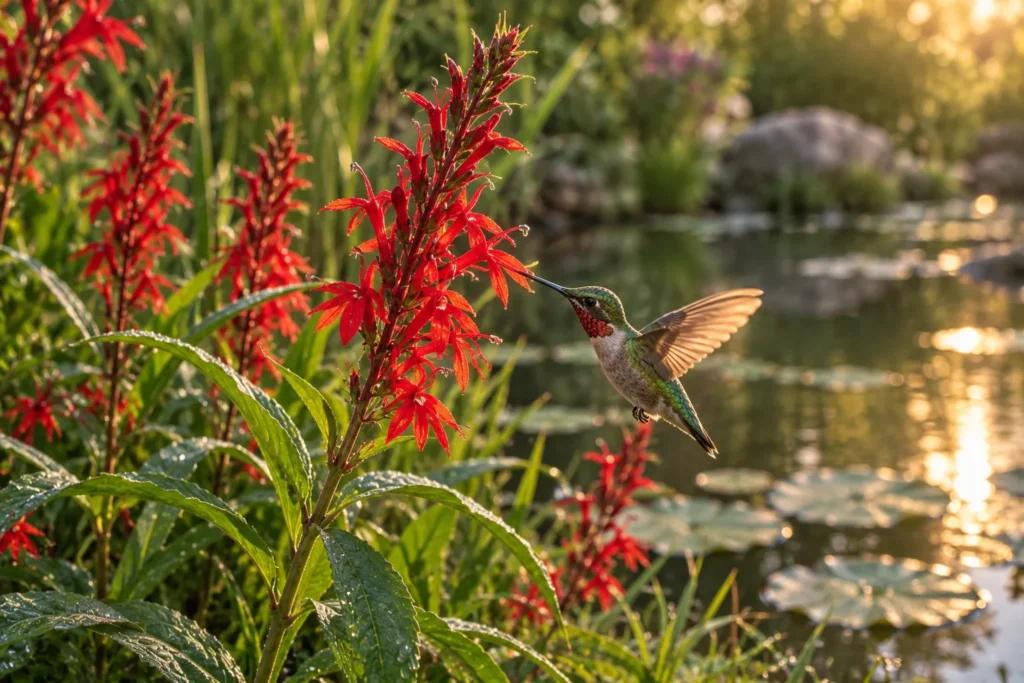
Cardinal flower brings a shot of pure red to the pond’s edge, tall spikes that hummingbirds cannot seem to resist. It is technically a marginal plant, meaning it likes to have wet feet without being fully submerged, so it thrives right along the damp border of a pond or bog garden.
Give it partial sun and consistently moist soil. A mistake people make is letting the soil dry out between waterings, which this plant does not forgive easily. If you are away from home often, pair it with a self watering container setup near the pond’s edge instead of a dry garden bed.
This flower is worth planting purely for the hummingbird traffic it brings, especially in a garden where you already sit outside in the evenings.
8. Water Canna
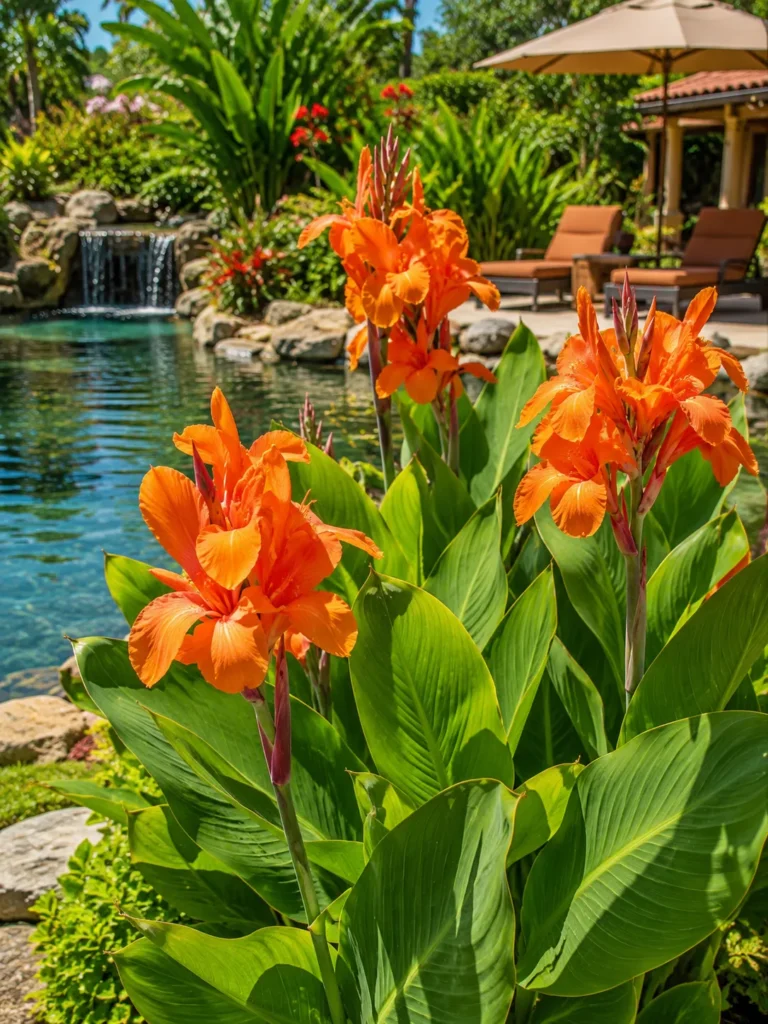
Water canna gives a pond a tropical, resort like feel, with broad paddle shaped leaves and bright orange, red, or yellow blooms that stand tall above the water. It is a bigger, bolder cousin to the regular garden canna, built to handle wet roots.
Plant it in a submerged pot at the pond’s edge, in water no deeper than six inches over the crown. It loves full sun and heat, so it is a strong pick for gardens in warmer climates or for a sunny patio pond that gets blasted with afternoon light most other plants would struggle with.
A save worthy detail here is that water canna also does double duty as a privacy screen near a pond deck, since the leaves grow tall and dense by midsummer.
9. Water Forget Me Not
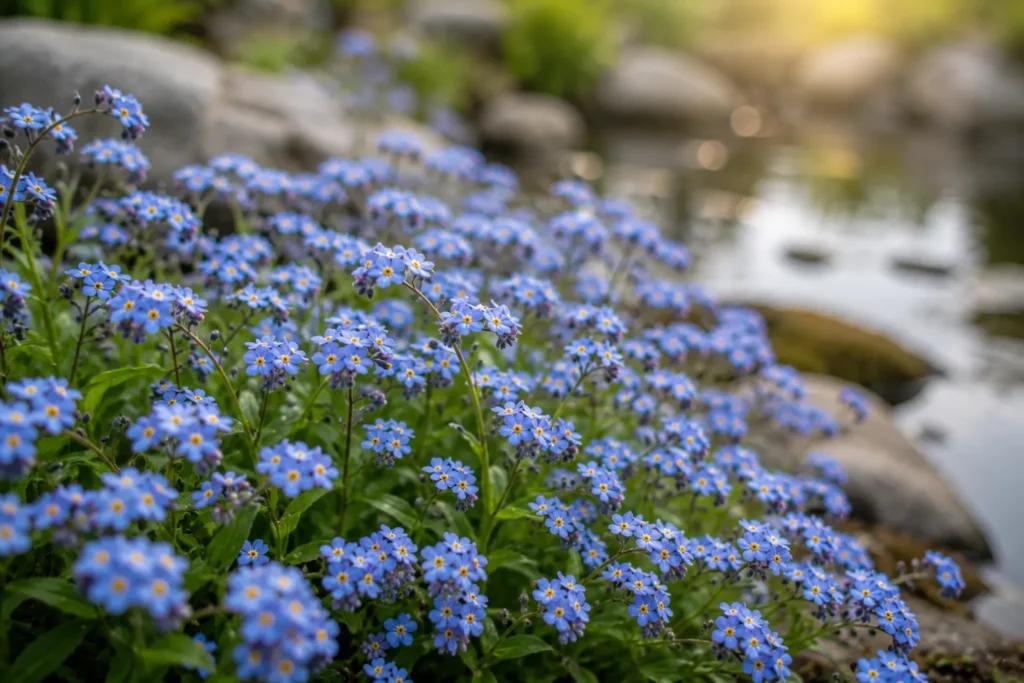
This little flower has tiny blue blooms with a soft yellow center, and it tends to spread gently across the pond’s shallow edges like a low, floating carpet. It is one of the more delicate looking plants on this list, but it is surprisingly easy to grow.
It prefers partial shade and shallow water, and it pairs beautifully with taller plants like iris or pickerelweed, filling in the gaps at the base so the pond edge does not look bare or patchy.
If you are working with a small pond or even a large half barrel, water forget me not is one of the easiest ways to add texture without overwhelming the space.
[INTERNAL LINK OPPORTUNITY: best small pond plants for tiny backyard gardens]
10. Arrowhead (Duck Potato)
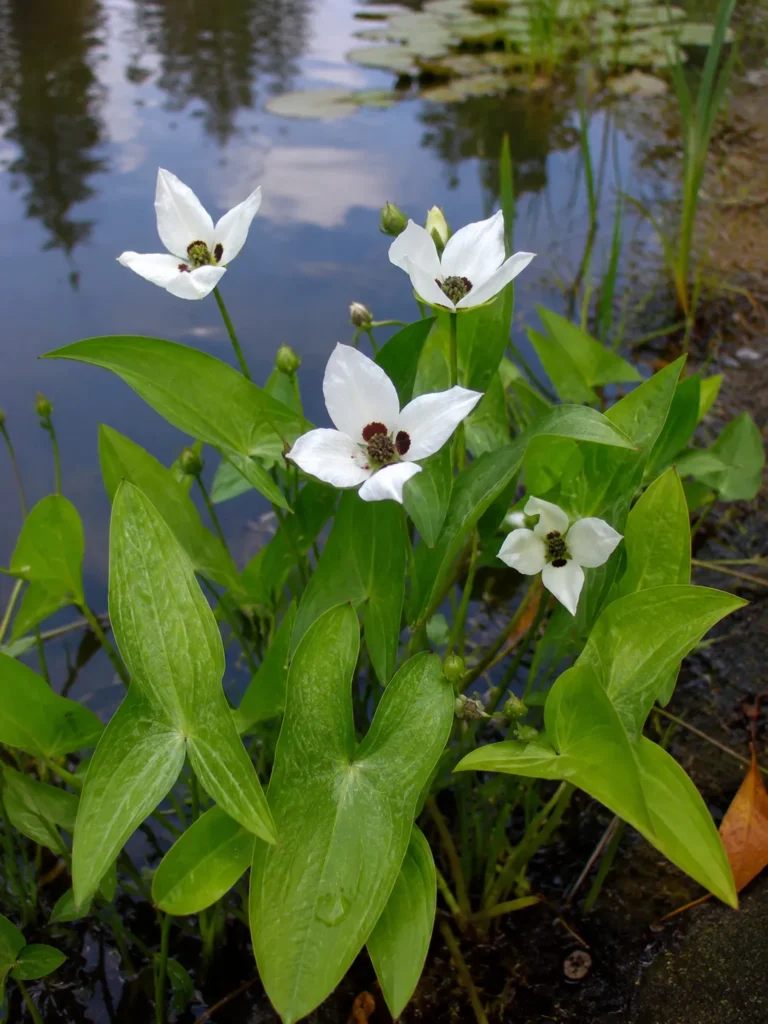
Arrowhead gets its name from its distinct arrow shaped leaves, and it produces delicate white flowers with a dark center that bloom in clusters through the summer. It is a marginal plant, meaning it grows right at the pond’s edge in shallow water rather than floating on top.
It is one of the lowest maintenance plants on this list. Once it is settled into shallow water with a few hours of sun, it mostly takes care of itself, spreading slowly over a few seasons rather than taking over.
This plant is a solid use case for beginners who want a water garden but are nervous about keeping delicate plants alive. It forgives a missed feeding or an uneven watering schedule far better than most.
Bringing It All Together
A pond full of water flowers does not happen overnight, and that is actually part of the charm. Start with one or two easy options like marsh marigold or arrowhead, get a feel for how your space handles sun and water levels, then build out from there with something bolder like a lotus or water canna. Whatever your garden looks like right now, even if it is just a barrel on a balcony, one of these ten flowers can make it feel a little more magical by next season. Pick the one that speaks to you and give it a try this week.
[INTERNAL LINK OPPORTUNITY: how to build a container water garden without a full pond]
6. Image Alt Text Suggestions
- Pink water lily floating on calm pond water with a dragonfly on the petal
- Tall pink lotus flower blooming above round leaves in a backyard pond
- Purple pickerelweed flower spikes growing along a shallow pond edge
- Bright yellow flag iris blooms with sword shaped leaves at a pond edge
- Yellow marsh marigold flowers blooming early spring beside a garden pond
- Lavender water hyacinth flowers floating on a pond with glossy leaves
- Red cardinal flower spikes at a pond’s edge with a visiting hummingbird
- Orange water canna blooms with tropical leaves beside a sunny pond
- Small blue water forget me not flowers along a shallow pond edge
- White arrowhead flowers with arrow shaped leaves at a pond’s edge
7. FAQ Section
Do water flowers need a full pond to grow, or can I plant them in containers? Many water flowers, including water lilies, water canna, and marsh marigold, grow well in large containers like half barrels or wide tubs. You do not need a full in ground pond to enjoy them, just a container that holds water and gets enough sun.
Which water flowers are best for beginners? Arrowhead, marsh marigold, and pickerelweed are some of the most forgiving choices. They tolerate uneven watering and do not need constant attention once they are established.
How much sun do water flowers usually need? Most water flowers, like water lilies and lotus, need at least four to six hours of direct sun a day to bloom well. A few, like cardinal flower and water forget me not, tolerate partial shade.
Can I mix different water flowers in the same pond? Yes, and mixing them is often what creates the most magical looking pond. Pair floating plants like water lily with edge plants like iris or pickerelweed for layered color and texture.
Are any of these water flowers considered invasive? Water hyacinth spreads quickly and is considered invasive in some regions if it escapes into natural waterways. Keep it contained in an enclosed pond or tub and thin it regularly.
How do I keep my pond water clear once I add flowers? Plants like pickerelweed naturally help filter excess nutrients from the water, which can reduce algae over time. Keeping a balance of floating and marginal plants, along with regular thinning, also helps keep the water clearer.


