

10 Less Is More Decorating Tricks You’ll Love
Do you ever walk into your living room and feel tired just looking at it? Too many throw pillows, too many knickknacks on the shelf, too many half finished corners that never quite come together. You are not alone. So many of us fill our homes hoping more stuff will make the space feel more complete, when really it just makes it feel more crowded.
The less is more approach flips that idea on its head. It is not about living in a bare, cold room. It is about choosing fewer things that you actually love, so your home finally feels calm instead of chaotic. Here are 10 simple tricks to help you get there, one corner at a time.
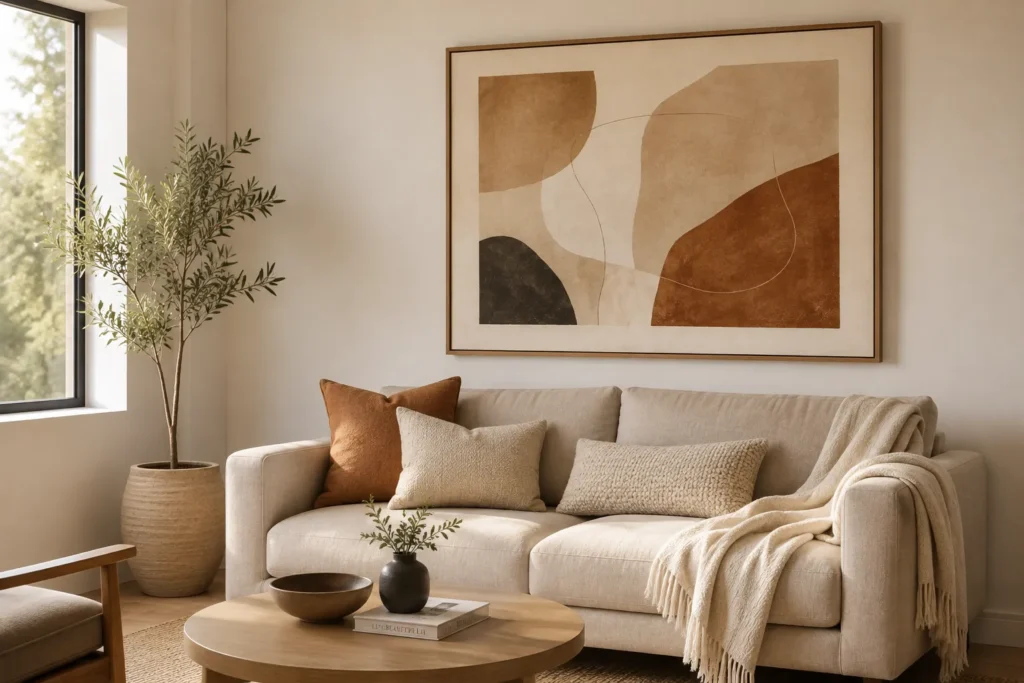
1. Pick One Statement Piece Per Room
Every room needs a hero, not ten competing extras. Choose one item, a bold mirror, a chunky vase, or a piece of art, and let it anchor the whole space.
The mistake most people make is trying to give every item in the room the spotlight. When everything is “special,” nothing actually stands out, and the eye does not know where to rest. Instead, pick the piece you love most and build quietly around it with simple, neutral pieces that do not compete for attention.
This works especially well in small apartments where wall space and surface space are limited. A single oversized piece of art above the couch can do more for the room than five small frames scattered around it.
2. Clear One Surface Completely
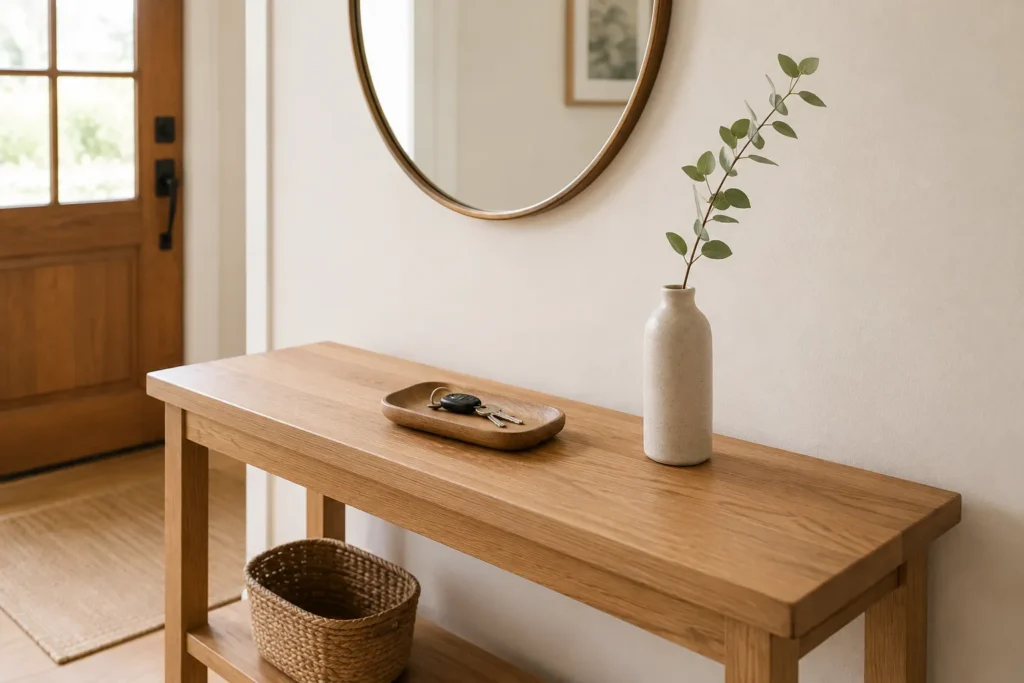
Before you add anything new, take everything off one surface, a coffee table, a console, or a kitchen counter, and leave it empty for a few days.
You will notice something surprising. An empty surface actually makes the whole room feel bigger and calmer, even if nothing else changed. When you do add items back, add them slowly and only bring back what you truly use or love.
Try this on your entryway table first. A completely clear entry table, maybe with just a small tray for keys, makes the whole entrance feel more welcoming the moment you walk in.
3. Swap Multiple Small Rugs for One Larger One
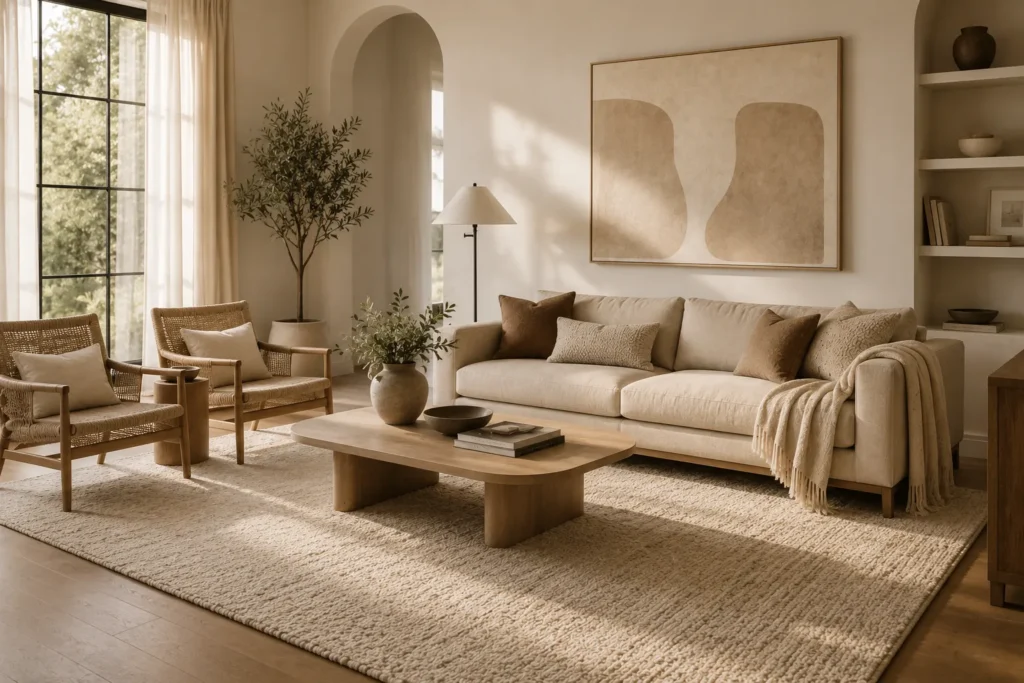
A lot of people layer several small rugs around a room thinking it adds coziness. In reality, it usually just chops the floor into busy little sections and makes the room feel smaller.
One larger rug that anchors the main seating area does the opposite. It pulls the furniture together and makes the floor feel like one continuous, restful space. This is one of those changes that costs a bit more up front but pays off every single day you walk into the room.
For rental homes, look for a rug in a size that covers at least the front legs of your sofa and chairs. That one detail makes a huge difference in how finished the room feels.
4. Choose a Simple Color Story and Stick to It
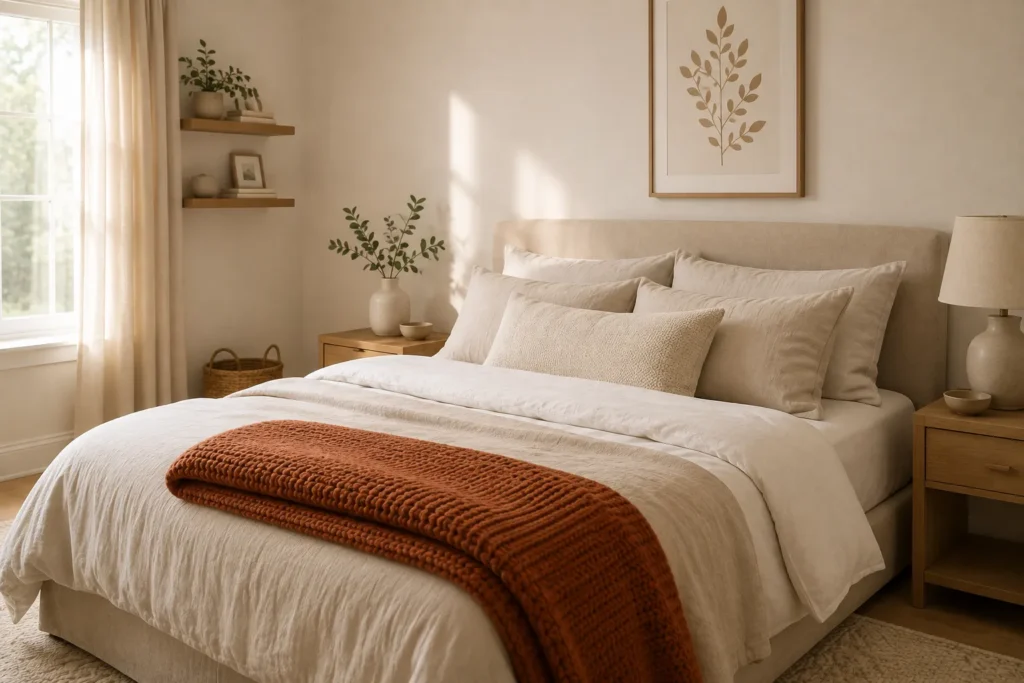
Pick two or three main colors for a room and let every new item you buy fit within that story. This does not mean everything has to match perfectly, but it should feel like it belongs in the same family.
A common trip up here is buying pieces you love individually without thinking about how they work together. You end up with a room that feels more like a collection of separate purchases than one cohesive space. Before you buy something new, ask yourself if it fits your existing color story or if it is going to compete with what you already have.
A soft palette of white, warm beige, and one deeper accent color like terracotta or sage works in almost any home, budget friendly or not.
5. Let Negative Space Do the Work
Negative space, the empty gaps between objects, is not wasted space. It is what lets your eye rest and gives your favorite pieces room to breathe.
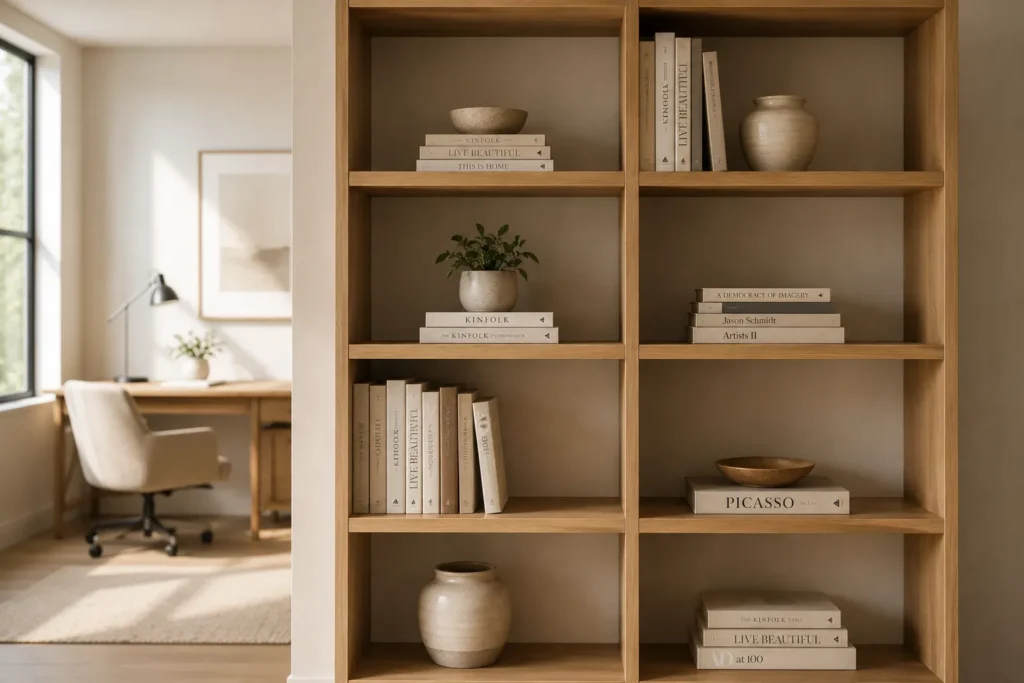
On a bookshelf, this might mean leaving a few shelves partly empty instead of packing every inch with books and decor. On a wall gallery, it might mean spacing your frames further apart than feels natural at first. Give your space some quiet, and the pieces you do keep will actually get noticed instead of blending into visual noise.
This trick works beautifully in a home office, where a cluttered desk and packed shelves can make it harder to focus. A few empty spots on the shelf can make the whole room feel more organized just by looking at it.
6. Edit Your Throw Pillows Down to Three
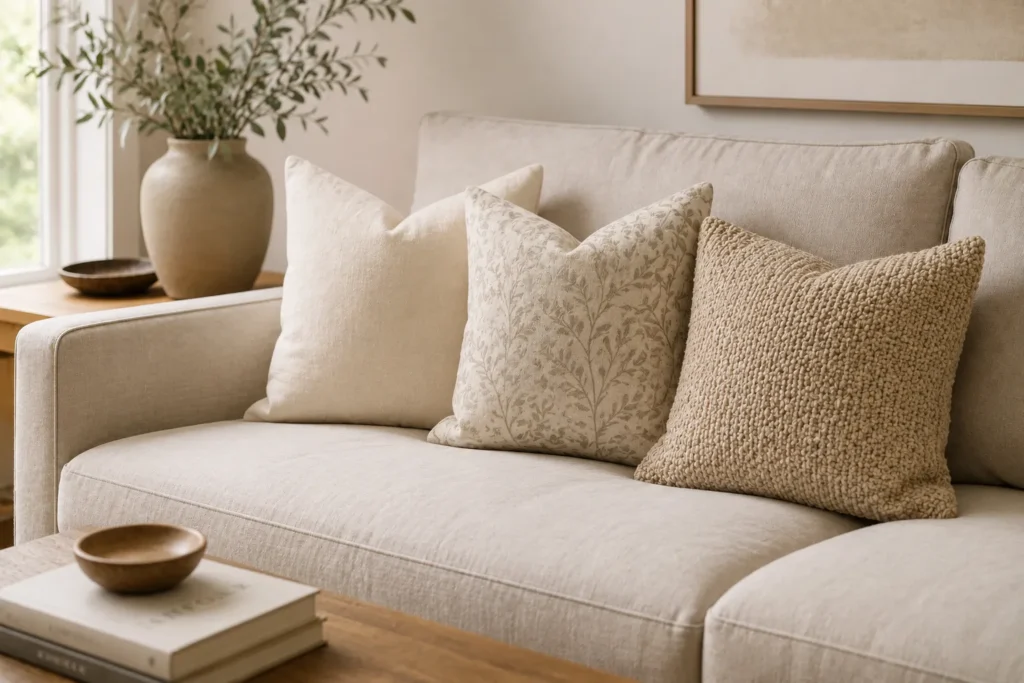
Pillows are one of the easiest places to go overboard. Five, six, seven pillows piled on a couch might look nice in a photo, but in real life they end up shoved on the floor every time someone sits down.
Aim for three pillows per sofa in varying but coordinated textures, one solid, one patterned, one textured like linen or knit. It is enough to add warmth and comfort without turning your couch into an obstacle course.
This is a save worthy trick for anyone who has ever felt embarrassed by how many pillows they own. Come back to this one the next time you are tempted to add a fourth.
7. Choose Furniture With Visible Legs
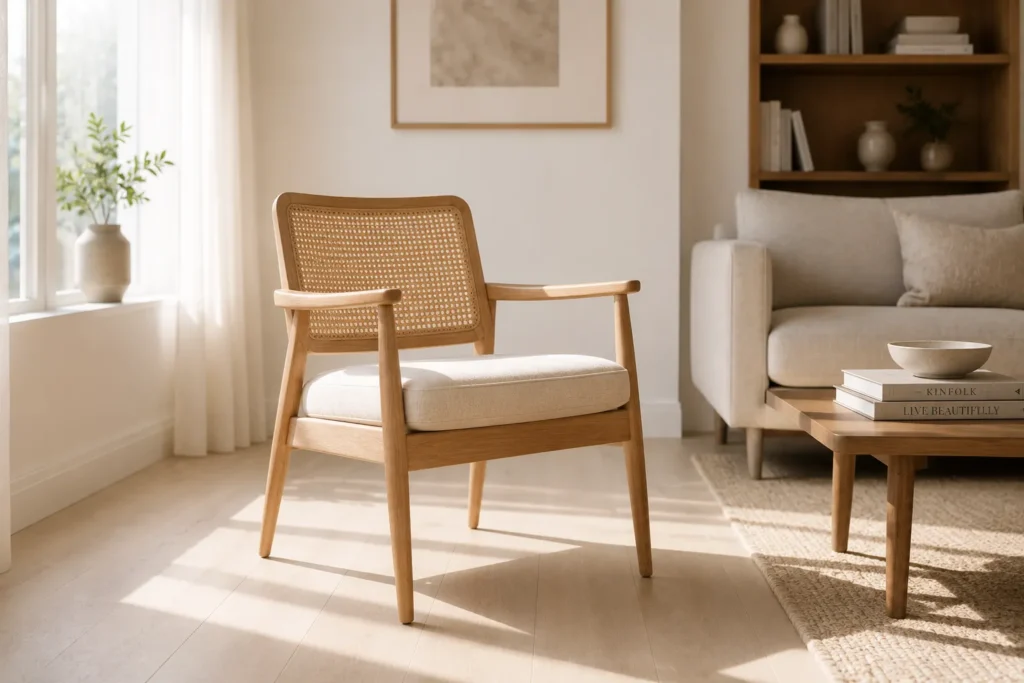
Furniture that sits low and heavy on the floor, like a bulky sectional with a skirt, can make a room feel more closed in. Pieces with visible, slender legs let light pass underneath, which tricks the eye into seeing more open floor space.
This is a small detail that makes a big difference, especially in smaller apartments or rentals where every square foot matters. A wooden leg on a sofa or armchair also adds a bit of warmth and character without adding visual weight.
If you already own heavier furniture, you do not need to replace it right away. Just keep this in mind for your next purchase, whether it is a new accent chair or a side table.
8. Limit Wall Decor to One Focal Wall
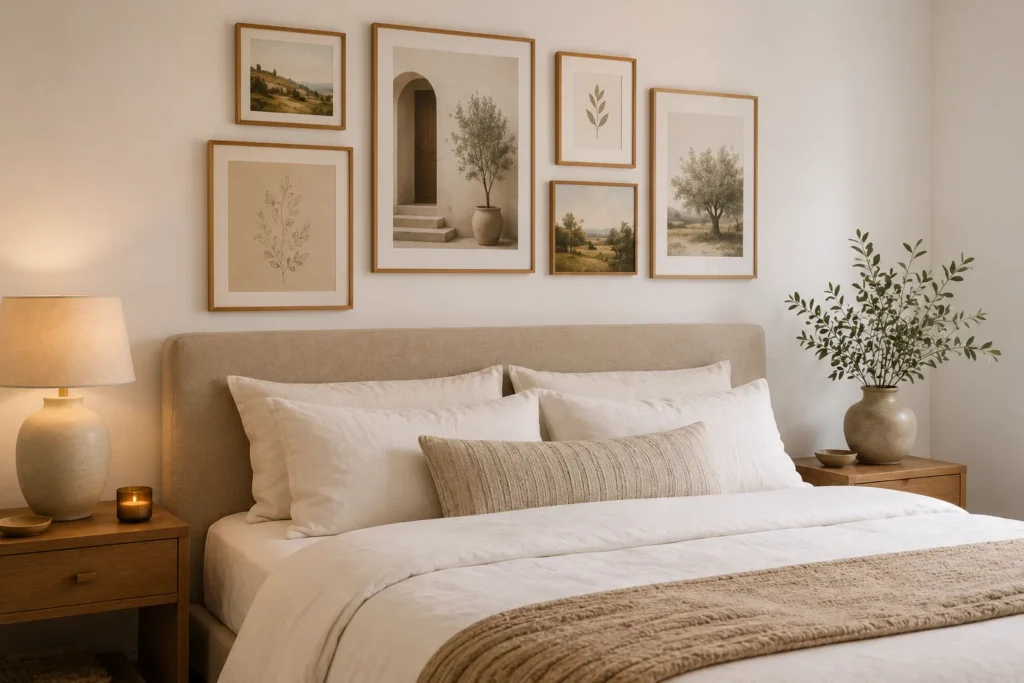
Instead of hanging something on every wall in the room, choose one focal wall and let the others stay simple, maybe just a fresh coat of paint or nothing at all.
This is one of those curiosity points most people never think about. A room with decor on every single wall can feel busy and tiring to sit in, even if each piece is beautiful on its own. When you dedicate your effort and budget to one strong focal wall, the whole room feels more intentional and put together.
In a bedroom, this is often the wall behind your headboard. In a living room, it is usually the wall behind your main seating area.
9. Store Instead of Display
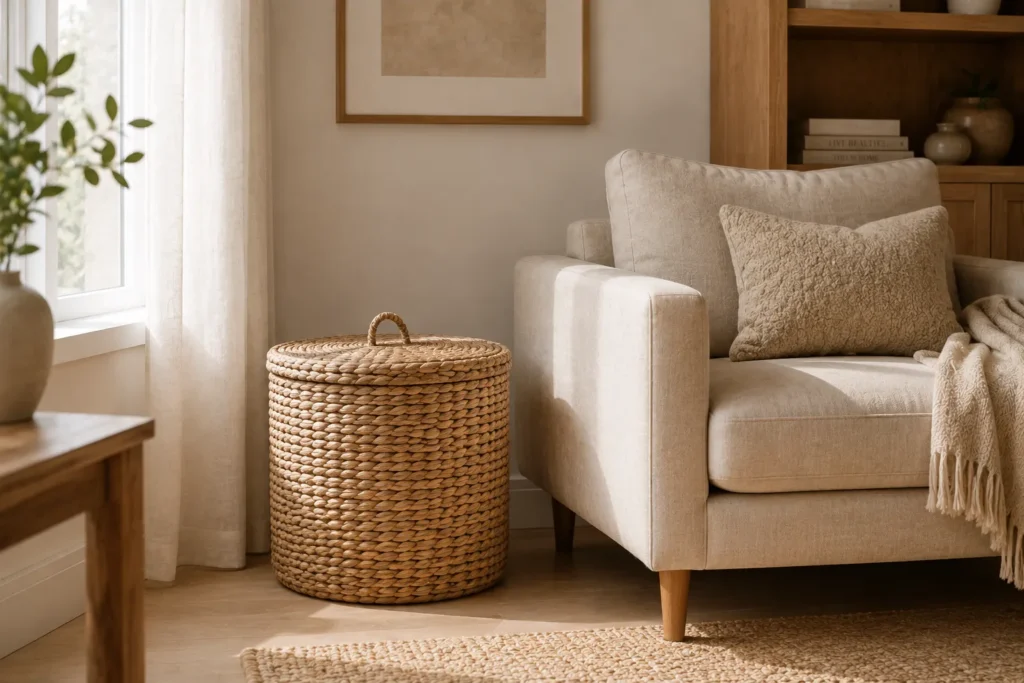
Not everything you own needs to be on a shelf. Some of your favorite items, seasonal decor, extra books, sentimental keepsakes, can be stored in a closed cabinet or basket and rotated in every few months.
This keeps your open shelves and surfaces from feeling overloaded, while still letting you enjoy those items later. It also gives your home a sense of freshness every season, since you are essentially redecorating with things you already own instead of buying new.
A woven basket with a lid in the corner of your living room is a simple, budget-friendly way to store extra throw blankets or toys without them taking over the room visually.
[INTERNAL LINK OPPORTUNITY: budget-friendly storage solutions for small homes]
10. Add Warmth With Texture, Not More Stuff
A room can start to feel cold once you start removing extra items, and that is a common worry people have about the less is more style. The fix is not to add more objects back in. The fix is to add texture instead.
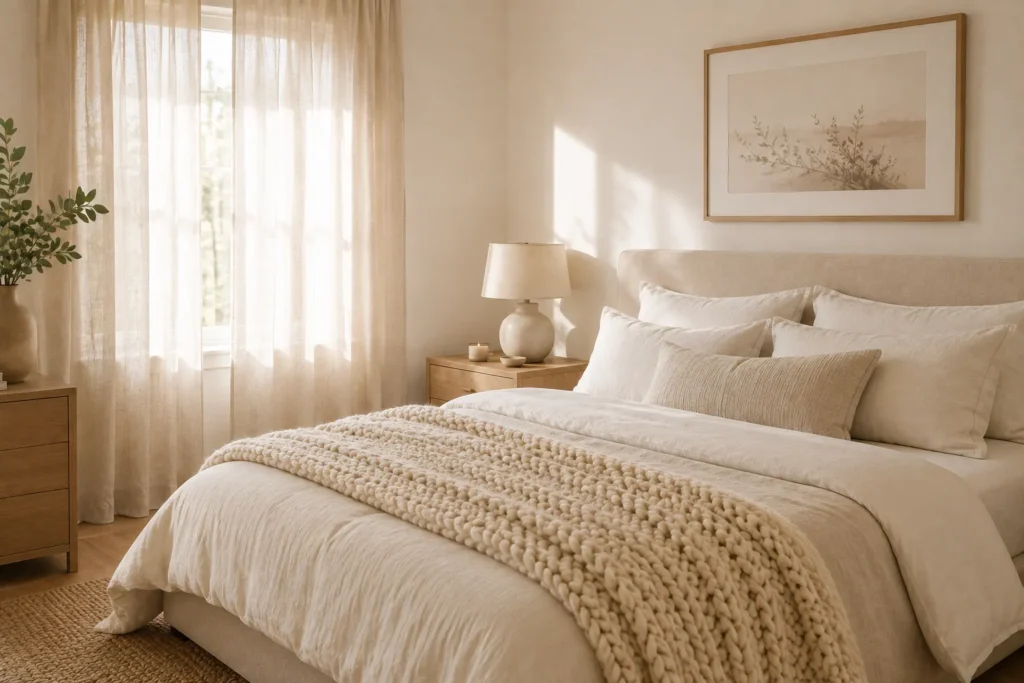
A chunky knit throw, a linen curtain, a wood grain coffee table, or a woven basket all add warmth and depth to a room without adding visual clutter. Texture engages the eye and the hand in a way that flat, matching decor never quite manages.
This trick is especially useful in minimalist bedrooms, where a few well chosen textured pieces, like a waffle knit blanket or a boucle accent chair, can make the whole room feel cozy instead of stark.
[INTERNAL LINK OPPORTUNITY: cozy minimalist bedroom ideas on a budget]
Final Thoughts
If your home has felt cluttered and unfinished no matter how much you add to it, you are not missing more decor. You are probably just missing the courage to take some away. Start with one surface, one shelf, or one pillow pile this week and see how much calmer that single corner feels. Less is more is not a rule you have to follow perfectly. It is simply permission to keep only what you truly love, and let the rest go. Try one of these ideas this week and save this list for the next time your space starts to feel like too much again.
Image Alt Text Suggestions
- Small living room with one large abstract art print above a neutral sofa as the single statement piece
- Clean entryway table styled with a small wooden tray and a single stem vase for a less is more look
- Living room with one large neutral area rug anchoring a sofa and two armchairs
- Bedroom decorated in a soft beige and white color story with a terracotta throw blanket accent
- Bookshelf styled with books, one plant, and open negative space between groupings
- Sofa styled with exactly three coordinated neutral throw pillows
- Light wood accent chair with slender tapered legs in a bright airy living room
- Bedroom with a styled gallery wall focal point behind the headboard and simple bare walls elsewhere
- Living room corner with a closed lid woven storage basket beside an armchair
- Minimalist bedroom with a chunky knit throw blanket, linen curtains, and a wood nightstand
FAQ Section
What does “less is more” mean in home decorating? It means choosing fewer, more intentional pieces instead of filling every space with decor. The goal is a room that feels calm and pulled together, not empty or unfinished.
Will a less is more style make my home feel cold or boring? Not if you use texture and warm materials like wood, linen, and knit fabrics. Warmth comes from texture and color choices, not from the number of objects in a room.
How do I start decluttering without getting overwhelmed? Start with just one surface or one shelf. Clear it completely, live with it empty for a few days, then add back only what you truly use or love.
Is less is more decorating budget friendly? Yes, in many ways it can save you money since you are buying fewer, better quality pieces instead of constantly adding new decor. It also makes it easier to shop with intention instead of impulse.
Does this style work in a small apartment or rental? It works especially well in small spaces since fewer, well chosen pieces make rooms feel larger and less cramped. Many of these tricks, like clearing surfaces or choosing one larger rug, do not require any permanent changes.
How many throw pillows should I actually have on a sofa? Three pillows per sofa is a good general rule. It adds comfort and style without making the couch feel cluttered or hard to actually sit on.


