

10 Summer Sunscreen Spray Ads to Inspire Your Brand
Summer is the busiest season for sunscreen sales, and it is also the most crowded time to run an ad. Every skincare brand is fighting for the same scroll, and most of the ads start to look the same after a while. If you have ever stared at a blank campaign brief wondering how to make your spray sunscreen stand out, you are not alone.
The good news is that a few small creative choices can make a huge difference in how people respond to your ad. Below are 10 sunscreen spray ad concepts that use real emotional triggers, clear messaging, and visuals people actually stop for. Use them as a starting point for your next summer campaign.
1. The Beach Bag Essentials Ad
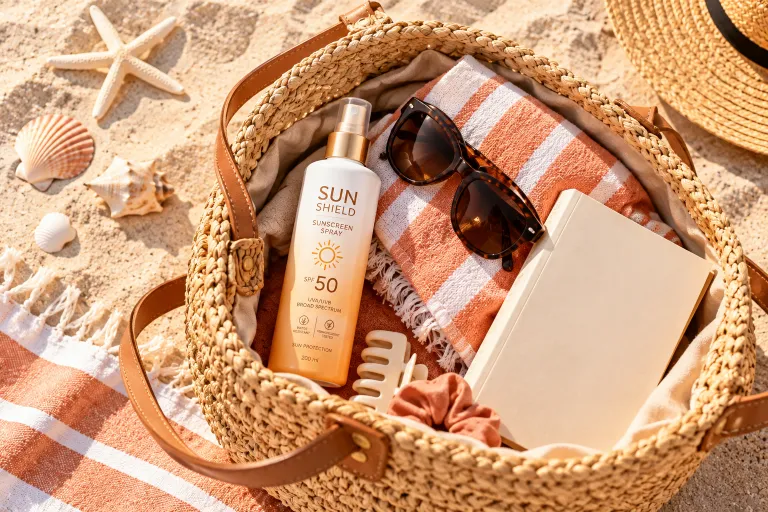
Show your sunscreen spray sitting inside an open beach bag next to a towel, sunglasses, and a paperback book. This kind of ad works because it places your product inside a moment the customer already imagines themselves in.
The key is keeping the scene a little messy and real, not perfectly staged. A sandy towel corner or a slightly open bag flap makes it feel like a real trip instead of a studio shoot. Pair the image with a short line about grabbing it and going, since convenience is one of the biggest reasons people choose a spray over a lotion.
2. The Application Speed Comparison
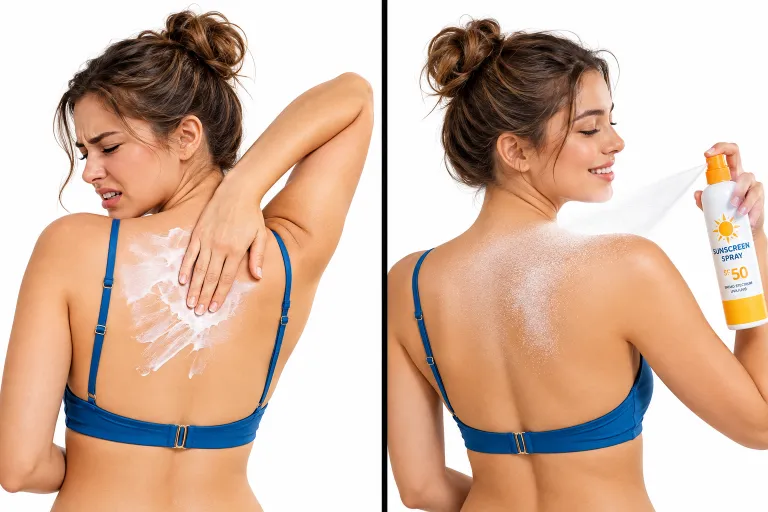
Many people still assume spray sunscreen is less effective than lotion, so this is a mistake worth addressing directly. Create a simple side by side visual or short video showing how fast a spray covers the shoulders and back compared to rubbing in a lotion by hand.
A common mistake brands make here is only showing the product, not the problem it solves. Instead, show a person struggling to reach their own back with lotion, then cut to the same person using the spray in seconds. This mistake and fix pattern builds trust because it acknowledges a real frustration before offering the solution.
3. The Family Vacation Moment
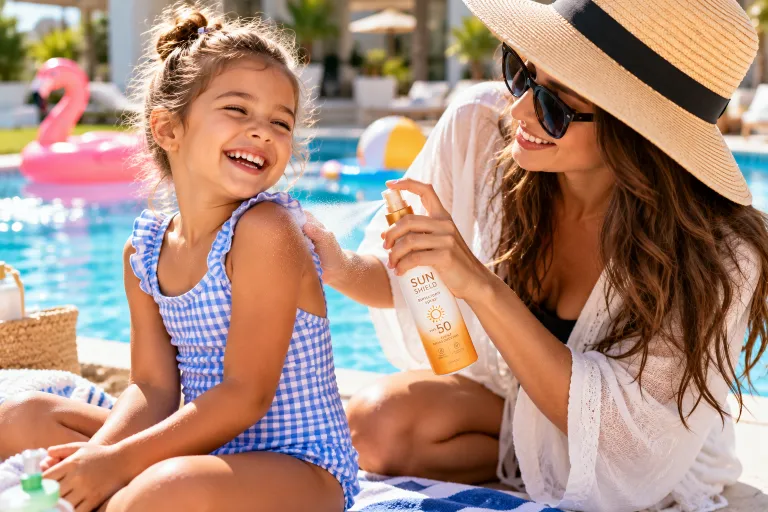
Parents are one of the biggest buying groups for sunscreen spray because it is faster to apply on wiggly kids. An ad built around a family at the pool or beach, with a parent quickly spraying a child mid laugh, taps into that exact use case.
Keep the copy focused on speed and coverage rather than generic claims. Something like a note about getting the kids covered before they run back into the water works better than a vague promise of protection. This kind of scene also works well as a save worthy pin because parents often bookmark products for their next family trip.
4. The Mineral Sunscreen Close Up
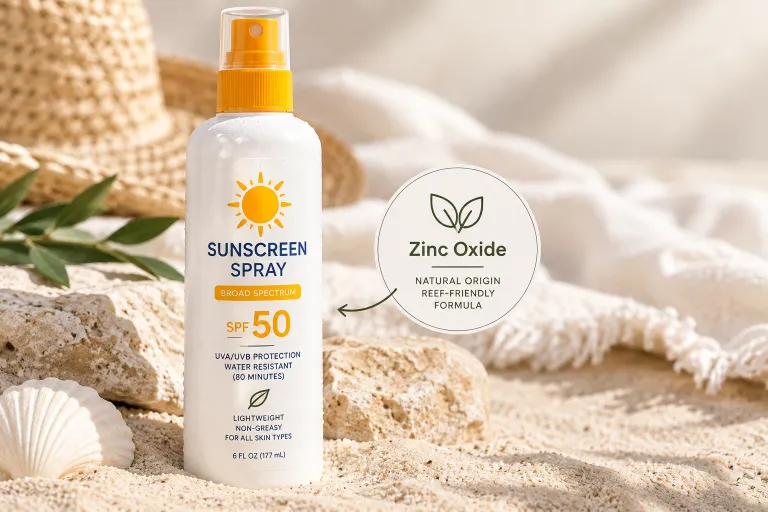
If your spray uses mineral active ingredients like zinc oxide, this is worth highlighting on its own. A close up shot of the bottle with a small callout listing the mineral ingredient and a phrase like reef friendly or gentle on sensitive skin speaks directly to a growing group of ingredient conscious shoppers.
This angle works especially well for sensitive skin or clean beauty audiences who read labels before buying. Avoid vague claims here. Naming the actual active ingredient and explaining briefly why it matters, such as sitting on top of the skin instead of absorbing in, gives the ad real credibility instead of empty marketing language.
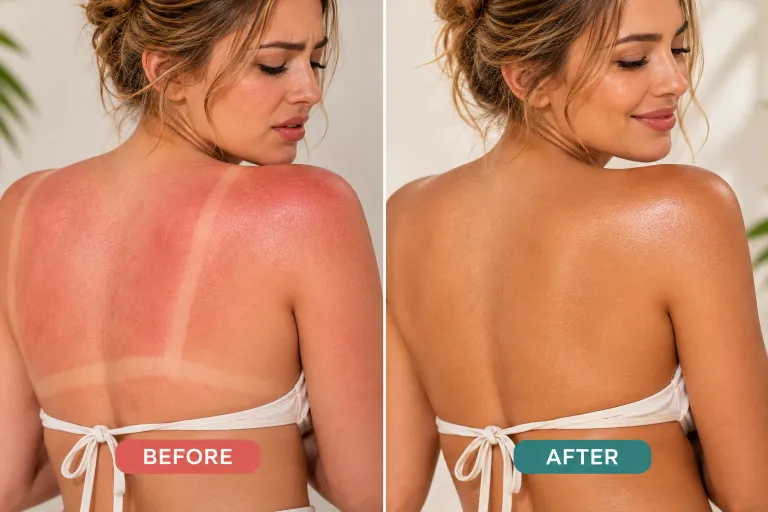
5. The Before and After Sunburn Story
A well done before and after ad is one of the strongest formats for sunscreen because it shows a consequence people fear. This does not need to be graphic or alarming. A simple split image of pink shoulders next to protected, even toned skin gets the point across.
Pair this with a short caption about a trip that almost got ruined by sunburn, then how the spray changed the routine. Personal, story driven captions tend to outperform generic product descriptions because they feel like a real recommendation from a friend rather than an ad.
6. The On the Go Lifestyle Shot
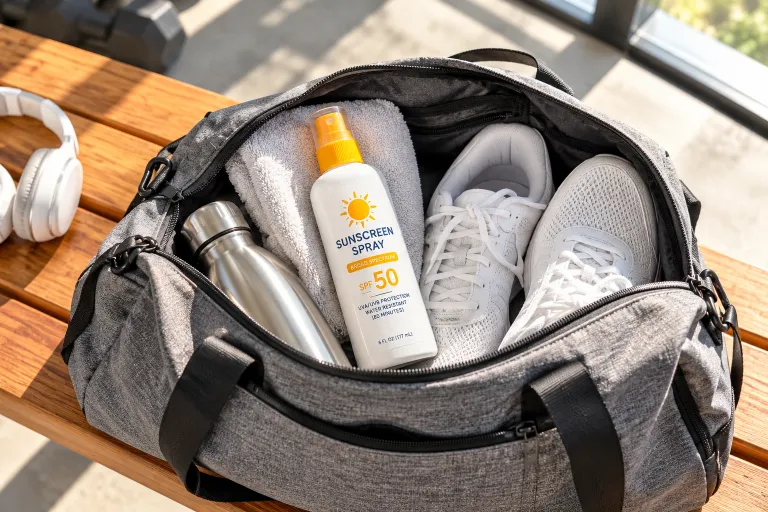
Not every sunscreen moment happens at the beach. Show your spray being tossed into a gym bag, a car cup holder, or a work tote. This use case framing helps people picture the product fitting into everyday life, not just vacation days.
Most people overlook the fact that sun exposure happens during a regular commute, a lunchtime walk, or an outdoor workout, not only on vacation. An ad that points this out gently, without sounding preachy, can open up a whole new reason for someone to buy your product year round instead of only in June.
7. The Ingredient Transparency Ad
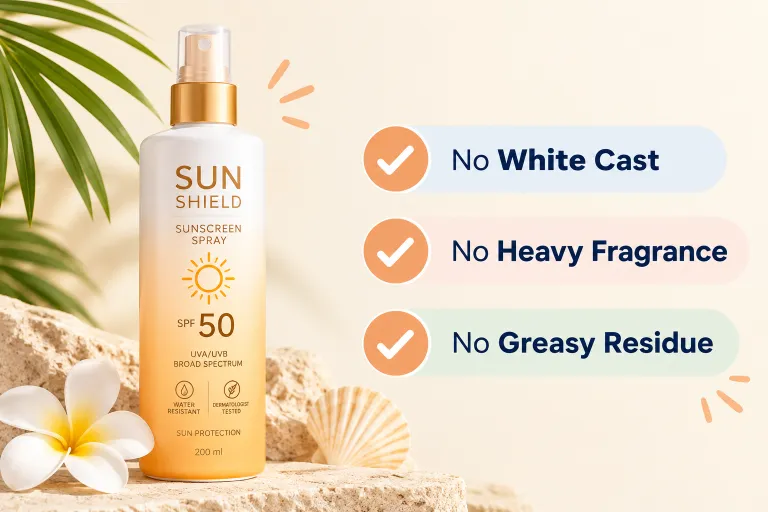
Shoppers today want to know what is not in a product just as much as what is in it. A clean, simple graphic listing what your spray leaves out, such as no white cast, no heavy fragrance, or no greasy residue, addresses common hesitations before they even come up.
This format works especially well as a carousel or multi image pin, since each claim can get its own small visual. Keep the design simple with plenty of white space so the information is easy to scan quickly, which matters a lot on a platform where people are scrolling fast.
8. The Texture and Finish Demo
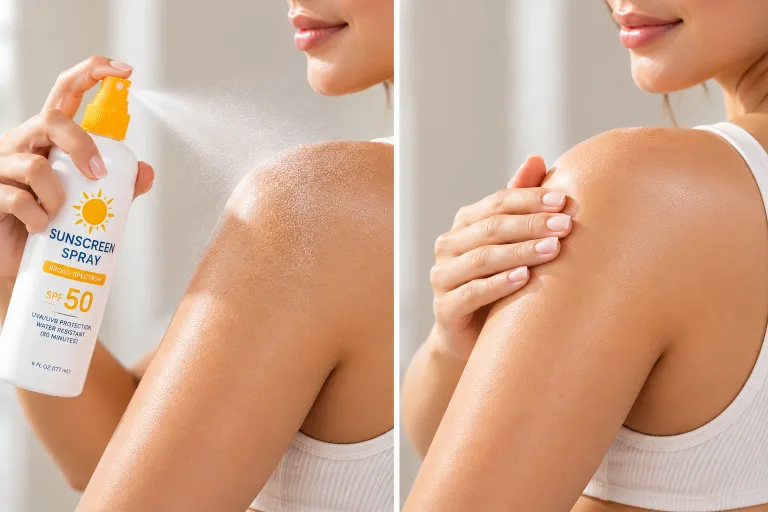
One of the biggest objections to spray sunscreen is the fear of a sticky or greasy finish. A short video or image sequence showing the spray being applied and then blended in with a quick rub, revealing a matte or natural finish, directly answers that concern.
This is a good spot to use the mistake plus fix pattern again. Many people spray too close to the skin, which causes pooling and a sticky feel. Showing the correct spraying distance, usually four to six inches away, along with the smooth result, teaches the customer something useful while showcasing the product at the same time.
9. The Seasonal Bundle Offer
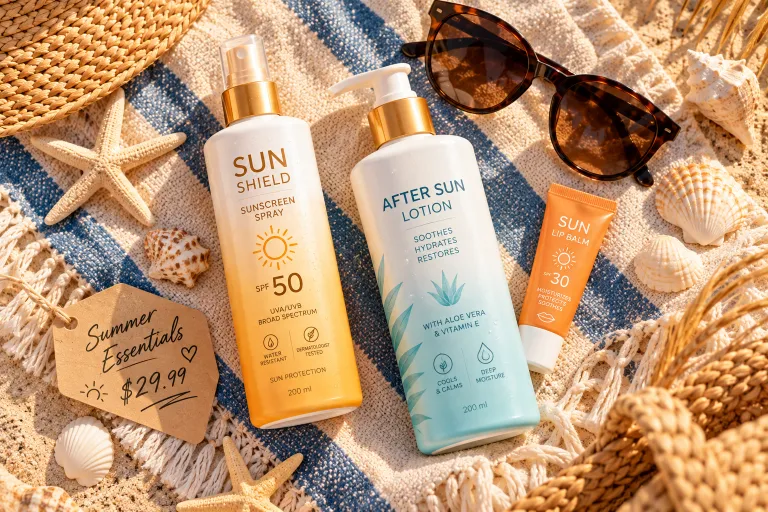
Summer shoppers often stock up rather than buying one bottle at a time. An ad built around a bundle, such as a spray sunscreen paired with an after sun lotion or a lip balm with SPF, appeals to people planning for a whole trip or season rather than a single day out.
Style the product flat lay with warm, sunny tones and a small handwritten style price or discount callout. This kind of ad tends to get saved because people bookmark deals to come back to later, especially right before a trip when they are finalizing their packing list.
10. The Real Customer Review Ad
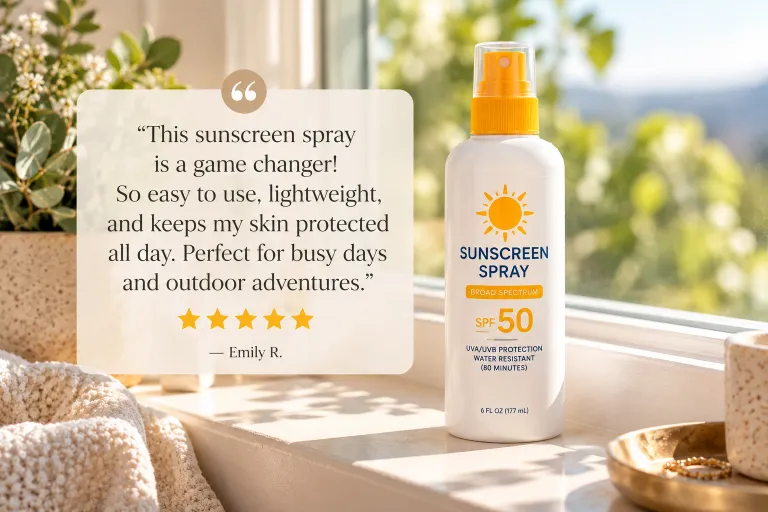
Nothing builds trust faster than a real voice. Turn an actual customer review into the main visual of your ad, styled as a simple quote graphic over a lifestyle photo of the product in use. Keep the review short and specific rather than a generic five star rating.
A review that mentions a specific detail, such as how it did not leave a white cast on darker skin tones or how it held up during a full day at the lake, feels far more believable than a vague compliment. This kind of specific, honest detail is what makes people trust a product enough to try it themselves.
Final Thoughts
Standing out in a crowded summer sunscreen market does not require a bigger budget, it requires a clearer idea. Each of these ad concepts works because it starts with a real moment, a real concern, or a real question your customer already has in their head. Pick two or three that fit your brand’s voice and try them this season before the summer rush is over. You might be surprised how much a small creative shift changes the way people respond to your ad.
Image Alt Text Suggestions
- Open beach bag with sunscreen spray, sunglasses, towel, and book on sand
- Split screen comparison of lotion application versus sunscreen spray application
- Parent spraying sunscreen on a laughing child at a sunny pool
- Close up of mineral sunscreen spray bottle with ingredient callout graphic
- Before and after image of sunburned skin versus sun protected skin
- Sunscreen spray bottle in a gym bag with sneakers and water bottle
- Graphic listing what a sunscreen spray does not contain
- Sunscreen spray being applied at correct distance with smooth skin finish
- Flat lay of sunscreen spray, after sun lotion, and SPF lip balm
- Quote graphic featuring a customer review over sunscreen product background
FAQ Section
Is spray sunscreen as effective as lotion sunscreen?
Yes, as long as it is applied evenly and in enough amount. The key is spraying close enough to the skin and rubbing it in slightly to make sure there are no missed spots.
Why do some sunscreen sprays leave a white cast?
This usually happens with mineral sunscreens that use higher concentrations of zinc oxide. Rubbing the spray in fully right after application helps reduce this effect.
How close should you hold a sunscreen spray to your skin?
Most sunscreen sprays work best held four to six inches away from the skin. Holding it too close can cause pooling and a sticky feeling.
Can sunscreen spray be used on the face?
Some sprays are labeled safe for the face, but many recommend spraying into your hands first and then applying to avoid inhaling the mist. Always check the product label for face specific instructions.
Why is ingredient transparency important in sunscreen marketing?
Shoppers increasingly want to know exactly what is and is not in their skincare products. Clearly listing ingredients and what is left out builds trust faster than vague marketing claims.
What makes a sunscreen ad more likely to get saved on Pinterest?
Ads that feel useful on their own, like a tip, a comparison, or a real customer story, tend to get saved more than straightforward product photos, since people bookmark them to reference again later.


