

10 Beach Sunscreen Packaging Designs Made for Summer
Digging through your beach bag for sunscreen only to find a sticky, sandy mess is one of the most annoying parts of a summer trip. You want something that protects your skin, fits easily in your bag, and does not leak all over your favorite towel. This list walks you through 10 sunscreen packaging designs that solve those exact problems, so your next beach day feels a little more put together.
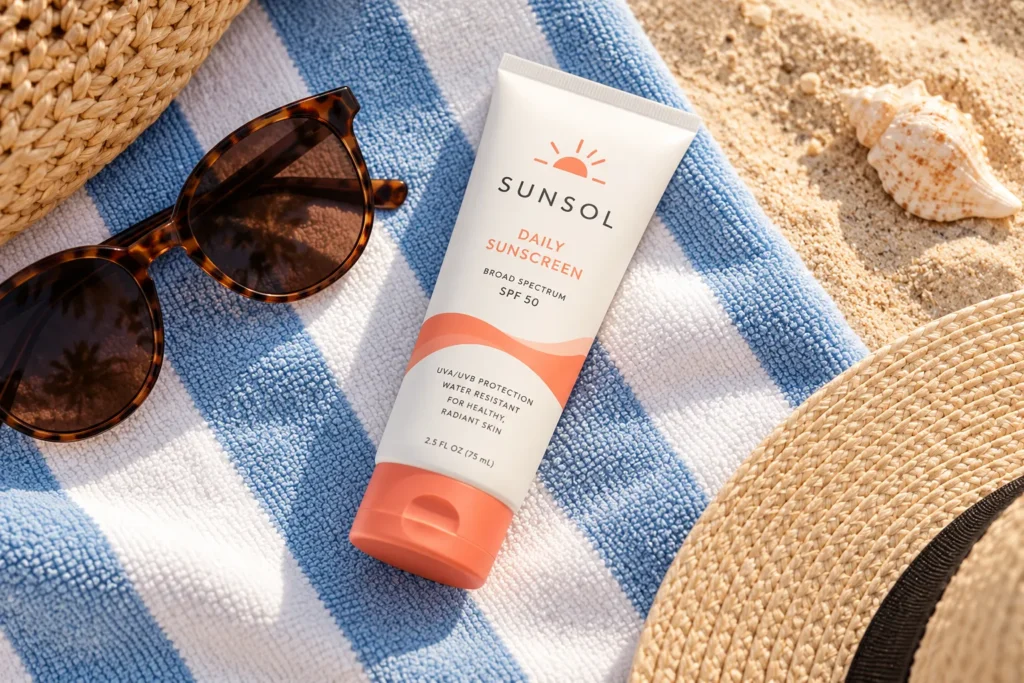
1. Slim Travel Tubes for Easy Packing
A slim, flat tube changes everything when your beach bag is already packed with towels, snacks, and a paperback. This shape slides into side pockets that a round bottle never fits into. Look for tubes under four ounces so they meet carry on rules if you are flying to the coast.
A common mistake is grabbing the bulky family size bottle for a day trip, then wrestling with it in a crowded bag. Switch to a travel size tube instead and you free up real space for the things you actually want with you, like sunglasses or a book.
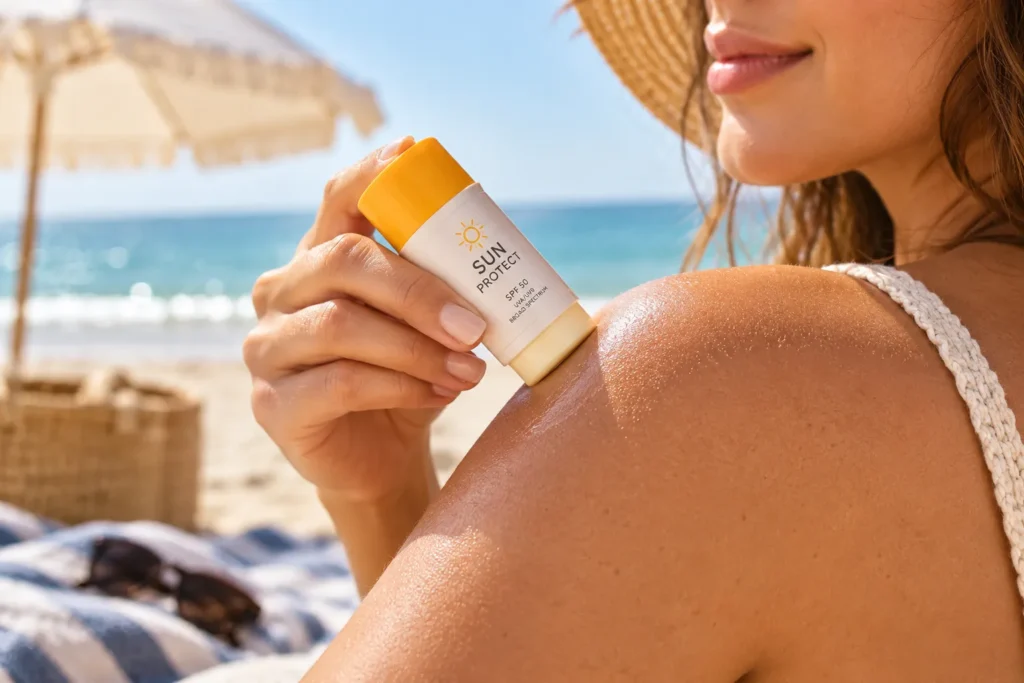
2. Push Up Stick Sunscreen for Mess Free Application
Stick sunscreen in a push up tube means no sunscreen on your hands before you touch your phone or a snack. This format works especially well for reapplying on the nose, ears, and shoulders where lotion tends to drip.
Parents managing squirmy kids on the sand love this one because there is nothing to spill. Twist up, swipe on, twist down, done.
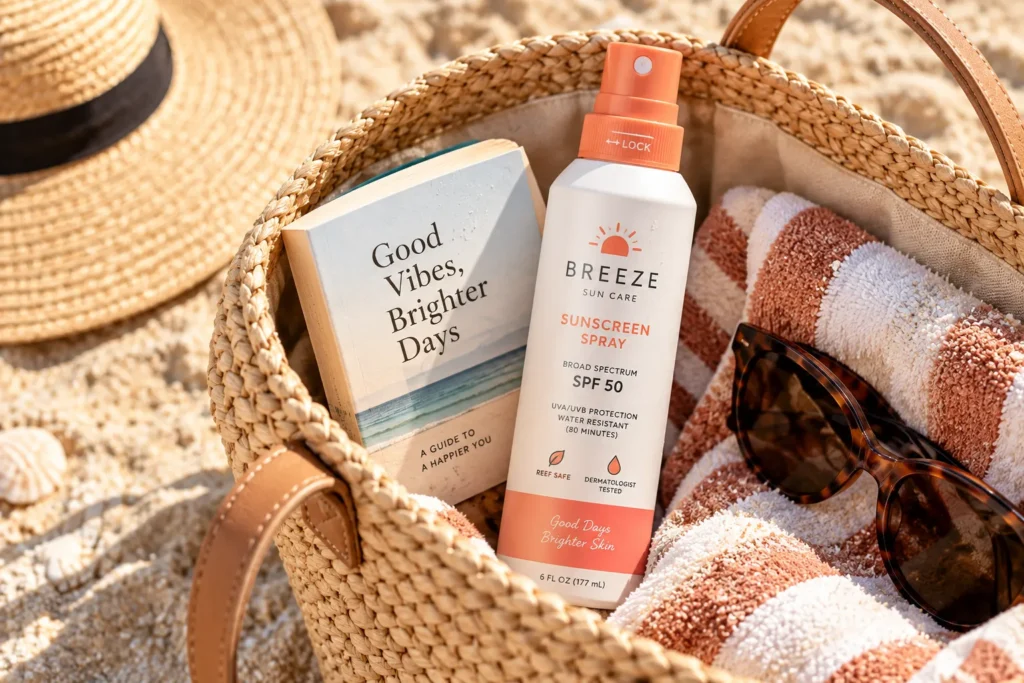
3. Spray Bottles with a Locking Cap
Sunscreen spray is fast for covering large areas like your back and legs, but a bag full of sand at the bottom usually means one thing: a bottle that popped open in transit. A locking cap solves this before it becomes a problem.
Before you toss a spray bottle in your bag, check that the nozzle has a twist lock or a cap that snaps firmly shut. It is a small detail, but it is the difference between dry sand and a sunscreen soaked beach bag.
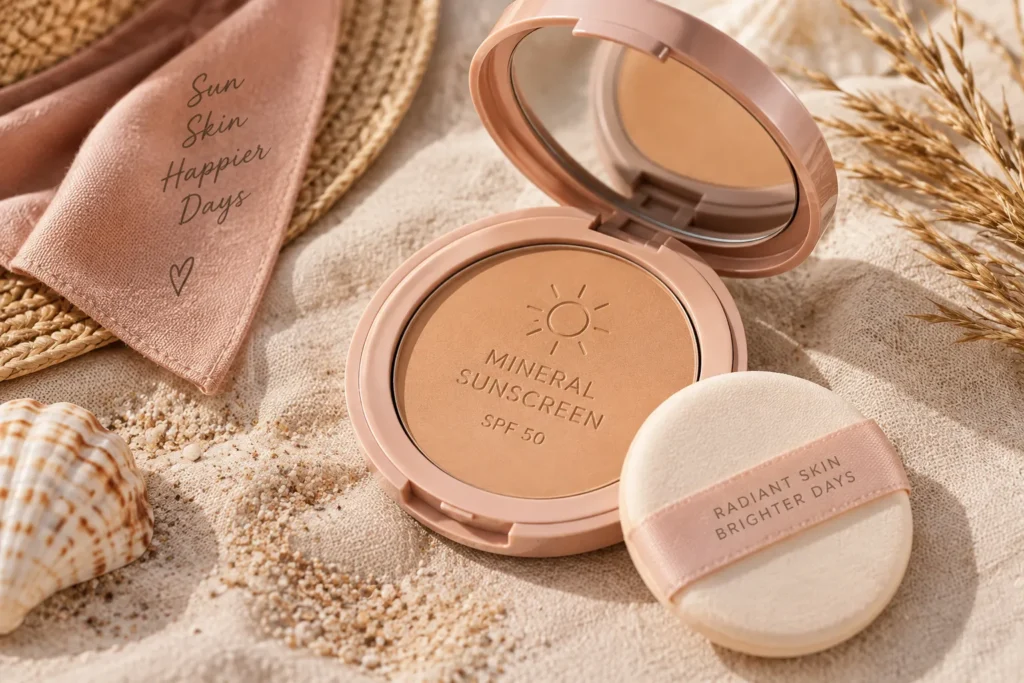
4. Tinted Mineral Sunscreen in a Compact Case
A compact case format works like a pressed powder, which makes it easy to touch up your face without needing a mirror from your bag or getting lotion under your nails. Tinted mineral formulas also double as light coverage, so you can skip an extra makeup step on hot days.
This is worth trying if you usually avoid reapplying sunscreen on your face because traditional lotion feels heavy or greasy under sweat.
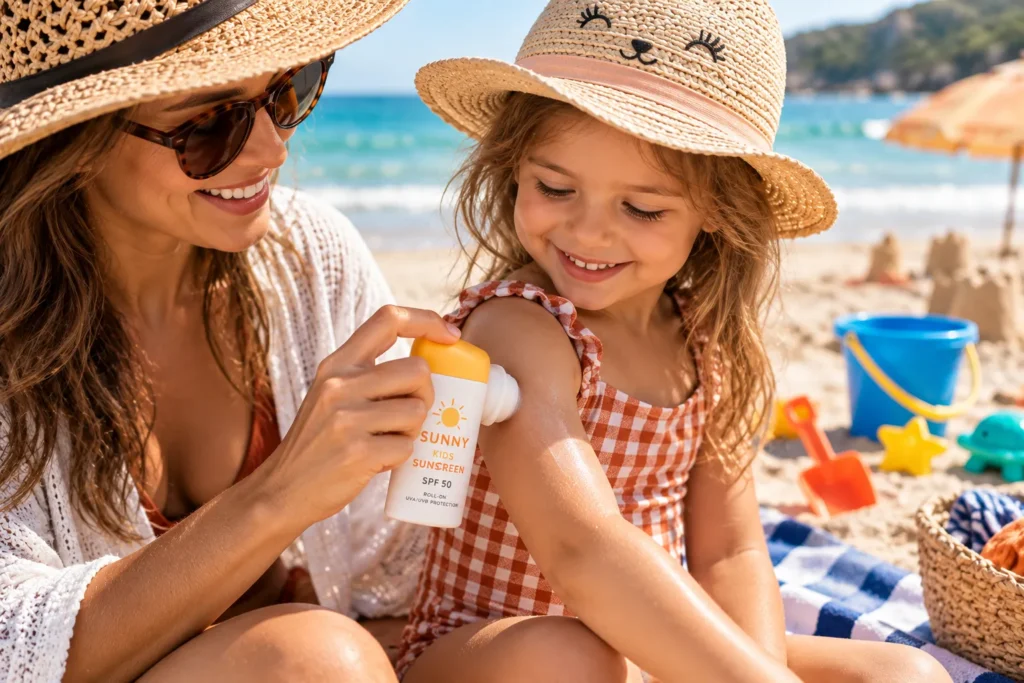
5. Roll On Applicators for Kids and Sensitive Skin
A roll on ball applicator keeps little hands from squeezing out too much product at once, which cuts down on waste and mess. It also spreads sunscreen more evenly than a squeeze bottle, since the ball does the smoothing for you.
Families heading to the beach with toddlers often find this format cuts reapplication time in half, since there is no rubbing lotion in by hand while a wiggly kid tries to run off.
6. Reef Safe Sunscreen in Recyclable Tins
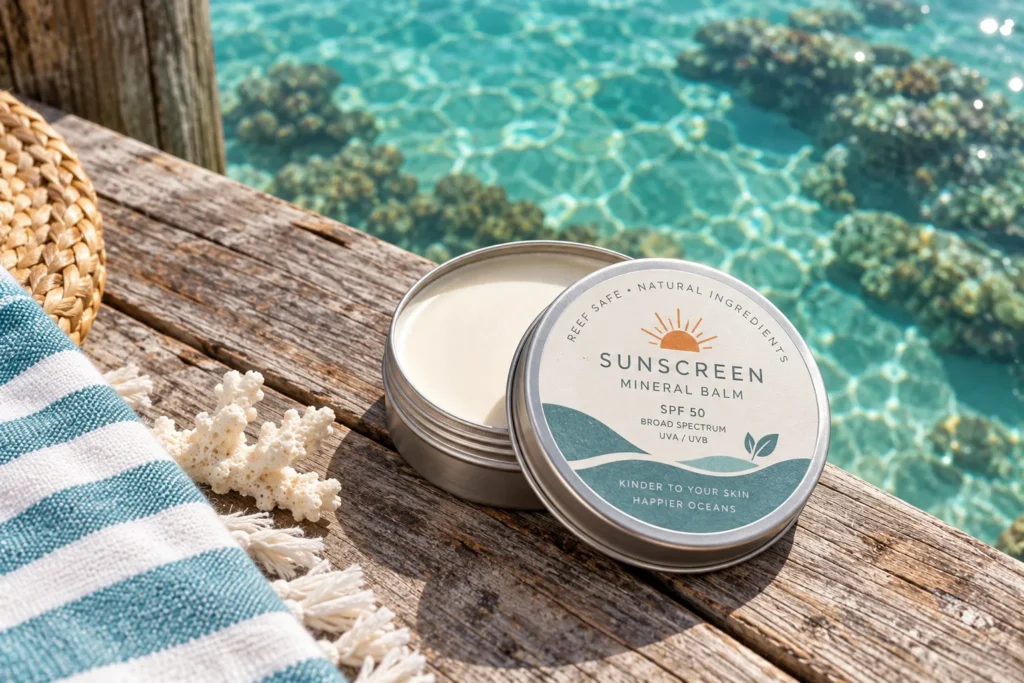
Reef safe formulas without oxybenzone or octinoxate protect coral reefs, and packaging them in metal tins instead of plastic squeeze tubes fits that eco conscious choice all the way through. Tins are also sturdier in a bag than soft tubes, so they hold up better against getting crushed under towels or a cooler.
If you snorkel or swim near reefs regularly, this pairing of reef safe formula and recyclable tin packaging is worth seeking out specifically, since not every reef safe sunscreen ships this way.
7. Two in One SPF and Moisturizer Bottles
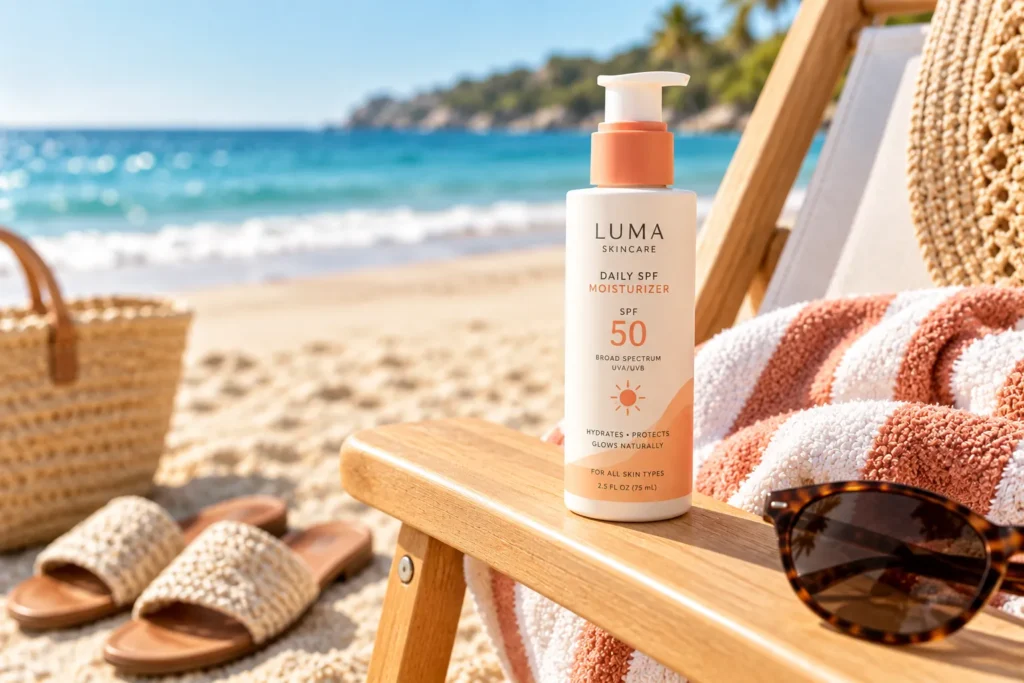
Combining moisturizer and SPF into one bottle cuts a step out of your morning beach prep, which matters most on vacation when you want more time in the water and less time at the sink. Look for a pump bottle design, since pumps dispense a consistent amount and avoid the over pouring that happens with a squeeze bottle.
A mistake people make here is assuming any moisturizer with SPF listed gives full beach level protection. Check the label for broad spectrum SPF 30 or higher, since some daily moisturizers only carry SPF 15, which is not enough for a full day outdoors.
8. Clear Squeeze Tubes with Volume Markers
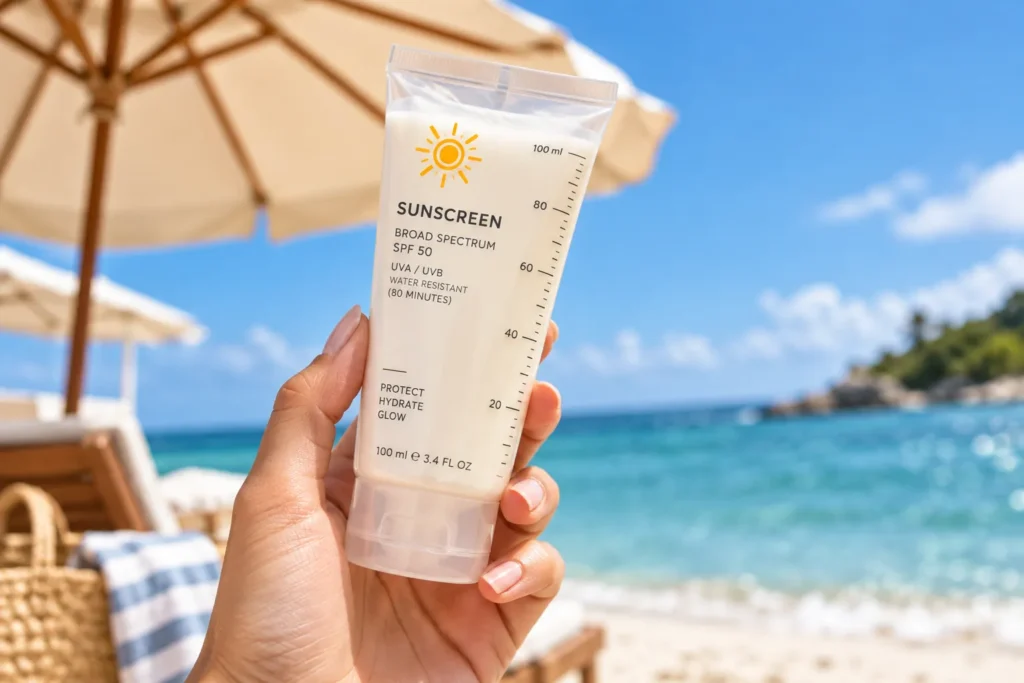
A clear tube with printed volume lines lets you actually see how much sunscreen is left before you run out mid trip. This sounds minor until you are three days into a beach vacation with no idea if your bottle will last the last afternoon.
This packaging style also helps you track how much you are applying, since most people use far less sunscreen than the amount needed for real protection. Seeing the product level makes it easier to use a proper handful each time instead of a light smear.
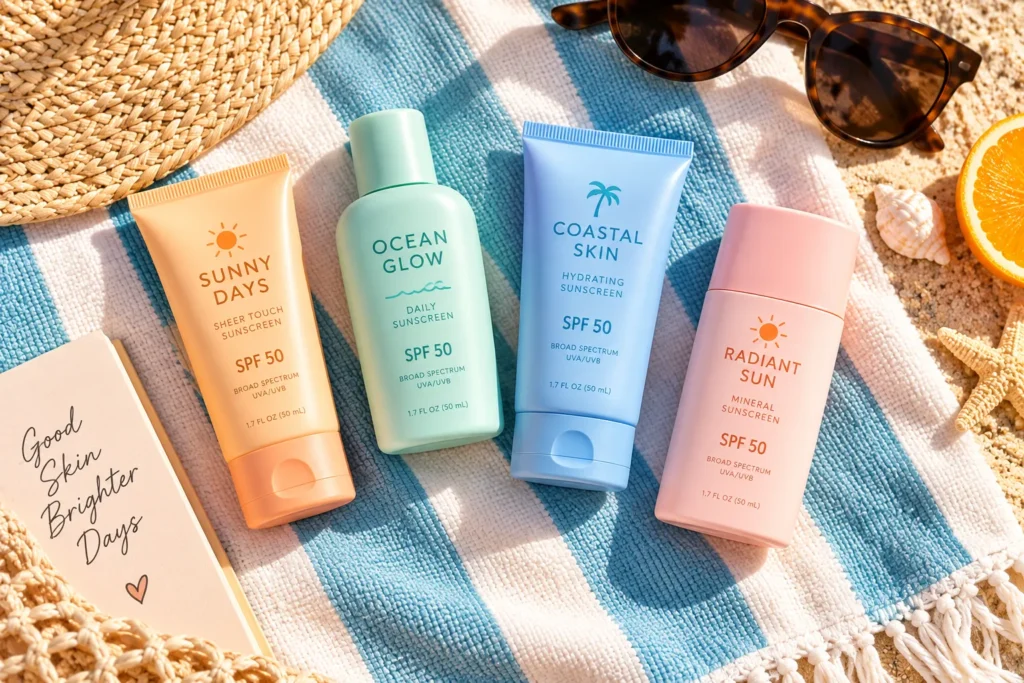
9. Mini Multi Pack Bottles for Sharing
A multi pack of small bottles works well for group trips, since everyone can carry their own without passing one greasy bottle around the whole group. It also solves the awkward moment of running low because one person used more than their share.
Save this idea for family reunions, girls trips, or any beach day where more than three or four people are sharing supplies. Splitting sunscreen this way keeps things sanitary and easier to track.
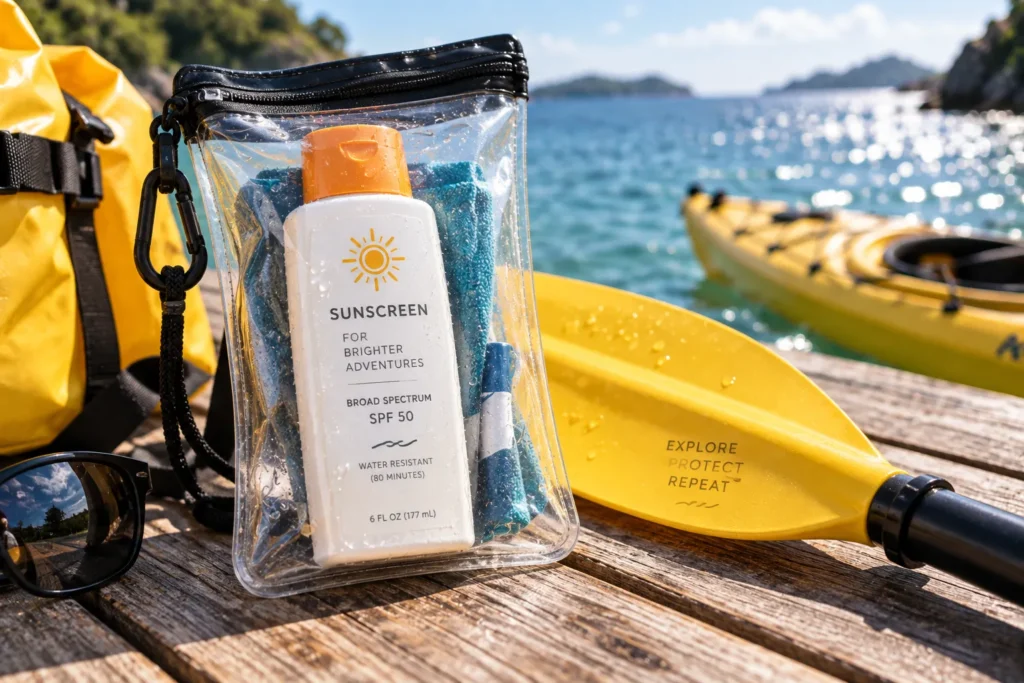
10. Waterproof Pouch Packaging for Extra Protection
Some brands now ship sunscreen bottles inside a small waterproof pouch, which protects against sand getting into the cap threads and keeps salt water from loosening labels. This is especially useful if you are boating, kayaking, or spending most of the day actually in the water rather than lounging on sand.
This is one of those small packaging choices you will not think about until the one time your regular bottle gets ruined by a wave, and then you will want it on every future trip.
Final Thoughts
Packing the right sunscreen should not be the most stressful part of getting ready for the beach. Once you know what packaging actually holds up to sand, water, and long days outside, choosing the right bottle becomes second nature. Pick one or two of these formats to try on your next trip and see how much smoother your beach bag routine feels. Save this list so you have it ready before your next summer getaway.
Image Alt Text Suggestions
- Slim flat sunscreen tube next to folded beach towel and sunglasses
- Push up stick sunscreen being applied to a shoulder at the beach
- Spray sunscreen bottle with locking nozzle in an open beach tote
- Tinted mineral sunscreen compact with sponge applicator open
- Roll on sunscreen applicator used on a child’s arm at the beach
- Reef safe sunscreen tin on a wooden dock near clear water
- SPF moisturizer pump bottle beside a beach chair and towel
- Clear sunscreen tube with volume markers next to a beach umbrella
- Mini pastel sunscreen bottles arranged on a striped beach blanket
- Sunscreen bottle inside a waterproof pouch next to a kayak paddle
FAQ Section
What is the best sunscreen packaging for a beach bag?
A slim, flat tube or a stick applicator usually works best since they take up less space and will not leak the way loosely capped bottles can.
Is spray sunscreen safe to bring on a plane?
Yes, as long as the bottle is under 3.4 ounces or 100 milliliters and packed in your carry on liquids bag, following standard TSA rules.
Why does reef safe sunscreen packaging matter?
Reef safe formulas avoid chemicals that harm coral, and pairing them with recyclable tins reduces plastic waste at popular swimming and snorkeling spots.
How much sunscreen should I actually use at the beach?
Most adults need about one ounce, roughly a full shot glass, to cover exposed skin, and clear tubes with volume markers make it easier to track how much you have used.
Are two in one SPF and moisturizer bottles as effective as regular sunscreen?
They can be, but only if the label shows broad spectrum SPF 30 or higher, since many daily moisturizers only offer SPF 15.
What sunscreen packaging works best for kids?
Roll on applicators and push up sticks tend to work best for kids since they limit mess and make it easier for parents to apply sunscreen quickly.


