

10 Anti Aging Moisturizer Secrets for a Youthful Glow
Do you ever stand in front of the mirror and notice your skin looks a little tired, even after a full night of sleep? You are not imagining it, and you are definitely not alone. Most of us were never taught how to actually use an anti aging moisturizer, we just grab whatever jar looks nice and hope for the best. This article walks you through the small, practical secrets that make a real difference, the kind you can start using tonight.
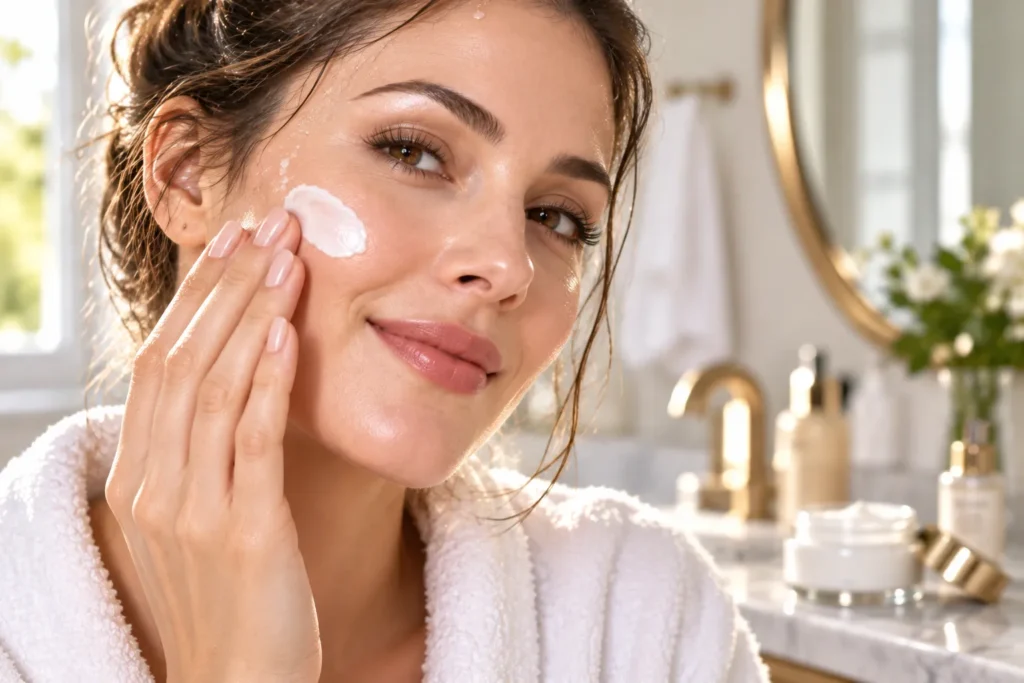
1. Apply Moisturizer on Damp Skin, Not Dry Skin
This one sounds too simple to matter, but it changes everything. When you smooth your anti aging moisturizer onto skin that is still a little damp from cleansing or a toner, it locks in extra water instead of just sitting on the surface.
Think of it like watering a plant, then sealing the soil with a light layer of mulch. The moisture stays where it is needed instead of evaporating into the air. For dry climates or winter months, this small habit alone can make skin look plumper within a week.
2. Do Not Skip the Neck and Chest
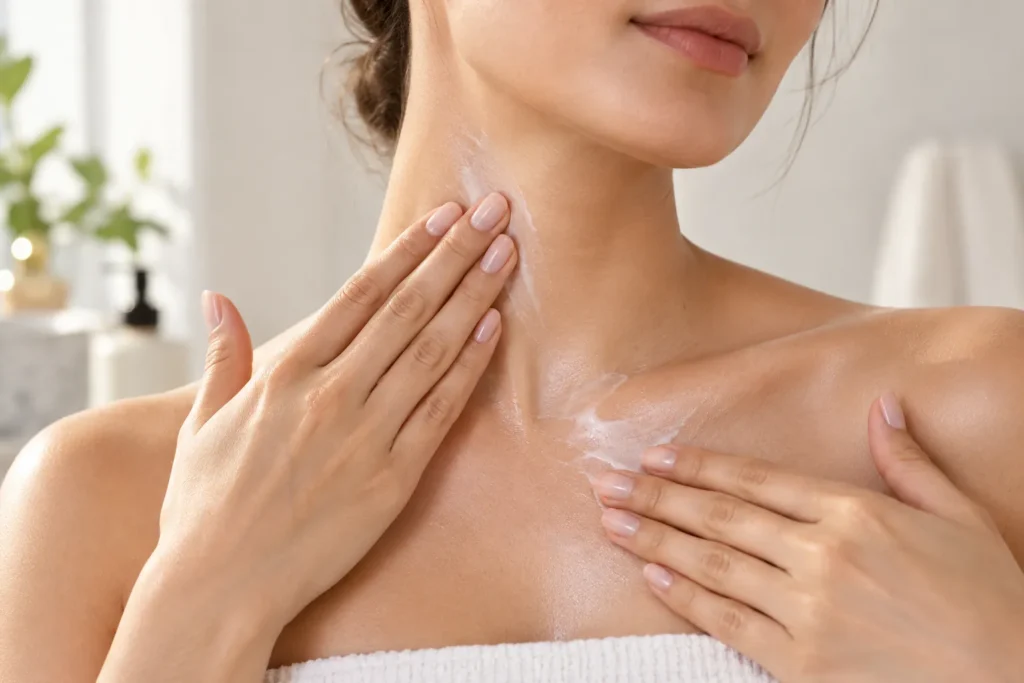
Most people stop their skin care routine right at the jawline, but the neck and chest often show age signs first. Skin there is thinner and has fewer oil glands, so it dries out and loses firmness faster than the face.
A common mistake is using a heavier face cream everywhere but forgetting these areas need attention too. The fix is simple: sweep any leftover moisturizer on your fingers down the neck and chest every single time you apply it to your face. It takes ten extra seconds and pays off over the years.
3. Layer Thin to Thick
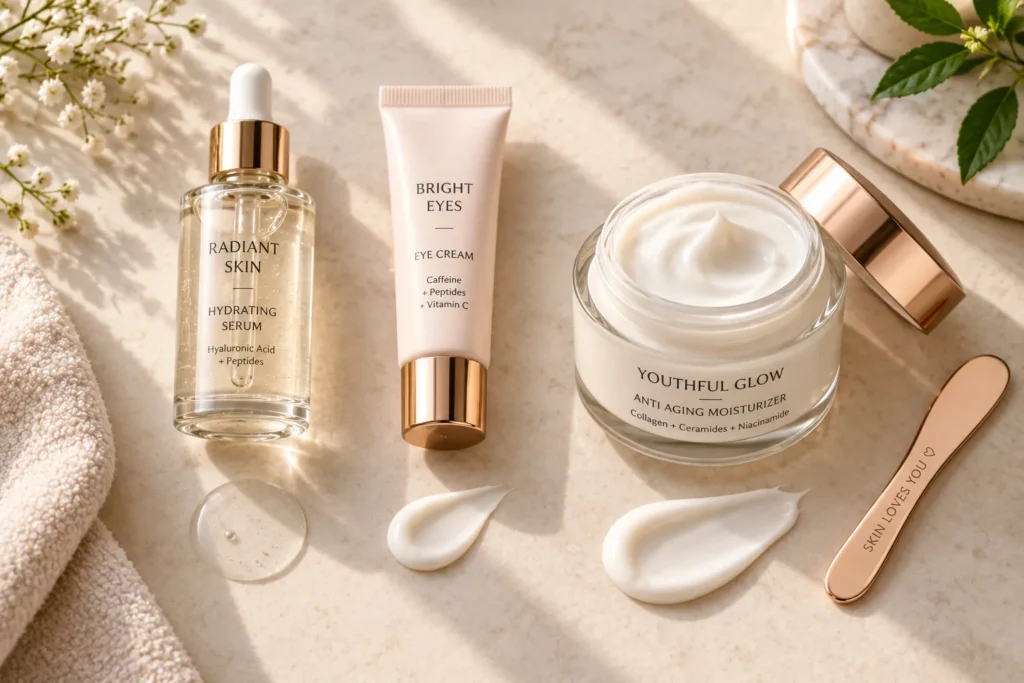
If you use a serum, eye cream, and moisturizer, the order matters more than people realize. Thinner, watery formulas go on first so they can soak in, then thicker creams go on top to seal everything in.
Applying a rich anti aging moisturizer before a lightweight serum creates a barrier that blocks the serum from absorbing at all. That expensive bottle ends up doing almost nothing. Save this order and your routine will finally work the way it is supposed to: cleanser, toner, serum, eye cream, moisturizer, then sunscreen in the morning.
4. Look for Peptides, Not Just Retinol
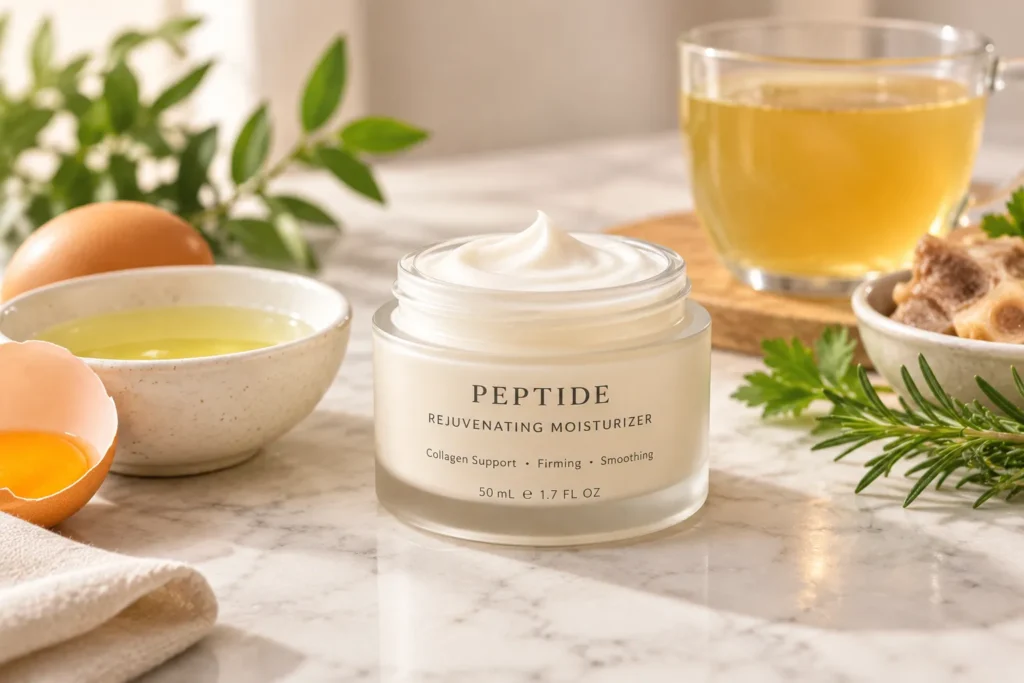
Retinol gets most of the attention in anti aging conversations, but it is not the only ingredient worth knowing. Peptides are small chains of amino acids that signal skin to produce more collagen, and they tend to be gentler for sensitive or reactive skin types.
If retinol has ever left your skin red or flaky, a peptide-based moisturizer can be a kinder starting point. It works well for anyone in their late twenties just starting to think about prevention, as well as for older skin that needs a break from stronger actives.
5. Warm the Product Between Your Palms First
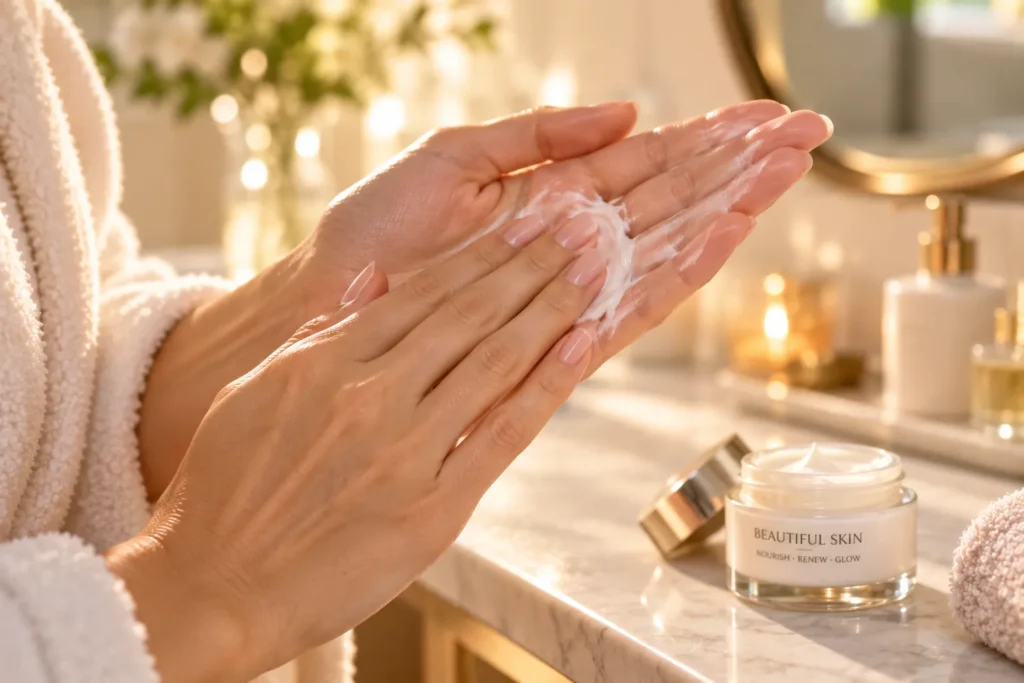
Rubbing moisturizer between your palms before applying it does two things. It warms the formula slightly, which helps it spread more evenly, and it activates any fragrance or botanical oils so the product feels more luxurious to use.
Skipping this step and just dabbing cold product straight from the jar onto your face often leads to patchy application, especially around the nose and hairline. Thirty seconds of warming makes the whole experience feel like a mini spa moment instead of a rushed chore.
6. Do Not Forget SPF Layers on Top
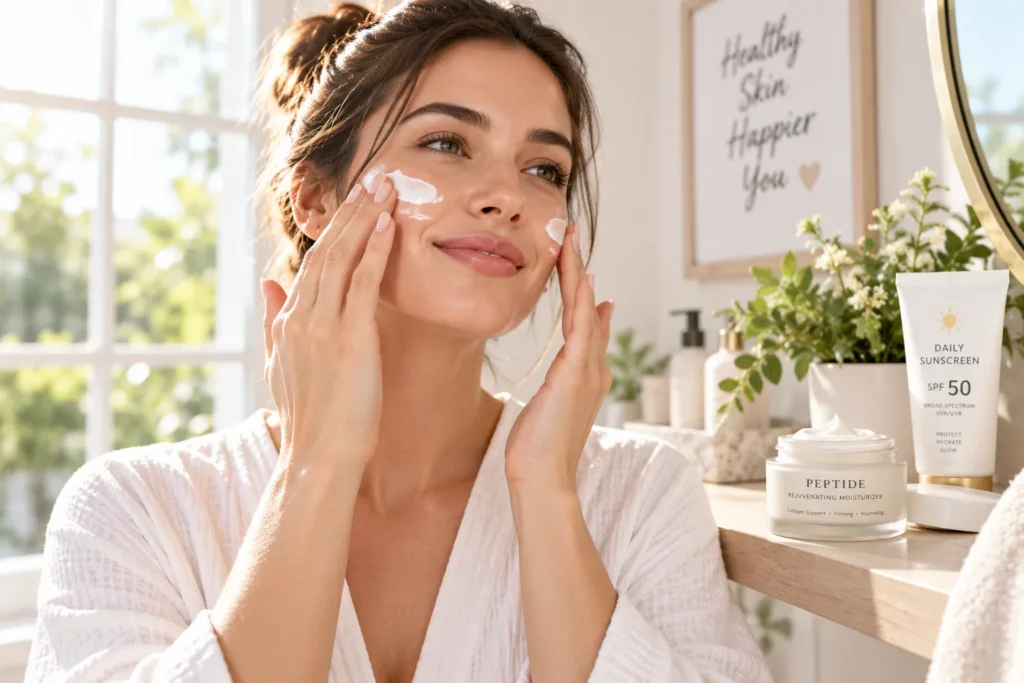
An anti aging moisturizer can do a lot, but it cannot undo daily sun exposure on its own. Sun damage is still the single biggest cause of visible aging, including fine lines, dark spots, and loss of firmness.
The mistake many people make is assuming a moisturizer with a little SPF built in is enough protection for the whole day. Those built-in SPF levels are often too light and wear off quickly. Follow your morning moisturizer with a dedicated sunscreen, and reapply if you are outside for long stretches, especially at the beach or during a midday walk.
7. Match Texture to the Season
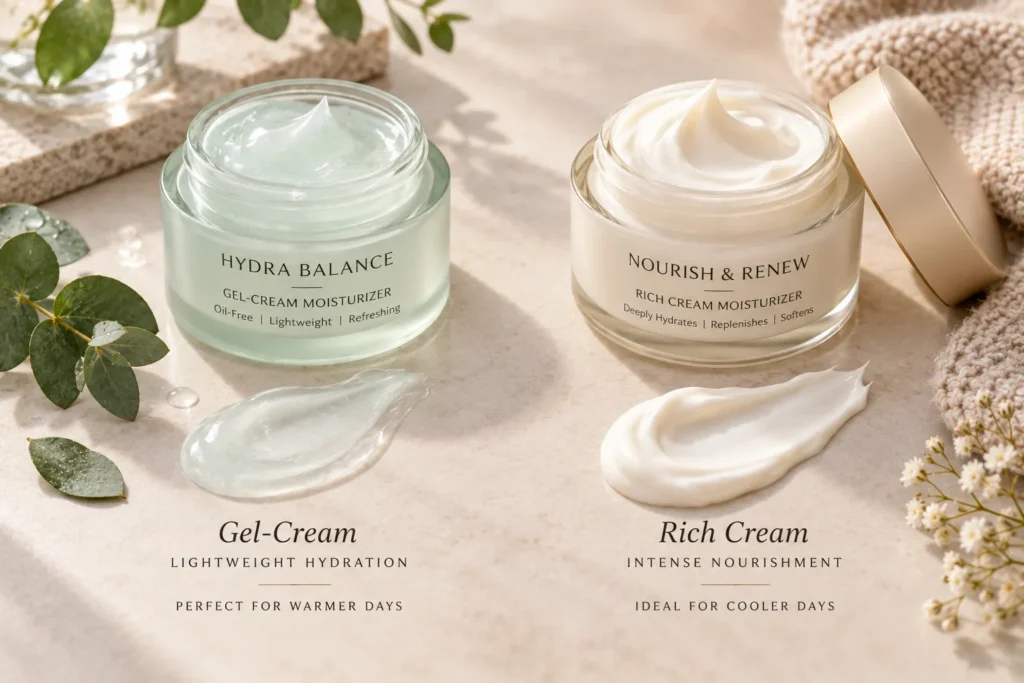
The rich, heavy cream that feels perfect in January can feel suffocating by July. Skin needs change with humidity and temperature, and using the wrong texture either leaves skin greasy or leaves it under-moisturized.
A good rule of thumb is a gel-cream in warmer months and a richer, oil-based cream in colder months. If you live somewhere with big seasonal swings, keeping two moisturizers on rotation is worth the extra shelf space.
[INTERNAL LINK OPPORTUNITY: seasonal skin care routine guide]
8. Massage It In With Upward Strokes
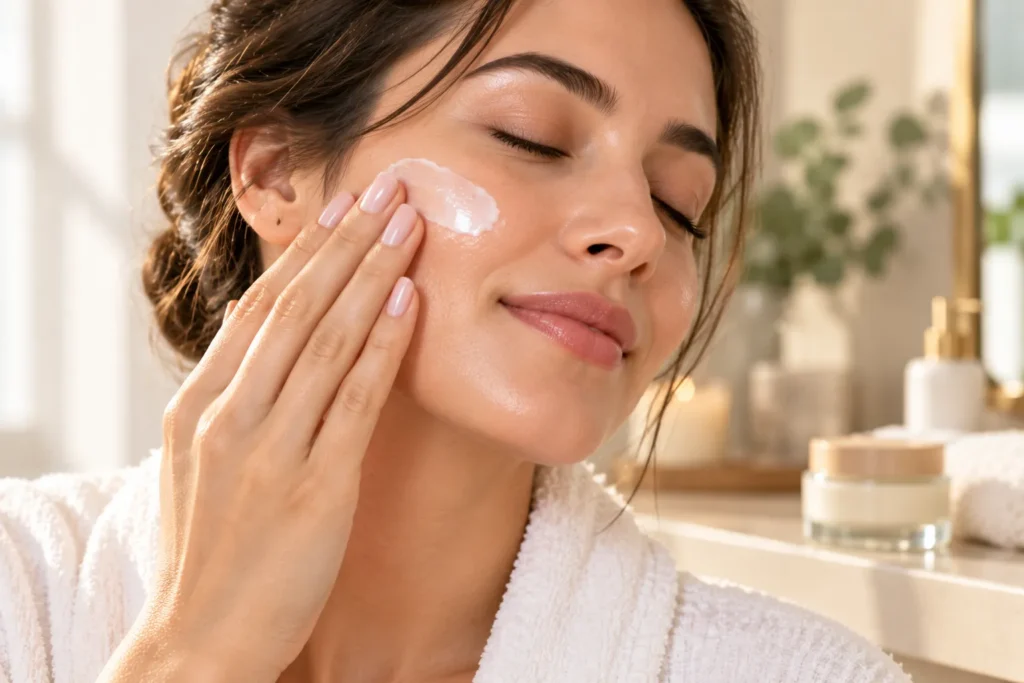
How you apply moisturizer matters almost as much as what you apply. Rubbing product in with quick, downward swipes can pull at the skin over time, especially around the cheeks and jawline.
Instead, use gentle upward and outward strokes, working from the center of your face outward. This small massage also boosts circulation, which can leave skin looking brighter within minutes, not just moisturized.
9. Give New Products at Least Four Weeks
It is tempting to switch moisturizers after just a few days if you do not see instant results, but skin cell turnover takes time. Most dermatologists point to around four to six weeks before a new product shows its real effect.
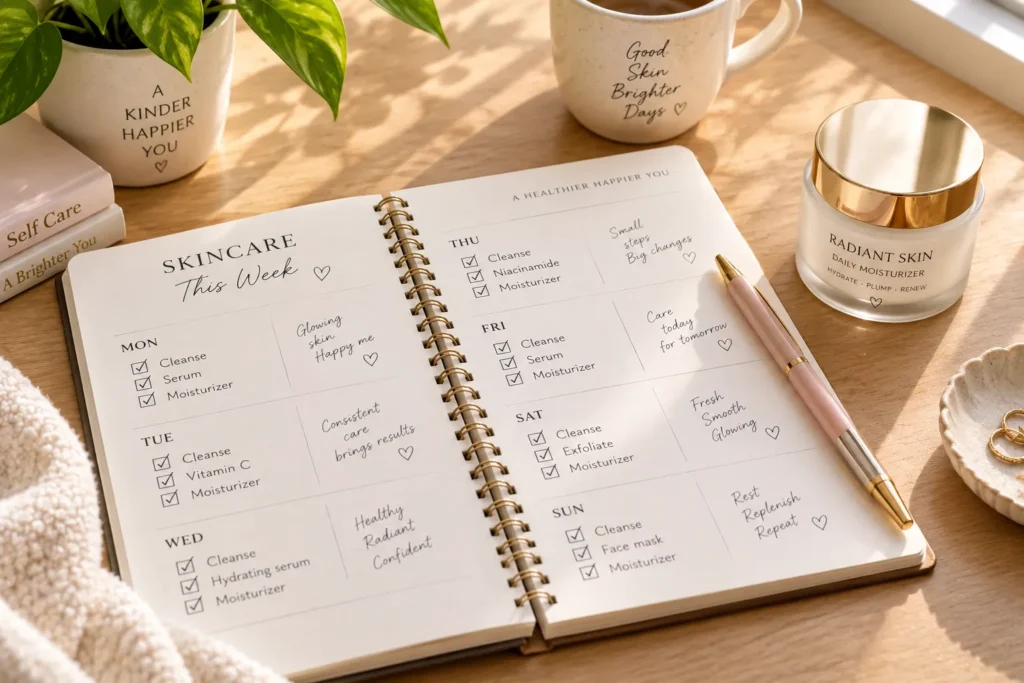
Constantly hopping between products, sometimes called skin care ping pong, can actually irritate skin and undo any progress. Pick one anti aging moisturizer, commit to it for a full month, and track how your skin looks in the same lighting each week before deciding if it is working.
10. Store It Away From Heat and Light
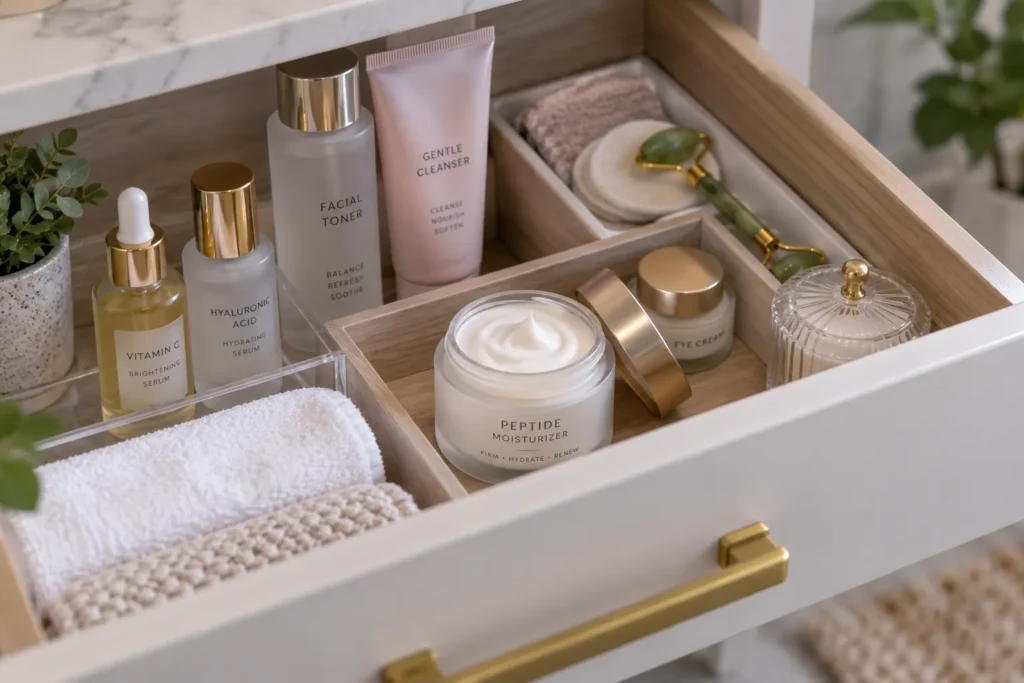
Where you keep your moisturizer affects how well it works. Active ingredients like retinol, vitamin C, and certain peptides break down when they are exposed to heat and direct sunlight for long periods.
Leaving your jar on a sunny bathroom windowsill might look pretty, but it slowly weakens the formula. Keep anti aging products in a cool, dark drawer or cabinet instead, and always put the lid back on tightly right after use.
A Few Words Before You Go
Building a skin that looks genuinely youthful is not about buying the priciest jar on the shelf. It is about small, consistent habits: applying at the right time, in the right order, with the right technique. Pick one or two secrets from this list to try this week rather than overhauling everything at once. Your skin will thank you for the patience, and future you will be glad you saved this list for later.
Image Alt Text Suggestions
- Woman applying anti aging moisturizer to damp skin in the morning
- Hands applying moisturizer to the neck and chest area
- Skin care products arranged from thinnest to thickest texture
- Peptide anti aging moisturizer jar with natural collagen-boosting ingredients
- Hands warming moisturizer between palms before applying to face
- Woman layering sunscreen over anti aging moisturizer
- Lightweight gel moisturizer and rich cream moisturizer for different seasons
- Woman massaging anti aging moisturizer into cheeks with upward strokes
- Weekly skin care tracking journal next to a moisturizer bottle
- Anti aging skin care products stored in a cool, dark drawer
FAQ Section
Does anti aging moisturizer really work, or is it mostly marketing? Anti aging moisturizers can genuinely help with hydration, texture, and fine lines when they contain proven ingredients like peptides or retinol. They will not erase deep wrinkles, but consistent use does improve how skin looks and feels over time.
What age should I start using an anti aging moisturizer? Many people start introducing lighter anti aging ingredients like peptides or antioxidants in their mid to late twenties as a preventive step. There is no single correct age, it depends more on your skin’s needs and sun exposure history.
Can I use anti aging moisturizer both morning and night? Yes, but the formula might need to differ. A lighter version with SPF works well for daytime, while a richer, more targeted formula can be used at night when skin naturally repairs itself.
Is it bad to mix retinol and anti aging moisturizer with other actives? Mixing retinol with strong exfoliating acids or vitamin C in the same routine can sometimes cause irritation. It is safer to alternate them on different nights or apply them at different times of day.
Why does my anti aging moisturizer sting when I apply it? Stinging can mean the product contains an active ingredient your skin is not used to yet, or that your skin barrier is slightly compromised. Try applying it over a simple, fragrance-free moisturizer first as a buffer while your skin adjusts.
How do I know if an anti aging moisturizer is actually working? Look for gradual changes over four to six weeks, such as smoother texture, less dryness, or a more even tone in consistent lighting. Sudden dramatic changes are rare, so patience and photos taken under the same light are the best way to track progress.


