

10 Kids Sunscreen Facts Every Parent Should Know
You slather sunscreen on your kid before every trip outside, but a nagging feeling still creeps in. Did you use enough? Is that bottle even the right kind for a five year old’s skin? Between beach days, sports practice, and hours at the park, kids sunscreen questions pile up fast, and most labels do not answer them. This guide walks through the real facts behind kids sunscreen, so you can stop guessing and start protecting with confidence.
1. Kids Sunscreen and Adult Sunscreen Are Not Interchangeable
Kids sunscreen formulas are usually built with gentler ingredients because young skin is thinner and more reactive than adult skin. Many kids sunscreens skip added fragrance and rely on mineral filters instead of the chemical ones found in some adult brands. This matters most for kids with eczema or a history of skin reactions.
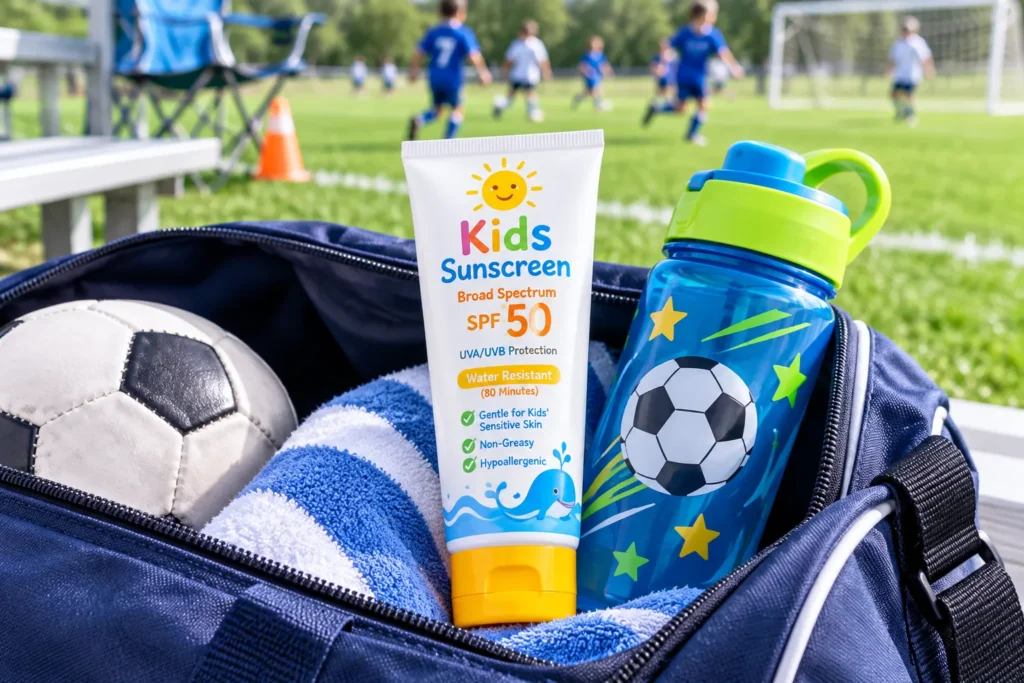
Think of a family heading to a weekend soccer tournament. If mom grabs her own facial sunscreen for her seven year old because it is closer in the bag, that formula might sting his eyes or irritate his cheeks by halftime. Keeping a dedicated kids bottle in the sports bag solves this before it becomes a problem.
2. Mineral Sunscreen Is Usually the Safer First Choice
Mineral sunscreens use zinc oxide or titanium dioxide to sit on top of the skin and reflect the sun, rather than absorbing into it the way chemical filters do. Pediatric skin experts often point parents toward mineral formulas first because there is less chance of irritation, especially for babies and toddlers with sensitive, developing skin.
The tradeoff is texture. Mineral sunscreen can leave a light white cast, which some kids do not love. A useful middle ground is a tinted mineral formula made for kids, which blends in better while still keeping the gentler mineral base.
[INTERNAL LINK OPPORTUNITY: mineral sunscreen benefits for sensitive skin]

3. SPF 30 Is the Real Minimum, Not SPF 15
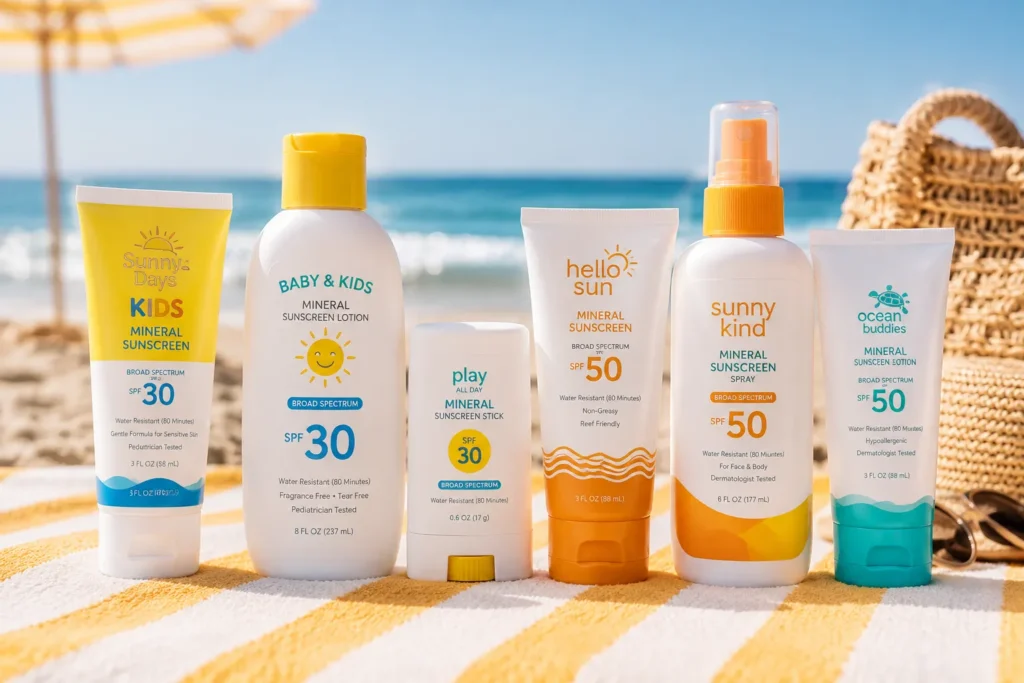
A lot of parents assume any SPF number is fine as long as it says “kids” on the front. In reality, SPF 30 is generally treated as the practical starting point for daily outdoor time, since it blocks a meaningfully higher share of UVB rays than SPF 15. Going higher, like SPF 50, adds a small buffer for long beach days or high altitude trips, but the jump from 15 to 30 matters more than the jump from 30 to 50.
For a family beach vacation, packing SPF 50 for the kids and saving SPF 30 for shorter park visits is a simple way to match protection level to actual sun exposure.
4. Most Parents Use Way Less Sunscreen Than Needed
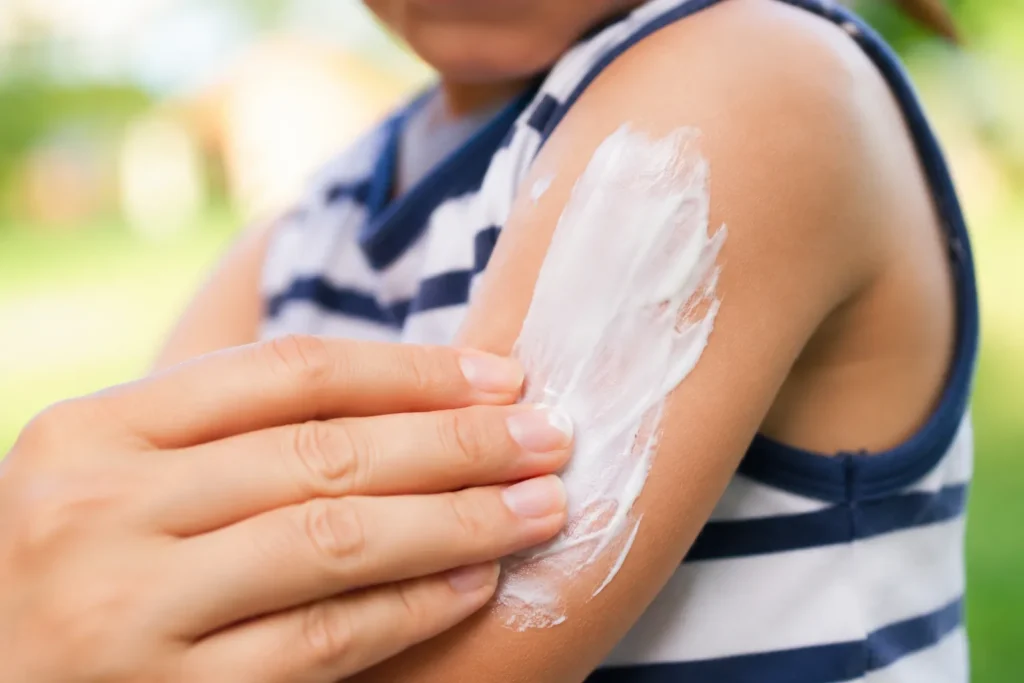
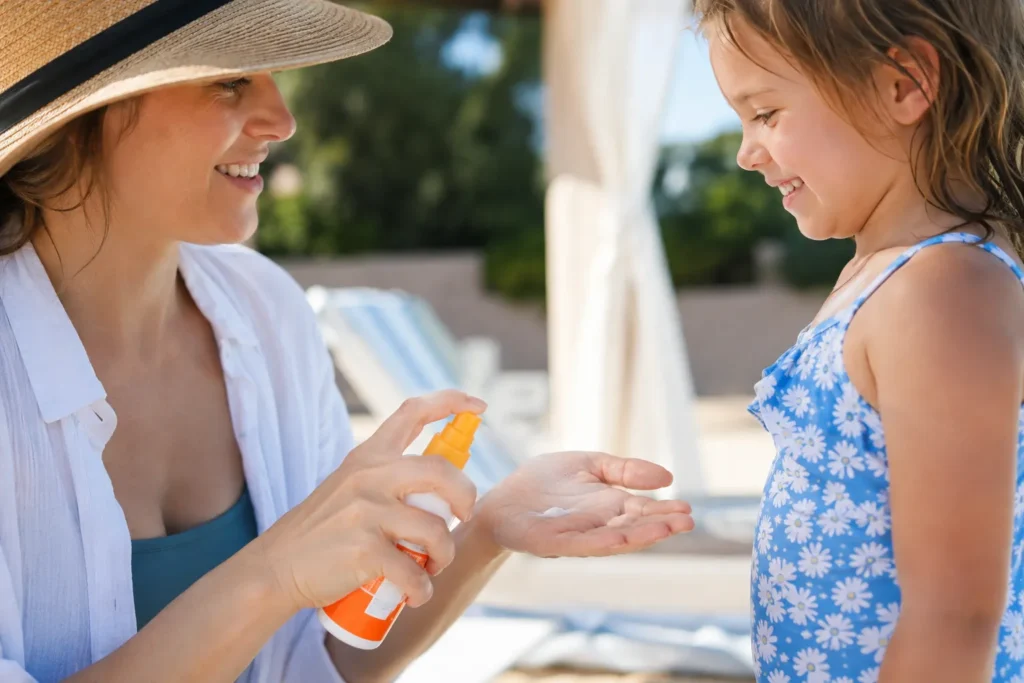
This is one of the most overlooked kids sunscreen facts. A small dab rubbed in quickly is not enough to give the SPF number on the bottle its full effect. A general guide is about one teaspoon for the face and neck, and another teaspoon for each arm, leg, and the torso areas that are exposed.
The common mistake is treating sunscreen like lotion, using a thin layer once and calling it done. The fix is simple. Apply a visibly thick layer, let it sit for a few minutes before heading outside, and do not be afraid if it looks like a bit much at first. It will absorb.
5. Reapplication Matters More Than the SPF Number
A high SPF number can create a false sense of security. Sunscreen breaks down with sweat, water, and time, so even SPF 50 needs a refresh roughly every two hours during active outdoor play, and immediately after swimming or heavy sweating.
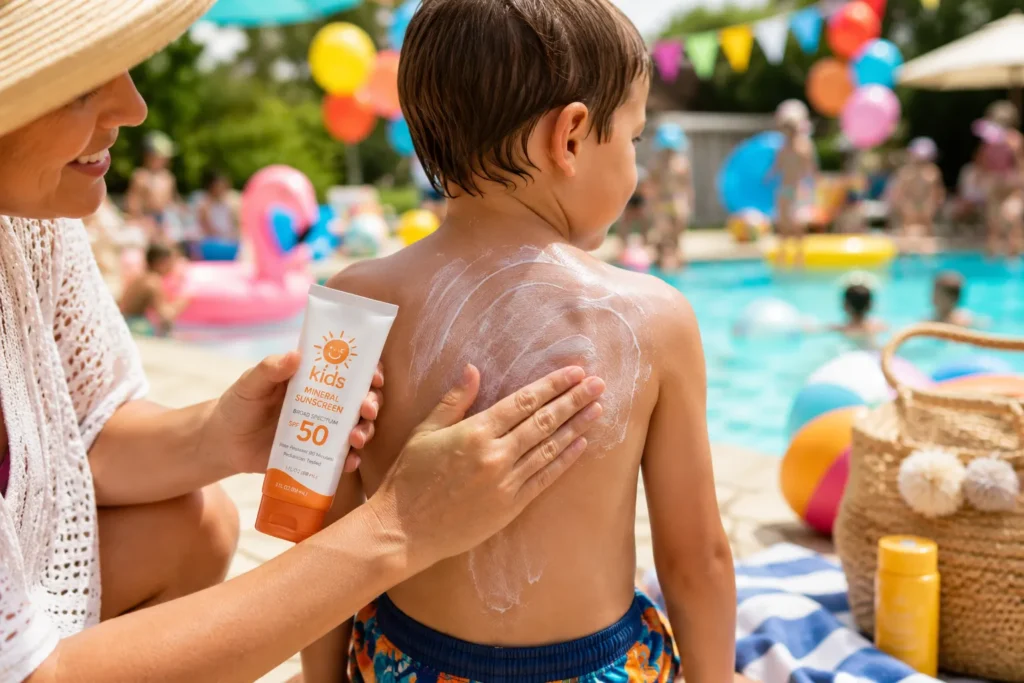
Picture a birthday party at a splash pad. If sunscreen goes on once at 10am and the party runs until 2pm, that first layer is long gone by the time cake is served. Setting a phone reminder for reapplication, especially at pool parties, keeps this from slipping through the cracks.
6. Babies Under 6 Months Need a Different Approach
For babies younger than six months, the usual advice leans toward keeping them out of direct sun entirely rather than relying on sunscreen, since their skin and its natural defenses are still developing. Shade, lightweight long sleeves, and a wide brim hat do most of the work here.
If shade genuinely is not available, a small amount of mineral sunscreen on exposed areas like the hands or face is sometimes used, but this is the kind of call worth checking with a pediatrician first rather than deciding alone from a blog post.

7. Water Resistant Does Not Mean Waterproof
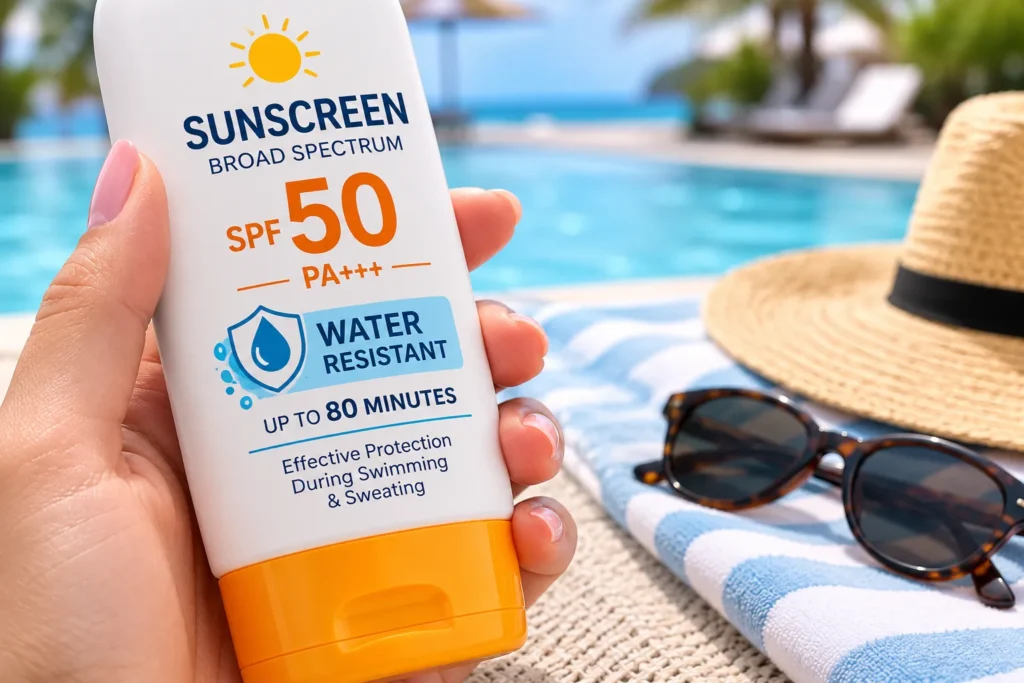
No sunscreen is truly waterproof, no matter what the marketing on the bottle suggests. “Water resistant” labels usually mean the formula holds up for either 40 or 80 minutes of swimming or sweating before it needs to be reapplied, and that timer is printed right on the bottle if you look closely.
A day at the lake is a good example. If the label says 80 minutes water resistant, that is the cue to reapply after that window, not a reason to skip sunscreen checks for the rest of the afternoon.
8. Expired Sunscreen Loses Its Protective Power
Sunscreen has a real shelf life, usually printed as an expiration date or a small jar icon with a number of months inside. Once it expires, the active ingredients break down and the SPF protection drops, even though the lotion might still look and smell normal.
A practical habit is checking the date at the start of every summer, since half used bottles often sit in a beach bag from one season to the next. If there is no date visible and the texture has changed, separated, or smells off, it is time to replace it.
9. Sun Protective Clothing Can Do Some of the Work
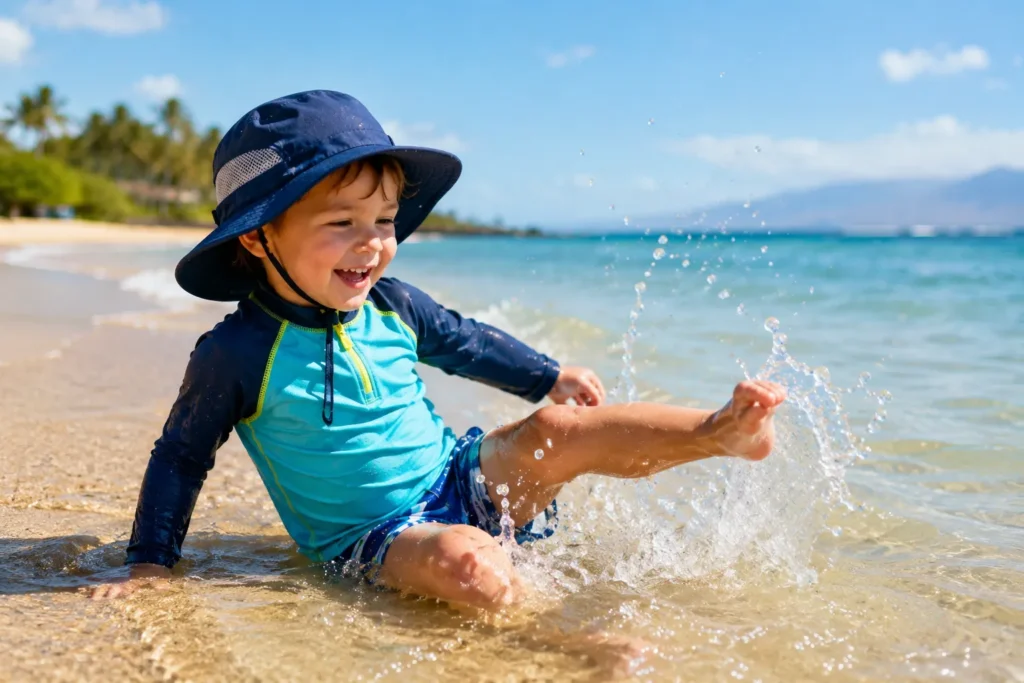
Sunscreen is not the only tool available. Clothing with a UPF rating, along with wide brim hats and sunglasses, adds a layer of physical protection that does not wear off in the water or from sweat the way sunscreen can.
For a family that struggles to keep sunscreen on a wiggly toddler, a long sleeve UPF rash guard for pool days can cover the areas that are hardest to keep reapplied, like little shoulders that always seem to peek out of a swimsuit.
10. A Patch Test Prevents Surprise Reactions
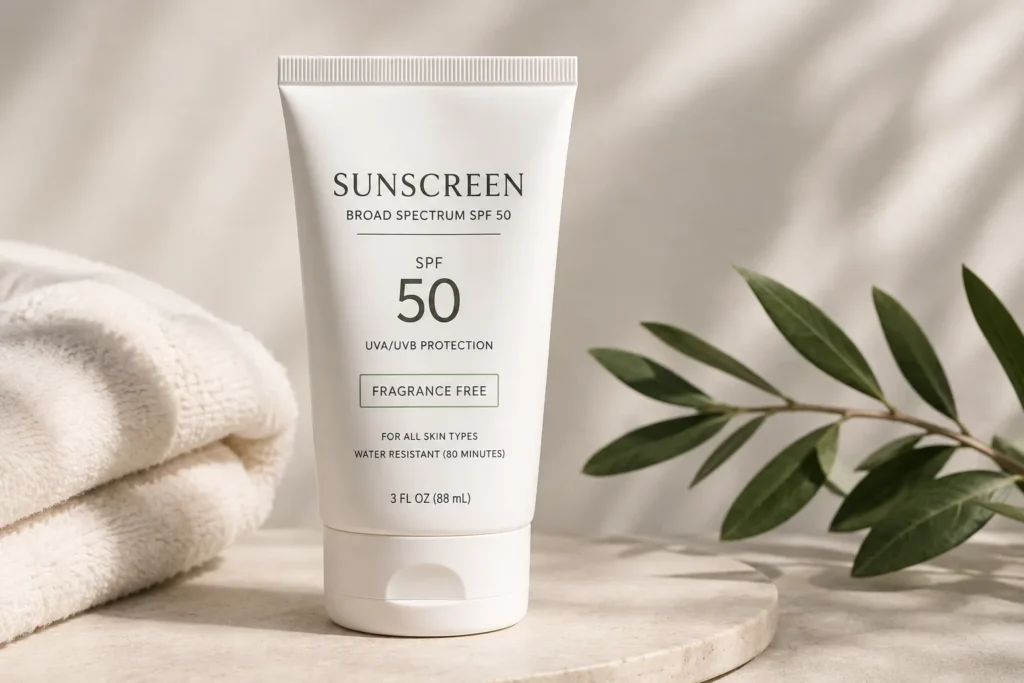
New sunscreen, new reaction. It happens more often than people expect, especially with kids who have sensitive or eczema prone skin. A small patch test on the inside of the wrist or elbow, left on for a day before full use, can catch redness or itching before it shows up all over a child’s face on vacation.
This is especially worth doing before a big trip. Testing a new bottle two or three days before travel gives enough time to switch formulas if a reaction shows up, instead of discovering it the morning of a flight.
Sunscreen shopping for kids can feel like one more thing on an already long parenting list, but it does not have to be complicated. Once you know the real facts, from how much to use to when a formula actually needs replacing, the guesswork mostly disappears. The next sunny day does not need to come with worry attached. Save this list, keep a fresh bottle in the beach bag, and give your kids the kind of sun protection that actually holds up to a real day of play.
6. Image Alt Text Suggestions
- Kids sunscreen tube packed next to a water bottle in a sports bag
- Mineral sunscreen being rubbed into a child’s shoulder
- SPF 30 and SPF 50 kids sunscreen bottles on a beach towel
- Thick layer of sunscreen being applied to a child’s arm
- Parent reapplying sunscreen on a child’s back at a pool party
- Baby resting in a stroller under a shade canopy wearing a sun hat
- Child jumping into a swimming pool with sunscreen bottle on the deck
- Checking the expiration date on a sunscreen bottle
- Toddler wearing a UPF rash guard and sun hat at the beach
- Sunscreen patch test being applied to the inside of a child’s wrist
7. FAQ Section
What SPF is best for kids? SPF 30 is generally treated as the everyday minimum for kids, with SPF 50 being a reasonable step up for long beach days or intense sun. Anything higher than SPF 50 adds very little extra protection.
Is mineral or chemical sunscreen better for kids? Mineral sunscreen, made with zinc oxide or titanium dioxide, is usually the gentler choice for kids because it sits on the skin instead of absorbing into it. It is often recommended first for babies, toddlers, and kids with sensitive or eczema prone skin.
How often should I reapply sunscreen on my kids? Reapply roughly every two hours during outdoor play, and right after swimming or heavy sweating, no matter how high the SPF number is. Sunscreen breaks down with time, water, and sweat.
Can I use regular sunscreen on my child? You can in a pinch, but kids formulas are often made without added fragrance and with gentler filters, which tends to be kinder to sensitive young skin. If your child has never reacted to adult sunscreen before, it is not an emergency, but a dedicated kids formula is the safer default.
Is it safe to use sunscreen on a baby? For babies under six months, the common approach is to rely on shade, hats, and lightweight clothing instead of sunscreen when possible, since their skin is still developing. If shade is not available, a small amount of mineral sunscreen on exposed skin is sometimes used, but it is worth checking with a pediatrician first.
Does water resistant sunscreen really work in the pool? Water resistant sunscreen holds up for a limited window, usually 40 or 80 minutes as stated on the label, not for the entire time your child is in the water. Reapplying after that window keeps protection consistent through a full pool day.


