

10 Simple Storage Ideas to Organize Every Room
If you have ever stood in the middle of a room wondering how it got so messy again, you are not alone. Clutter has a way of creeping back in even when you swear you just organized everything last month. The good news is that you do not need a full renovation or a Pinterest-perfect budget to fix this. You just need a few smart storage habits that actually fit real life. Here are ten simple ideas that will help you organize every room in your home, one small step at a time.
1. Use Vertical Space Before You Buy More Furniture
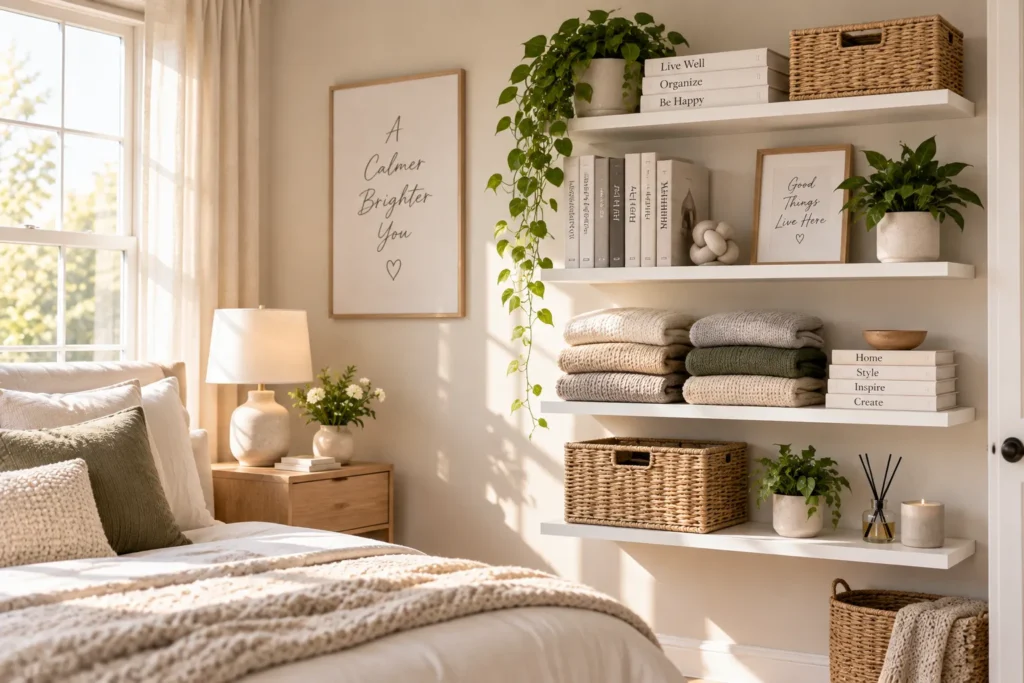
Most homes run out of floor space long before they run out of wall space. Look up before you look for more bins.
Wall shelves, hanging racks, and tall bookcases let you store more without shrinking your walking room. This works especially well in small apartments or kids’ bedrooms where floor space is already tight. A common mistake is buying short, wide storage pieces that eat up square footage. Instead, choose tall, narrow shelving units that stretch toward the ceiling. In a home office, mounting a few floating shelves above the desk can hold books and supplies that used to pile up on top of it.
2. Sort Before You Store, Not After
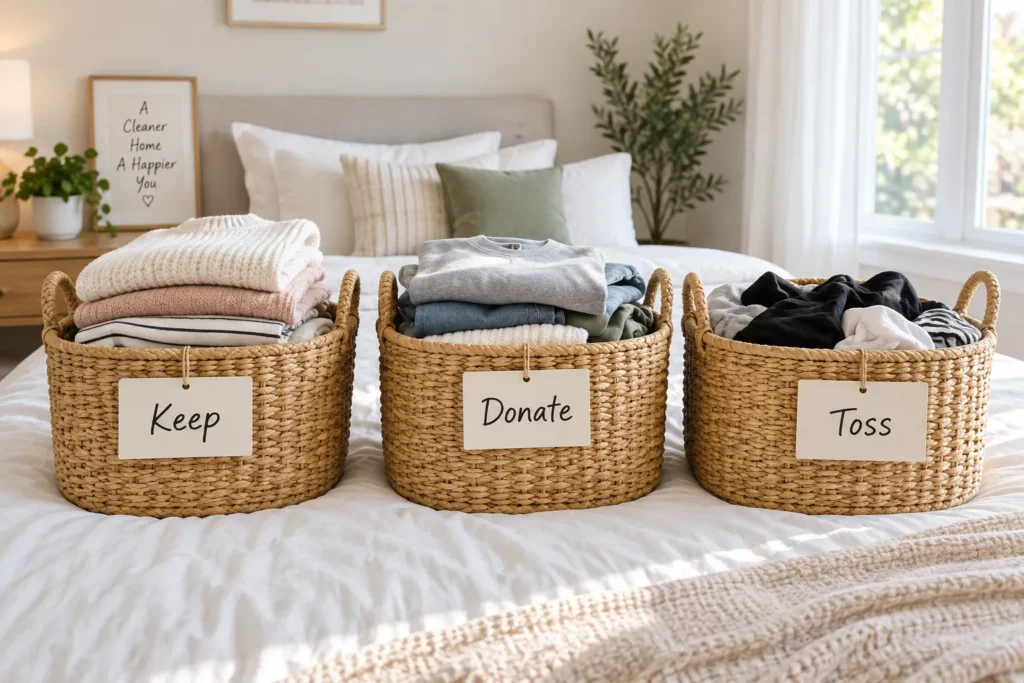
It is tempting to grab bins first and figure out what goes where later. That backwards approach is why so many storage systems fail within weeks.
Take everything out of a space, sort it into keep, donate, and toss piles, and only then decide what containers you actually need. This matters most in closets and kitchen cabinets, where mixed categories cause the most frustration. A closet stuffed with off-season clothes, shoes, and extra bedding will never feel organized no matter how many bins you add, until those categories are separated first. Give yourself an afternoon for this step alone before buying anything.
[INTERNAL LINK OPPORTUNITY: how to declutter a closet in one weekend]
3. Let Baskets Do the Work Bins Cannot
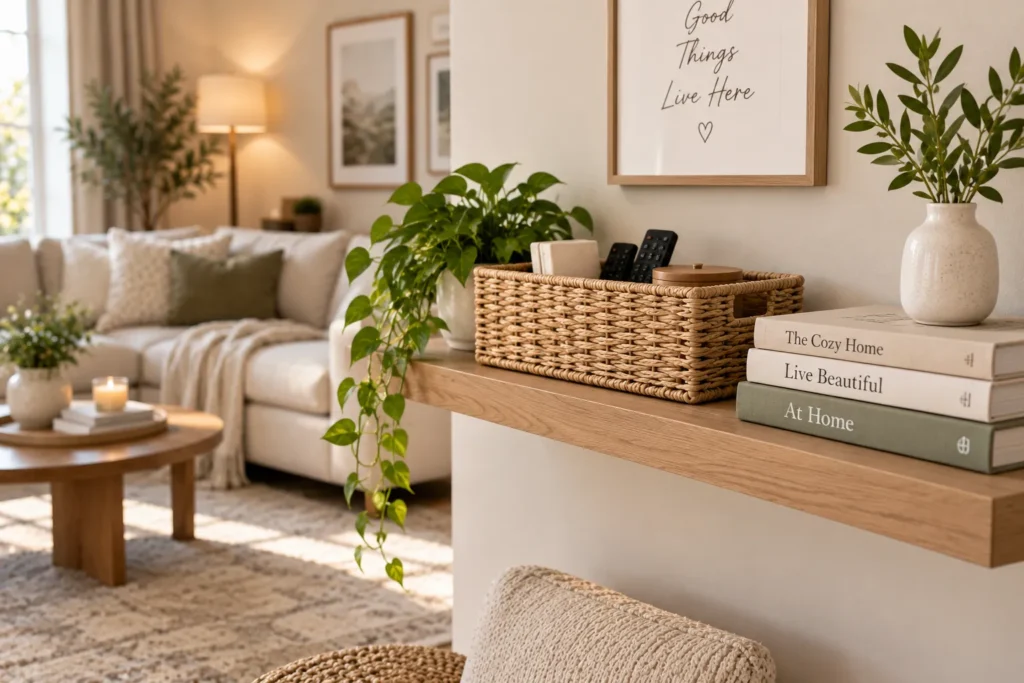
Baskets are not just decorative. They hide mismatched items while still keeping things easy to grab.
A woven basket on a living room shelf can hold remote controls, chargers, and mail without looking like a junk drawer moved to the couch. This use case framing matters because open shelving looks cluttered fast when items are exposed. Baskets soften that look while keeping everything within reach. Choose a basket a bit larger than you think you need, since underestimating size is one of the most common mistakes people make when buying storage.
4. Add a Drawer Organizer Before You Add a New Dresser
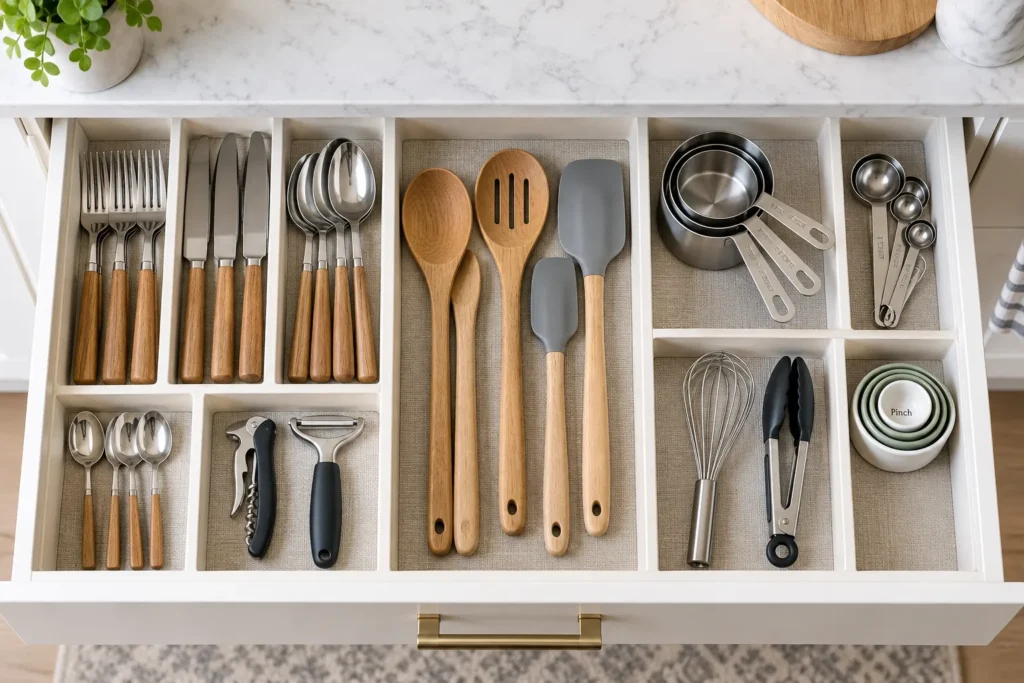
A junk drawer problem is rarely about not having enough drawers. It is about not dividing the one you already have.
Simple drawer dividers turn one chaotic drawer into several small, functional sections. This works in kitchens for utensils, in bathrooms for makeup, and in bedrooms for socks and accessories. Most people overlook this fix because it feels too small to matter, but it often solves clutter faster than buying new furniture. In a kitchen, separating spatulas from measuring spoons means you stop digging through a tangled pile every time you cook.
5. Use the Back of Doors as Free Storage
Every door in your home has unused space on the back of it, and most people never touch it.
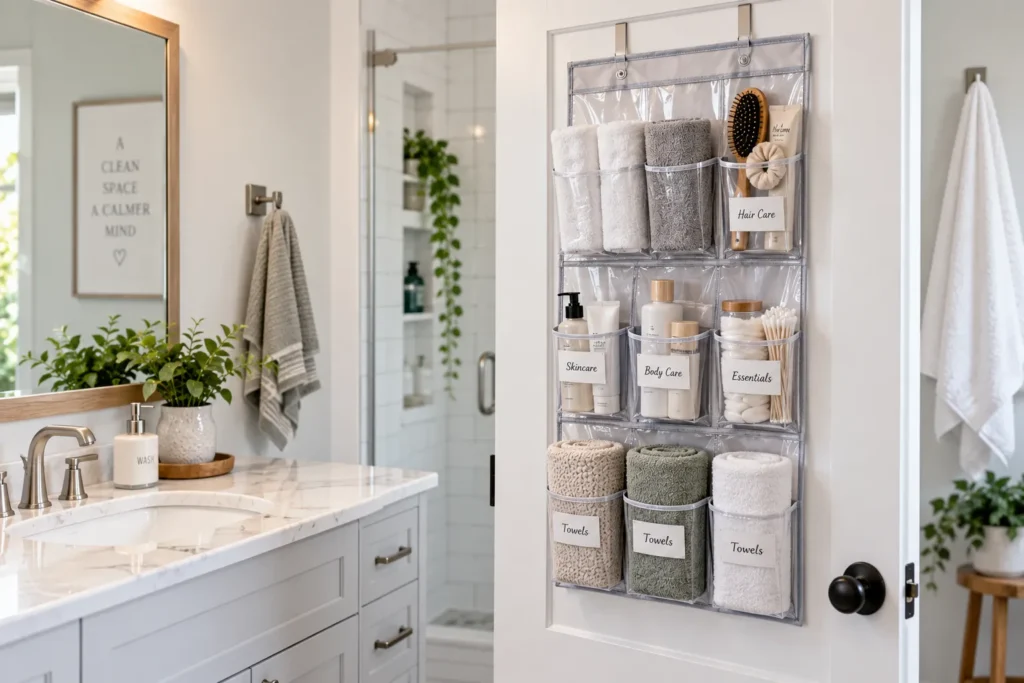
Over-the-door organizers work well in bathrooms for toiletries, in bedrooms for shoes, and in pantries for spices or snacks. This is a great fix for renters since most versions hang without any drilling. A common mistake is overloading these organizers with heavy items, which can cause them to sag or fall. Stick to lighter items and check the weight limit before hanging anything bulky.
6. Store Seasonal Items Where You Cannot See Them Daily
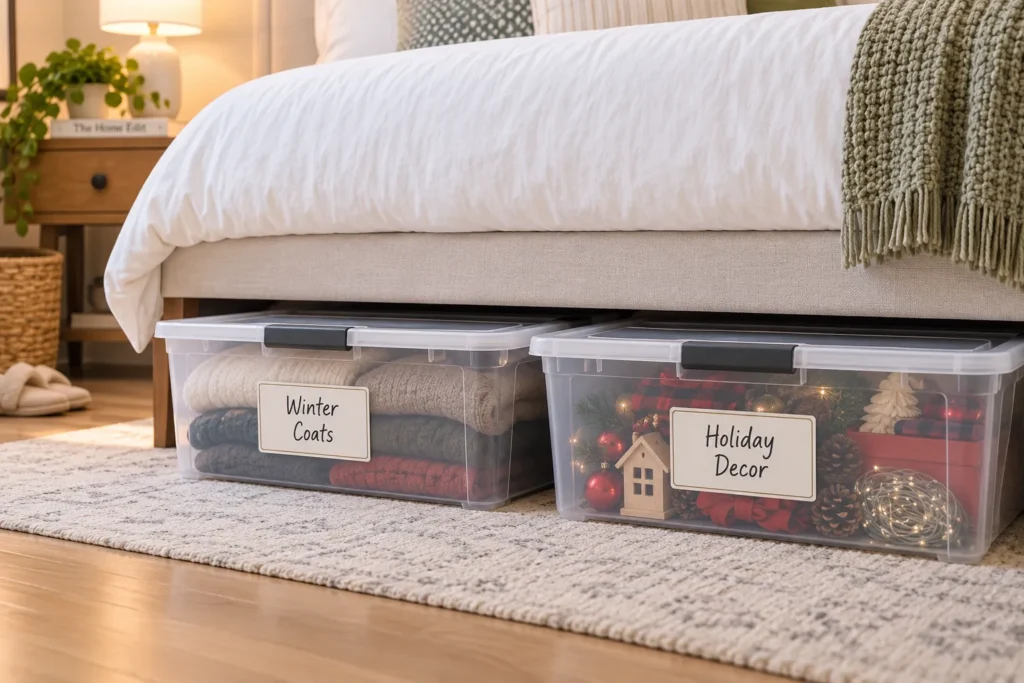
You do not need daily access to holiday decorations or winter coats in July. Storing them out of sight frees up prime storage for things you actually use.
Under-bed bins, top closet shelves, and labeled boxes in a garage or storage closet are perfect for seasonal rotation. This is especially helpful in small apartments where every inch of visible storage counts. Save-worthy tip here: label these bins clearly with the season and contents so future you does not have to open five boxes just to find the string lights. Rotate items twice a year so nothing sits forgotten for good.
7. Give Every Room an Entry Point Basket
Keys, mail, sunglasses, and loose change tend to pile up wherever you first set them down after walking in the door.
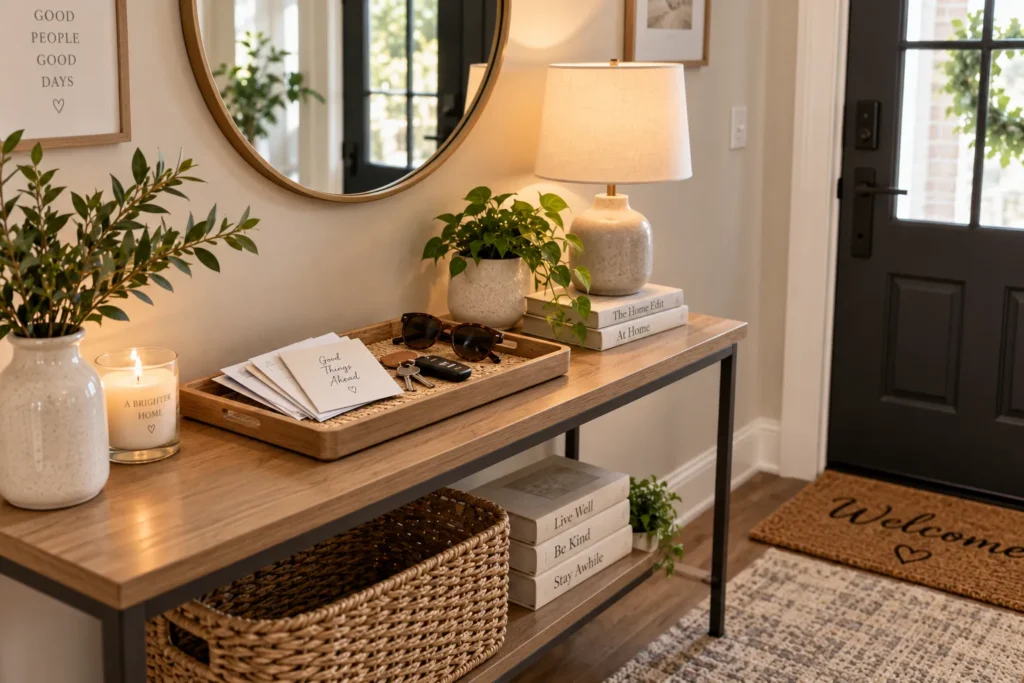
A single small basket or tray by the entryway gives all of that a designated spot instead of scattering across counters. This is one of those ideas that feels almost too simple, but it stops daily clutter before it starts. Keep it small on purpose. A basket that is too large invites more items than it should actually hold, which defeats the point.
8. Use Stackable Bins to Double Your Shelf Space
Flat shelving often wastes vertical space between items. Stackable bins solve that by using the height you already have.
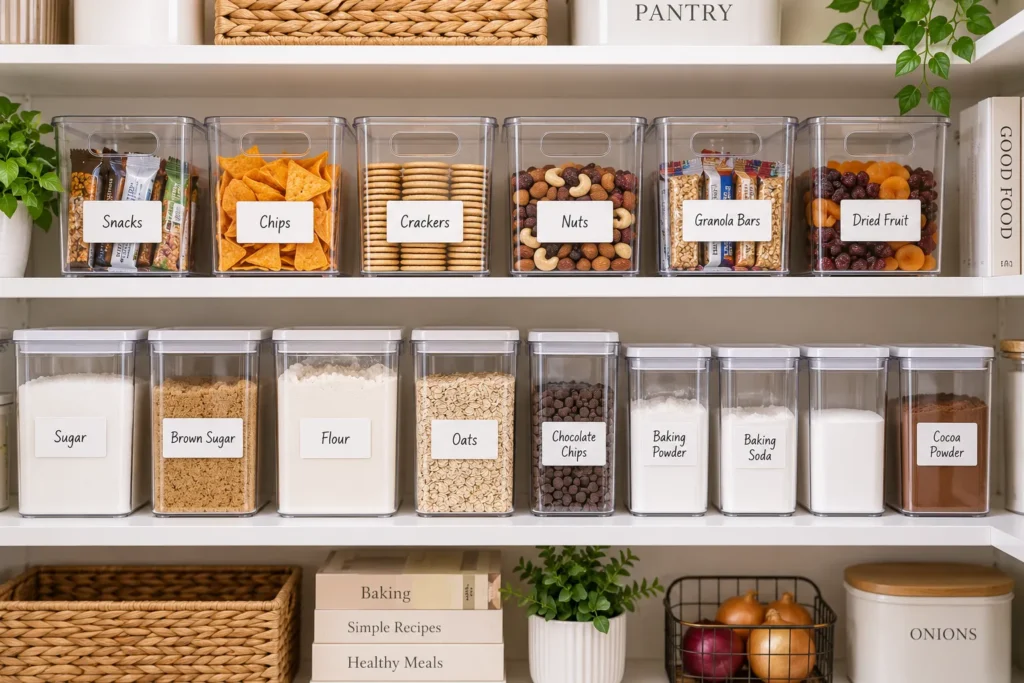
This works especially well in pantries, linen closets, and garages where items come in odd shapes and sizes. Choose bins with the same footprint so they stack evenly instead of wobbling. A common mistake is mixing bin sizes and brands, which makes stacking unstable and messy looking. In a pantry, stacking clear bins by category, like snacks on one level and baking supplies on another, makes grabbing what you need much faster.
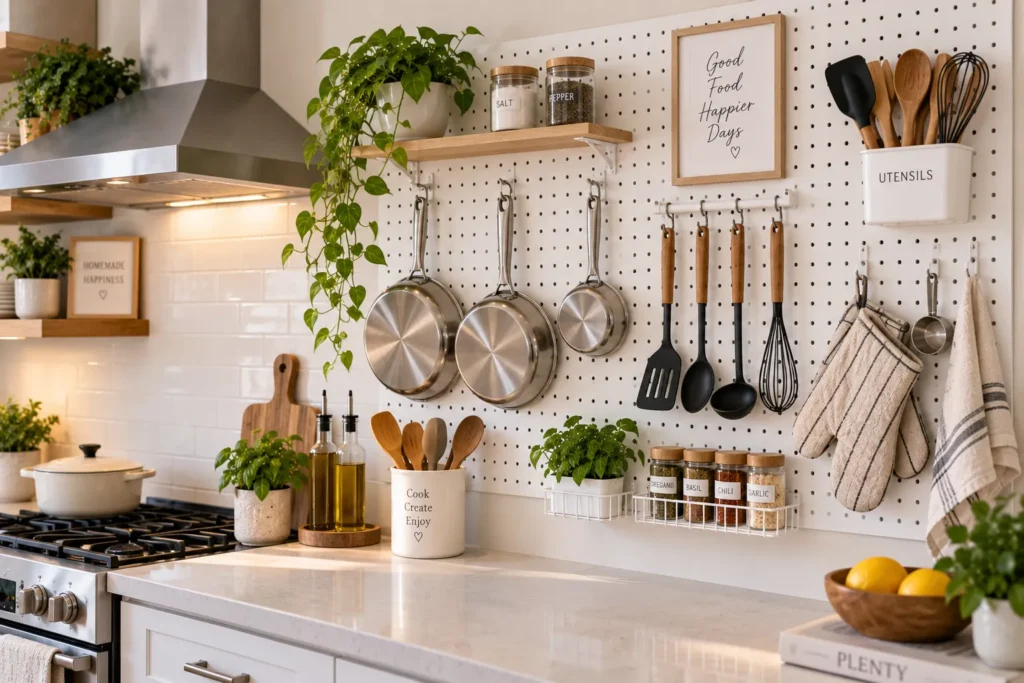
9. Mount a Pegboard for Flexible Storage
Pegboards are not just for garages anymore. They work in kitchens, craft rooms, and even entryways.
Because you can move hooks and shelves around anytime, a pegboard adapts as your storage needs change, which is something fixed shelving cannot do. This is a smart pick for renters who cannot install permanent cabinets but still want organized wall storage. In a kitchen, hanging pots and cooking tools on a pegboard frees up cabinet space below for everything else. It also turns storage into part of the room’s look instead of hiding it away.
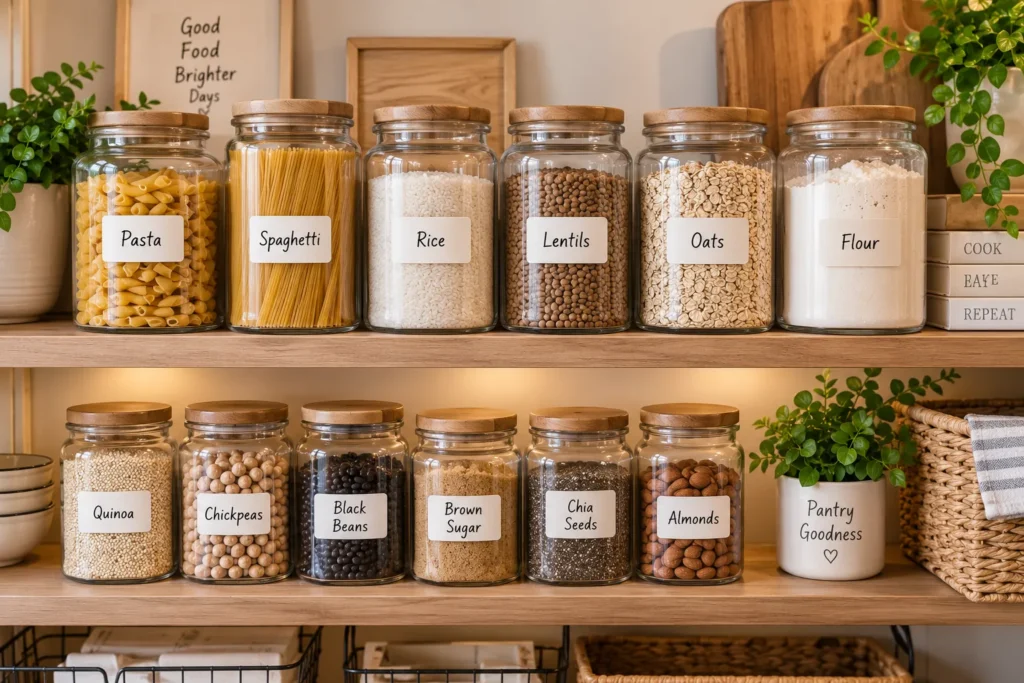
10. Label Everything, Even When It Feels Obvious
Labels are the difference between a storage system that lasts and one that falls apart in a month.
When everyone in the household knows exactly where something belongs, items are far more likely to get put back correctly. This matters most in shared spaces like a family pantry, a kids’ playroom, or a linen closet. A common mistake is assuming labels are only for guests or for looking neat. In reality, labels reduce the small daily decisions that lead to clutter creeping back. Simple handwritten tags work just as well as printed ones, so this is a low-cost fix that pays off for months to come.
Final Thoughts
Clutter rarely disappears overnight, and that is okay. The point of these ideas is not to create a picture perfect home in one weekend, but to build small systems that actually hold up over time. Pick one or two ideas from this list and try them in the room that bothers you most right now. Once you see how much lighter that space feels, you will want to save this list and come back to it room by room until your whole home feels easier to live in.
Image Alt Text Suggestions
- Tall white wall shelf with folded sweaters and books in a small bedroom
- Three labeled laundry baskets sorted for keep, donate, and toss
- Woven basket on a living room shelf next to books and a lamp
- Divided kitchen drawer with organized utensils and gadgets
- Over-the-door shoe organizer holding towels and toiletries
- Clear storage bins under a bed labeled winter coats and holiday decor
- Small entryway tray holding keys, mail, and sunglasses
- Stackable clear bins filled with pantry snacks and baking supplies
- White pegboard in a kitchen holding pots and cooking tools
- Labeled glass jars and bins inside a pantry
FAQ Section
What is the cheapest way to add storage to a small home?
Using what you already own more efficiently is the cheapest option. Sorting items by category, adding drawer dividers, and using baskets you already have can create real storage improvements before you spend a single dollar.
How do I organize a room that has no closet?
Freestanding wardrobes, over-the-door organizers, and vertical wall shelving work well when there is no built-in closet. Focus on using wall space and furniture with built-in storage, like an ottoman that opens or a bed frame with drawers.
What storage containers last the longest?
Clear plastic bins with matching lids tend to hold up the best over time since you can see contents without opening them and they stack evenly. Avoid mixing brands or sizes, since mismatched bins wear out faster from uneven stacking.
How often should I redo my storage system?
A light check every three to four months keeps most systems working well. A deeper reset twice a year, especially with the change of seasons, helps catch items that snuck back into the wrong spot.
Is it worth buying matching storage bins for every room?
Matching bins can make a space look calmer, but it is not required for good organization. Function matters more than matching, so prioritize the right size and shape for each space over a perfectly coordinated look.
How do I get my family to actually keep the storage system organized?
Clear labeling and keeping systems simple are the two biggest factors. If a system requires too many steps to put something away, most people will skip it, so the easier and more obvious the system, the more likely it sticks.


