

10 Sustainable Sunscreen Habits for Greener Skin
If you have ever stood in the sunscreen aisle feeling torn between protecting your skin and protecting the planet, you are not alone. So many bottles promise broad spectrum protection, but very few tell you what happens to that bottle once it is empty, or what happens to the ocean once that lotion washes off your shoulders. It can feel like you have to choose between healthy skin and a healthy planet. You do not. This article walks you through ten simple sustainable sunscreen habits that protect your skin just as well while cutting down on waste and reef damage.
1. Choose Mineral Sunscreen Over Chemical Formulas
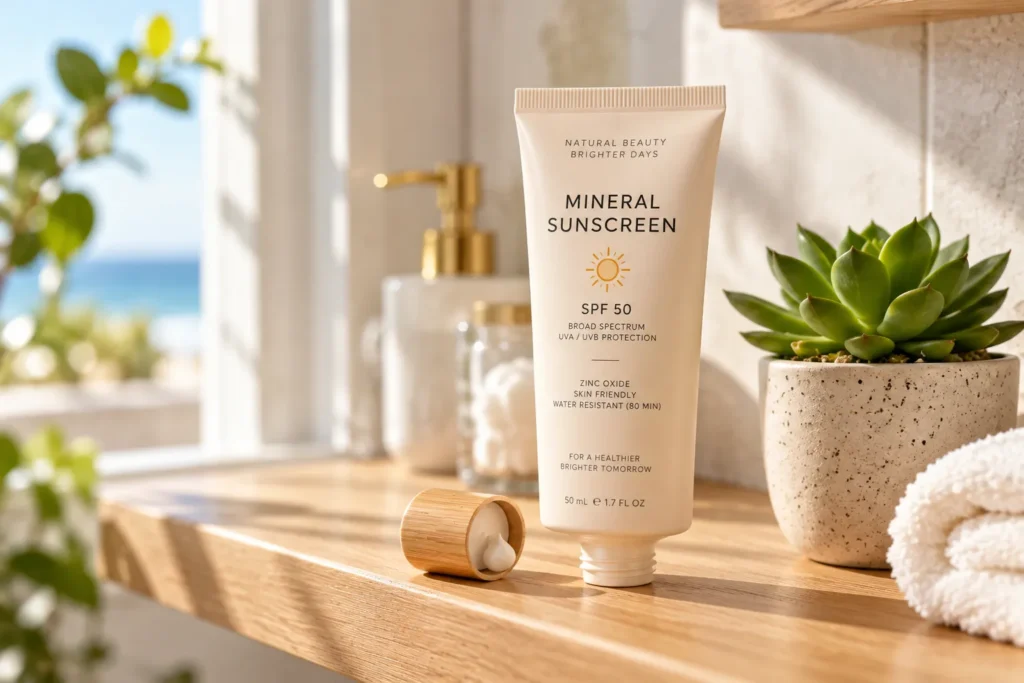
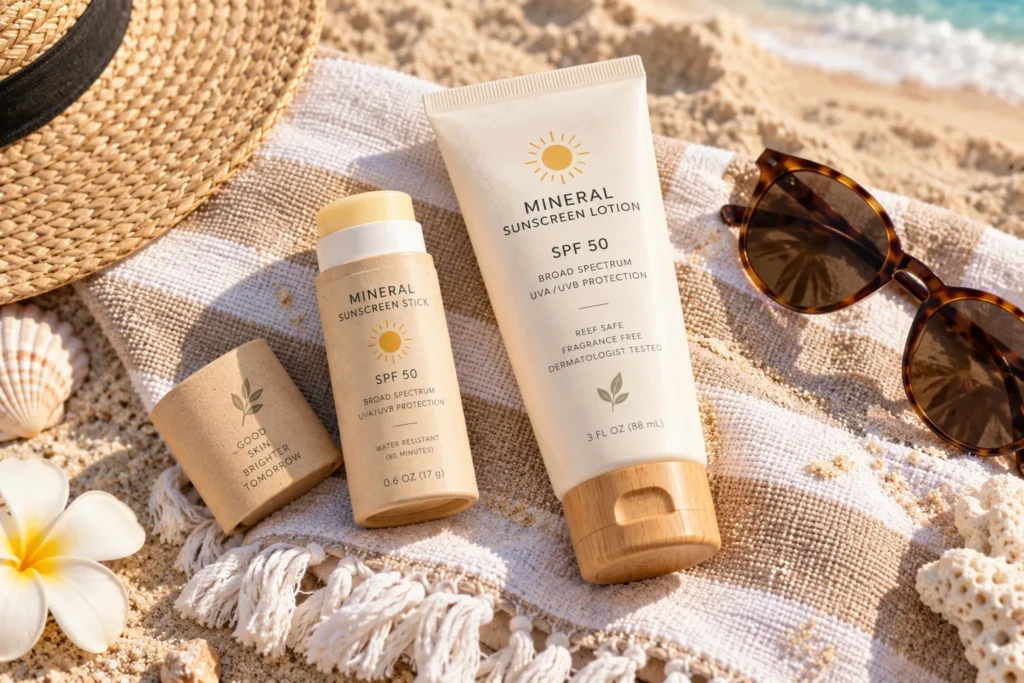
Mineral sunscreen made with zinc oxide or titanium dioxide sits on top of your skin instead of soaking in, and it does not break down into the chemicals that harm coral reefs. Many popular chemical filters, like oxybenzone and octinoxate, have been linked to coral bleaching in places like Hawaii and parts of the Caribbean, which is why several destinations have banned them outright. Mineral formulas also tend to be gentler for sensitive or acne-prone skin. A good example is swapping your everyday chemical SPF for a zinc-based version before a beach vacation, since that is exactly when sunscreen washes off directly into the water. The trade-off is that mineral formulas can leave a slight white cast, but newer tinted versions blend in much better than they used to.
2. Look for Reef-Safe Certifications, Not Just Marketing Claims
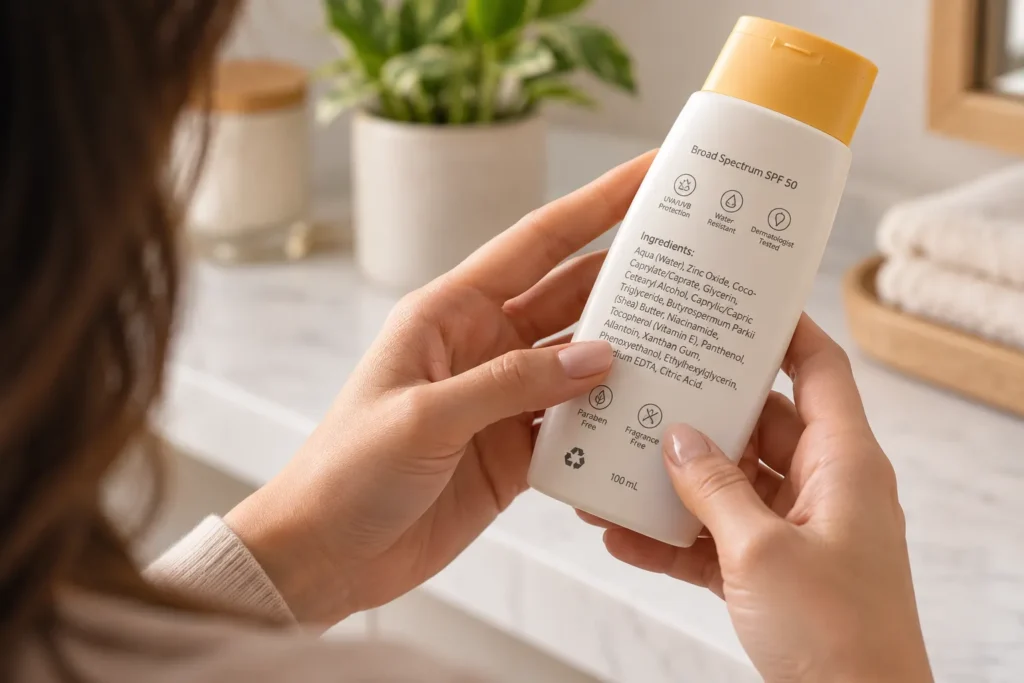
Here is something most people overlook. The term “reef-safe” is not regulated, so a brand can print it on the label without actually proving it. What you want to look for instead is a full ingredient list free of oxybenzone, octinoxate, and octocrylene, since these are the filters most commonly tied to coral damage. Some brands now carry third-party certifications, like the Protect Land + Sea Certification, which actually test the formula rather than relying on a marketing team’s word. If you are shopping for a family beach trip, check the back label instead of trusting the front. This small habit saves you from paying extra for greenwashed products that do not deliver on their promise.
3. Switch to Recyclable or Refillable Packaging
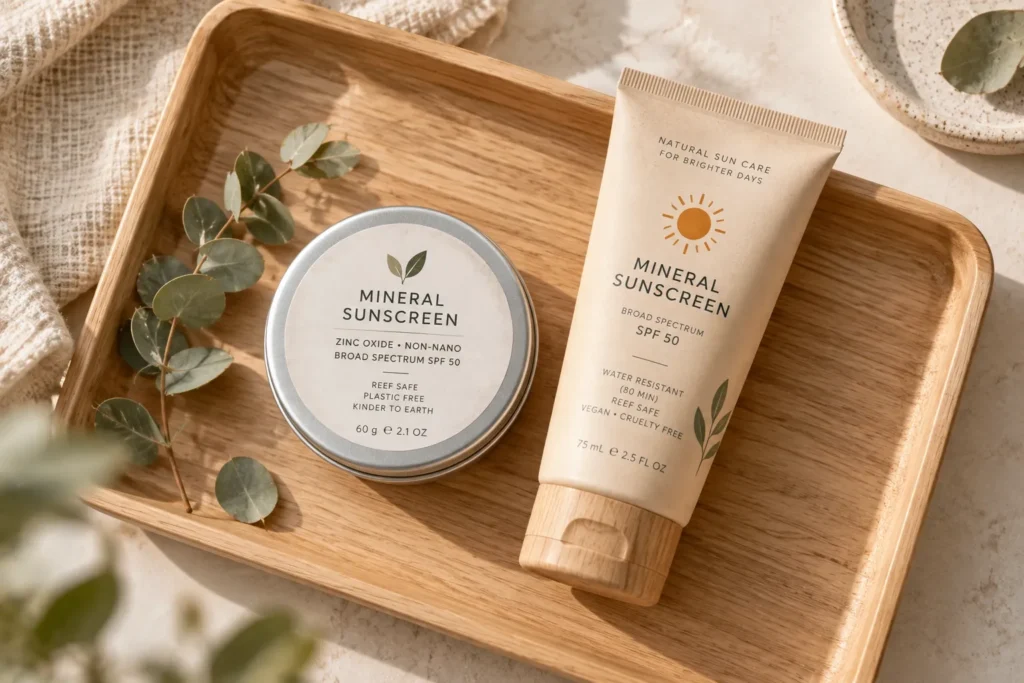
Most sunscreen bottles are made from a mix of plastics that are hard to recycle because of the pump mechanisms and mixed materials. A growing number of brands now sell sunscreen in aluminum tins, paper-based tubes, or refill pouches that cut plastic waste significantly. If you go through a bottle every month during summer, switching to a refillable system can genuinely add up over a year. Think of it the way you think of a reusable water bottle. One small swap, repeated often, makes a real dent. Keep an eye out for brands that print the recycling number clearly, since not all plastic sunscreen tubes are accepted by curbside programs even if they look recyclable.
4. Buy Sunscreen in Larger Sizes to Cut Down on Waste
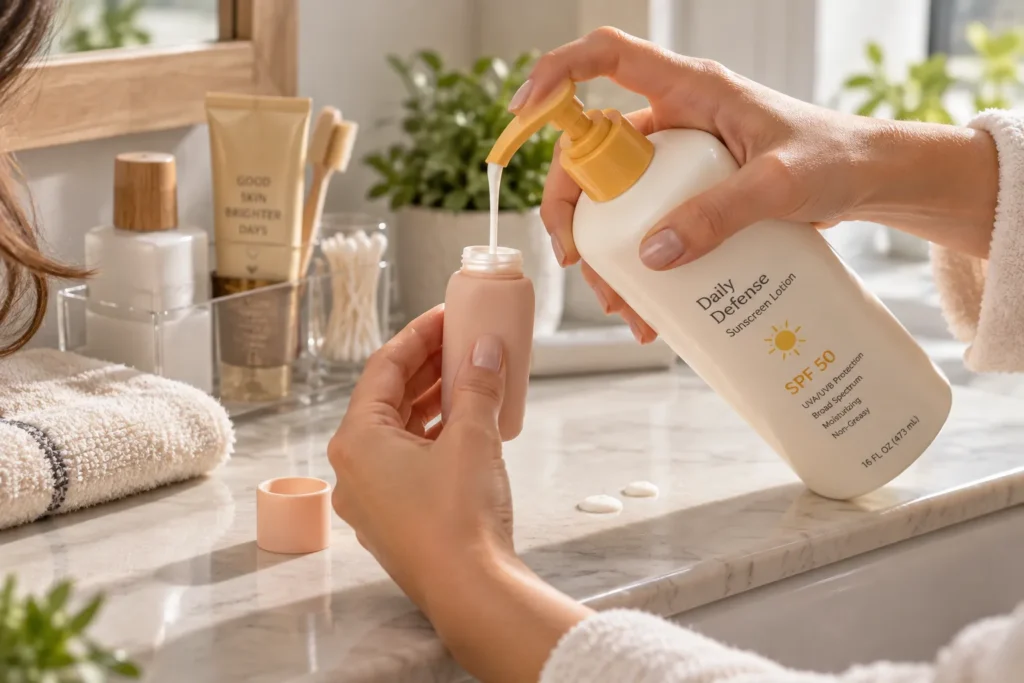
It sounds simple, but buying a larger bottle instead of three small travel sizes actually reduces the amount of plastic packaging per ounce of product. Travel sizes feel convenient, but you end up throwing away more containers over time. A good middle ground is to buy one larger bottle for home and refill a small reusable travel container before trips, rather than buying disposable minis every time you pack a bag. This habit works especially well for families who go through sunscreen quickly during summer months, since it also tends to save money per ounce.
5. Avoid Spray Sunscreens When Possible
Spray sunscreens feel fast and easy, but a large portion of the product misses your skin entirely and ends up in the sand, the air, or the water around you. That means you are applying less protection than you think while also releasing more product into the environment. Lotion and stick formulas apply more precisely, which means better coverage and less waste. If you love the convenience of spray for hard to reach areas like your back, try asking someone to help you rub it in evenly instead of relying on the mist alone. This is one of those habits that quietly protects both your skin and the beach you are standing on.
6. Apply Enough the First Time to Avoid Reapplying Excess
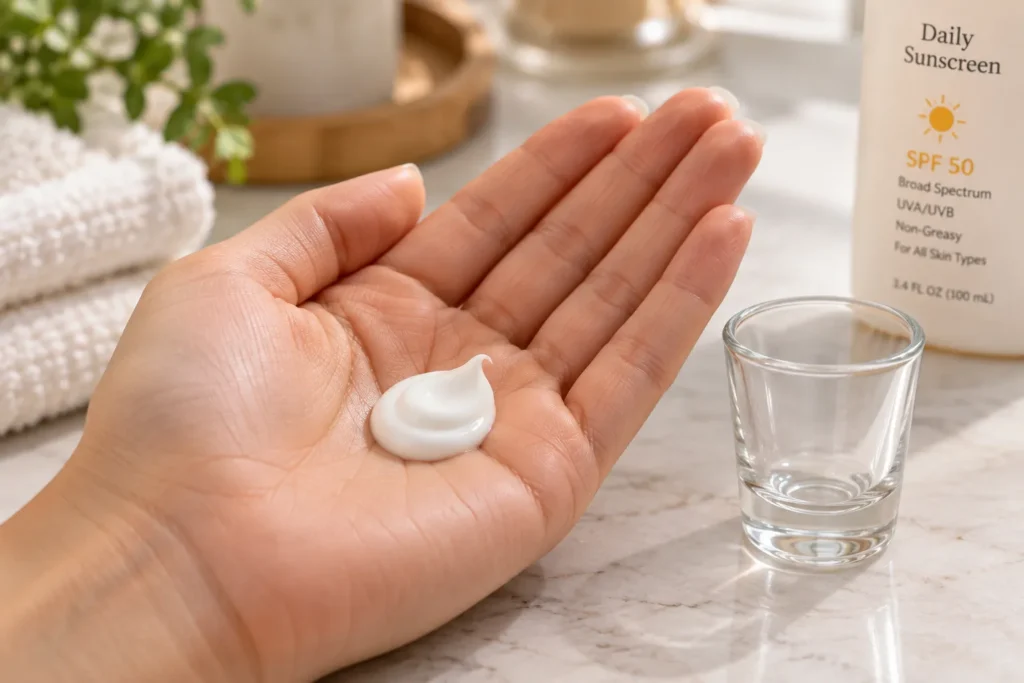
A common mistake people make is applying too little sunscreen at first, then reapplying heavily later to compensate for feeling burnt. The fix is simple. Use about a shot glass amount for your whole body and a nickel size amount for your face right from the start. This gets you full protection immediately instead of layering on extra product later, which wastes sunscreen and increases the amount that ends up on towels, clothes, and eventually in the wash water. Getting the first application right is one of the easiest ways to make your bottle last longer while keeping your skin properly protected all day.
7. Store Sunscreen Properly So It Does Not Go to Waste
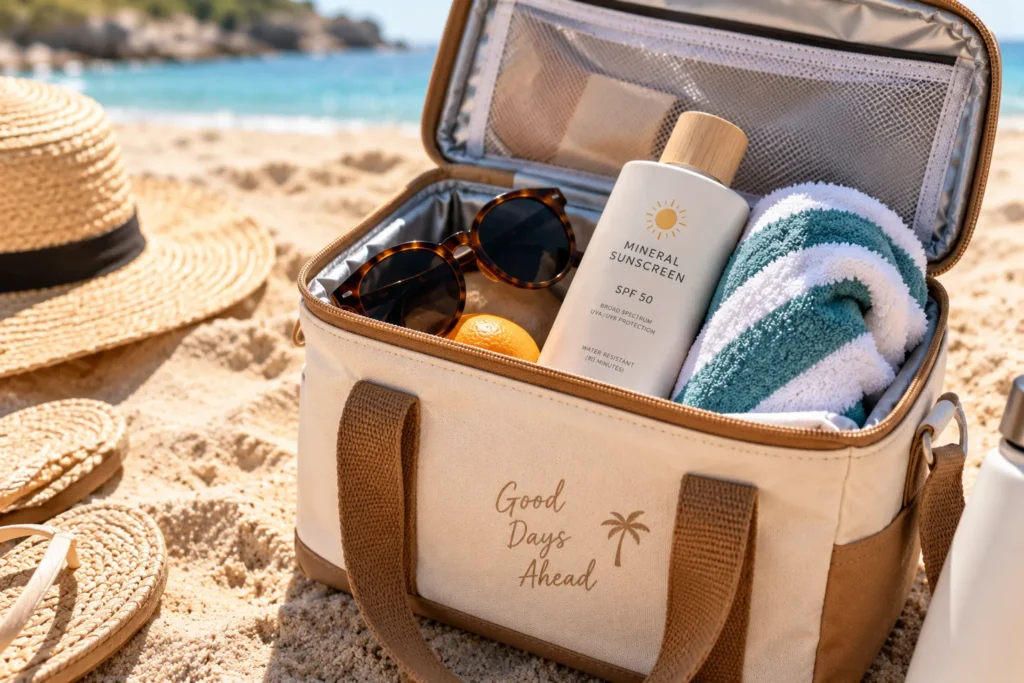
Heat breaks down sunscreen’s active ingredients faster than you might think, which means a bottle left in a hot car or a beach bag in direct sun can lose its effectiveness before the expiration date even hits. This leads people to toss out sunscreen and buy a new bottle more often than necessary. Keep your sunscreen in a cooler bag at the beach and store the everyday bottle in a cabinet away from direct sunlight or a hot bathroom shelf near a window. This one habit stretches the life of every bottle you buy, which means less waste and more consistent protection when you actually need it.
8. Rinse Off Before Swimming in Natural Water When You Can
If you have time before jumping into the ocean or a lake, a quick freshwater rinse at home lets your skin absorb the sunscreen fully instead of having a thick layer wash directly into the water within the first few minutes of swimming. This small delay habit means more of your sunscreen actually protects you instead of floating away immediately. It works especially well for families spending a full day at a lake house or coastal rental, where a rinse-off shower is often just steps away. It is a tiny shift in routine that adds up over a whole summer of swim days.

9. Choose Sunscreen With Fewer, Simpler Ingredients
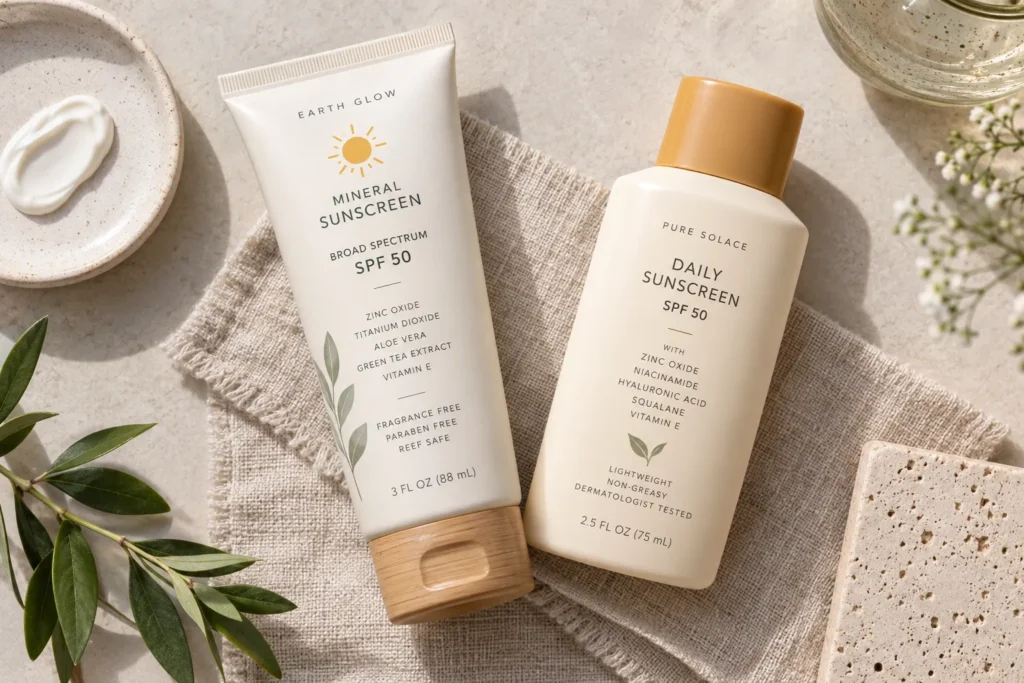
Long ingredient lists often include fillers, synthetic fragrances, and preservatives that are harder on both your skin and the environment during production and breakdown. Brands with shorter, more transparent ingredient lists tend to use fewer synthetic additives overall. This matters most for people with sensitive skin, since fewer ingredients usually means fewer potential irritants. Next time you shop, compare two sunscreens side by side and notice which one lists closer to ten ingredients versus thirty. Simpler formulas are often gentler and easier for the planet to process once they wash away.
10. Support Brands That Are Transparent About Their Sourcing
A brand that openly shares where its zinc oxide comes from, how its packaging is made, or how it tests for reef safety is usually more accountable than one that hides behind vague green branding. Save-worthy brands are the ones you will want to return to season after season, not just for one purchase. Look at a brand’s website before buying. If they cannot explain their sourcing or testing process clearly, that is often a sign the sustainability claims are surface level. Supporting transparent brands, even if they cost a little more, pushes the whole industry toward better standards over time.
A Small Routine, A Bigger Impact
Building a sustainable sunscreen habit does not mean overhauling your entire routine overnight. It means making one better choice at a time, the same way you started reading ingredient labels or carrying a reusable bag. Your skin still gets the protection it needs, and the beaches you love get a little more care in return. Pick just one habit from this list to start with this week, whether that is switching to mineral sunscreen or finally checking that ingredient label. Save this article so you can come back to it before your next sunny day out.
Image Alt Text Suggestions
- Mineral zinc oxide sunscreen tube on a bathroom shelf beside a potted plant
- Hand reading the ingredient list on the back of a sunscreen bottle
- Aluminum tin and paper tube sunscreen packaging on a wooden tray
- Large sunscreen bottle refilling a small reusable travel bottle
- Sunscreen stick and lotion tube next to a beach towel
- Sunscreen being measured on a palm next to a shot glass
- Insulated beach bag holding a sunscreen bottle and sunglasses
- Outdoor rinse shower at a beach house with sunscreen bottles nearby
- Two sunscreen bottles compared side by side for ingredient length
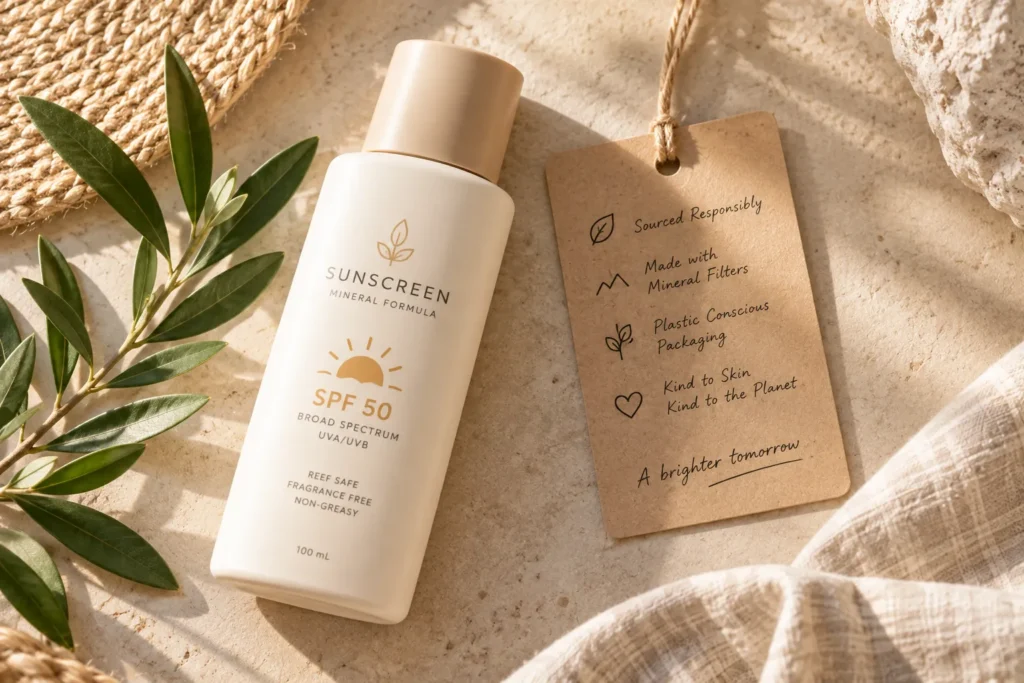
- Flat lay of a sunscreen bottle with a sourcing information card
FAQ Section
Is mineral sunscreen really better for the environment than chemical sunscreen?
Yes, mineral sunscreen made with zinc oxide or titanium dioxide does not break down into the chemical compounds linked to coral bleaching, unlike common chemical filters such as oxybenzone.
What does reef-safe actually mean on a sunscreen label?
The term is not officially regulated, so it is more reliable to check the ingredient list for oxybenzone, octinoxate, and octocrylene rather than trusting the label alone.
Does sustainable sunscreen cost more than regular sunscreen?
Some eco-friendly brands cost a bit more upfront, but buying larger sizes and refillable packaging often balances out the price over time.
Can I still use spray sunscreen if I like the convenience?
You can, but a lot of the product misses your skin and ends up in the environment, so lotion or stick formulas give better coverage with less waste.
How do I know if a sunscreen brand’s sustainability claims are real?
Look for brands that clearly explain their ingredient sourcing and any third-party testing or certifications, rather than vague green packaging or buzzwords.
Does sustainable sunscreen protect my skin as well as regular sunscreen?
Yes, as long as it is broad spectrum with an SPF of 30 or higher, mineral and eco-friendly formulas protect your skin just as effectively as chemical versions.


