

10 Beach Skin Care Tips for Sun-Kissed Skin
There is nothing like that first beach day of the season. The sound of the waves, the warm sand under your feet, and then you catch your reflection a few hours later looking more lobster than glowing. If you have ever come home from the beach with tight, red, peeling skin instead of that soft sun-kissed look you wanted, you are definitely not alone. The good news is that a few small changes to your routine can make a huge difference. Here are 10 beach skin care tips that will help you protect your skin, keep it hydrated, and actually enjoy that healthy glow without the damage.
1. Apply Sunscreen Before You Even Leave the House
Most people wait until they are already unpacking their beach bag to put on sunscreen, but by then it is often too late. Sunscreen needs about 15 to 20 minutes to properly bind to your skin before it can start working effectively.
Put your sunscreen on right after your shower, before you get dressed. This gives it time to absorb and means you are not standing at the edge of the water rubbing lotion on while everyone else is already swimming. Choose a broad spectrum SPF 30 or higher, and do not skip areas like your ears, the back of your neck, and the tops of your feet. These spots burn just as easily and get forgotten constantly.

2. Reapply Every Two Hours, No Matter What
Here is something a lot of people get wrong. They think one application of sunscreen in the morning will carry them through the whole day at the beach. It will not. Sunscreen breaks down from sun exposure, sweat, and water, even the water resistant kind.
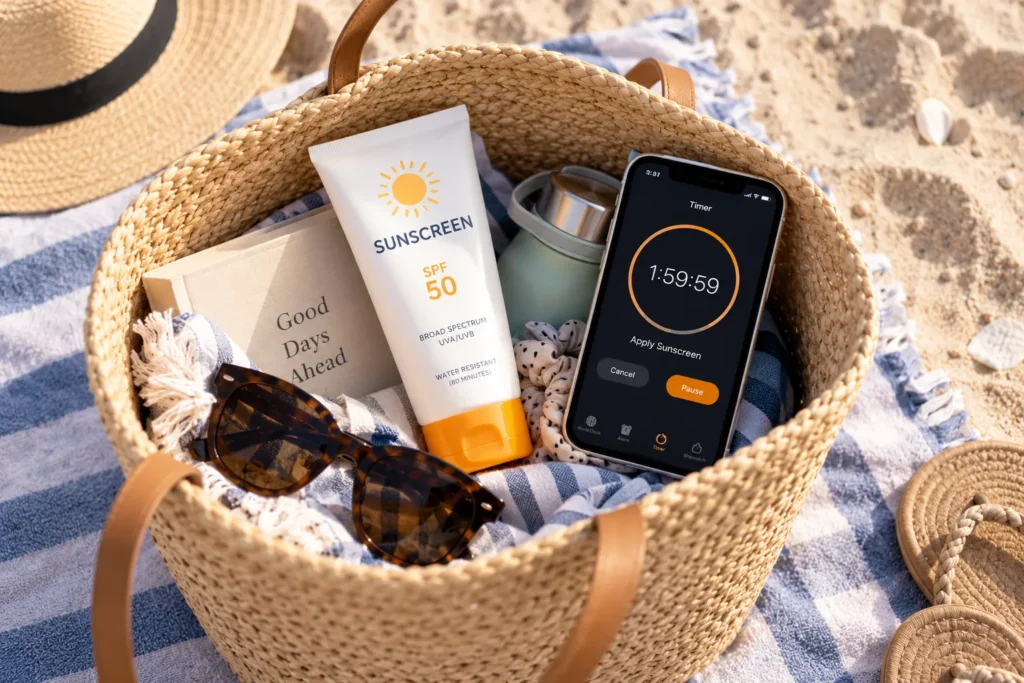
Set a reminder on your phone for every two hours. If you have been swimming or toweling off, reapply right after, even if it has not been two hours yet. A good habit is to reapply every time you sit back down on your towel after a swim. Keep your sunscreen in the shade in your bag too, since heat can break down the active ingredients faster.
3. Use a Stick Sunscreen for Your Face and Lips
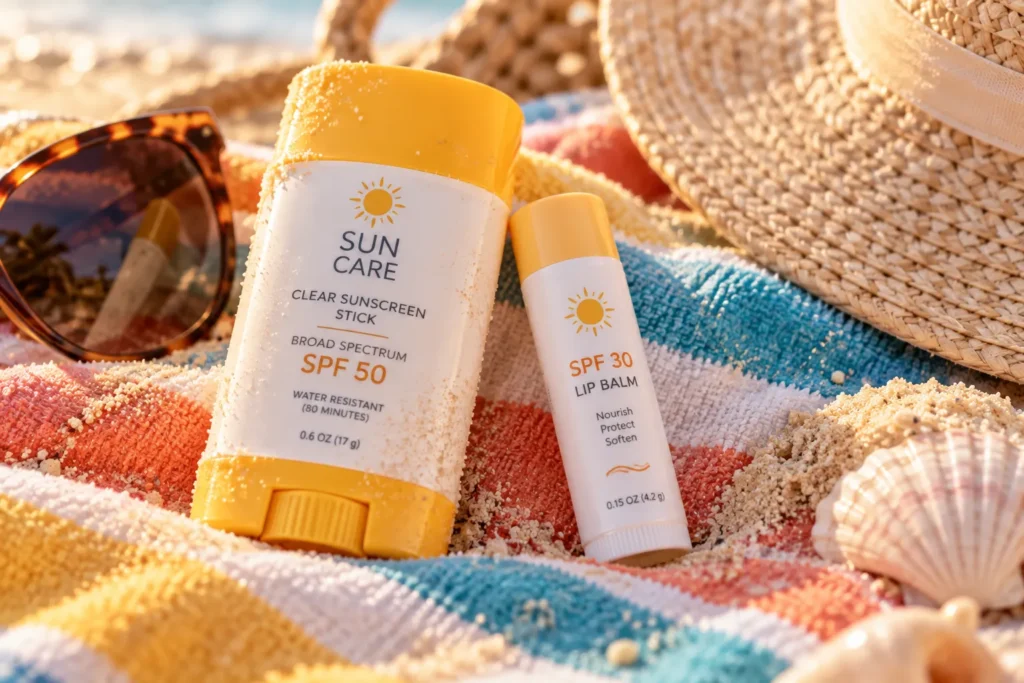
Regular lotion sunscreen can feel heavy and greasy on your face, especially once you mix in sweat and sand. A stick sunscreen is easier to apply precisely around your eyes, nose, and hairline without getting it in places you do not want it.
For your lips, use a balm with SPF built in. Lips have thinner skin and burn easily, and a cracked, sunburned lip can ruin the rest of your trip. Keep the stick sunscreen and lip balm together in a small pouch so you always have them within reach, not buried at the bottom of your bag.
4. Wear a Wide Brim Hat for Extra Protection
Sunscreen alone is not always enough, especially during peak sun hours between 10am and 4pm. A wide brim hat gives your face, scalp, and the top of your ears an extra layer of shade that sunscreen cannot fully replace.
This is especially useful if you have a part in your hair, since that thin strip of exposed scalp burns more than people expect. A hat also helps reduce how much squinting you do, which over time can worsen fine lines around your eyes. Look for a hat with at least a three inch brim for real coverage, not just a small fashion accessory.

5. Rinse Off Saltwater and Chlorine as Soon as Possible
Saltwater and chlorine both pull moisture out of your skin, which is part of why your skin can feel tight and dry after a beach day. Leaving saltwater to dry on your skin also means it keeps drawing out hydration long after you are out of the water.
If you do not have access to a full shower right away, at least rinse with fresh water from a bottle before you dry off. When you do get home, take a cool shower rather than a hot one, since hot water strips even more natural oils from already sun exposed skin. Pat your skin dry instead of rubbing, which helps avoid unnecessary irritation.

6. Moisturize While Your Skin Is Still Damp
This is a small trick that makes a big difference. Applying moisturizer to slightly damp skin, rather than fully dry skin, helps lock in more hydration because the product traps the water already sitting on the surface.
Right after your rinse or shower, while your skin is still a little damp, apply a fragrance free moisturizer or aloe based gel. Look for ingredients like hyaluronic acid or ceramides, which help repair the skin barrier that sun and salt exposure can weaken. This step matters even if your skin does not look sunburned, since UV damage happens under the surface too.

7. Keep a Cooling Aloe Gel in Your Beach Bag
Even with the best sunscreen routine, sometimes skin still gets a little too much sun, especially on a first beach trip of the season when your skin has not built up any tolerance yet. Keeping a cooling gel with you means you can treat mild redness before it turns into a real sunburn.
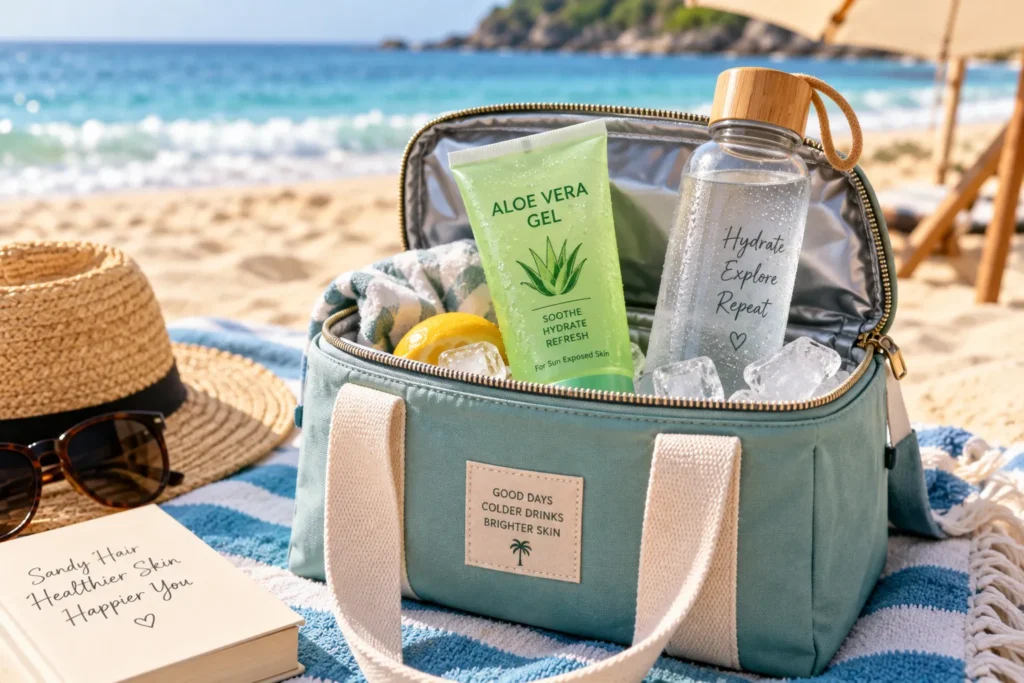
Pure aloe vera gel, kept in a small cooler bag or insulated pouch, feels amazing on warm skin and helps calm inflammation quickly. Avoid gels with added alcohol or fragrance, since these can sting on already sensitive skin. This is one of those small additions to your bag you will be glad you packed, even if you only need it once this summer.
8. Drink Water Before You Feel Thirsty
Beach skin care is not only about what you put on your skin. Hydration from the inside plays a real role in how your skin looks and feels after a day in the sun. Heat and sun exposure both increase how much water your body loses through sweat, even if you do not notice it right away.
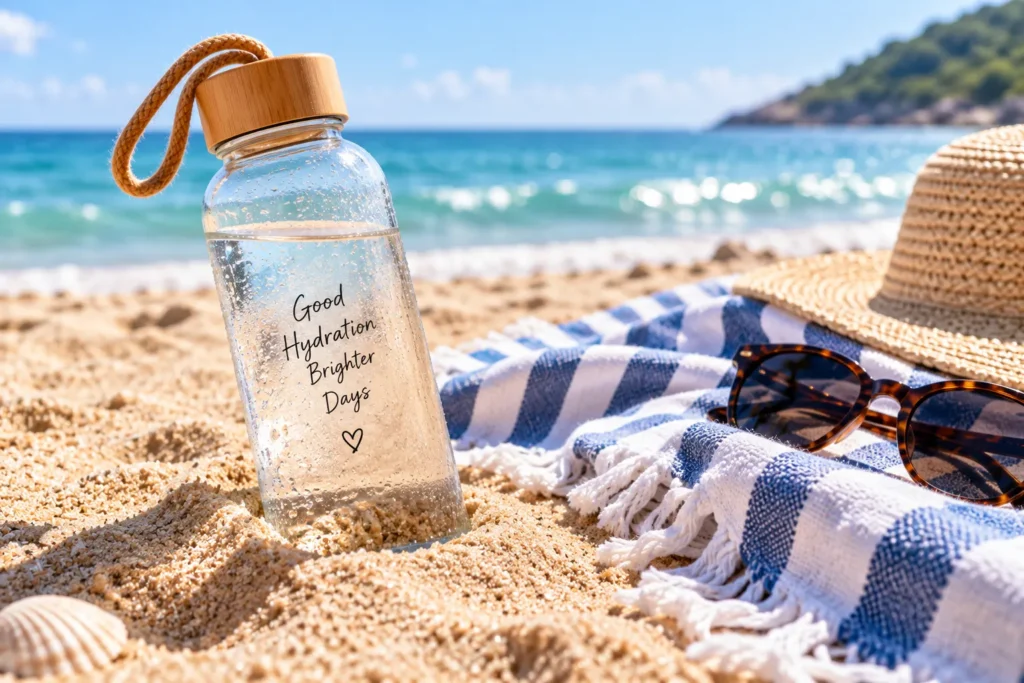
Bring a reusable water bottle and sip throughout the day rather than waiting until you feel thirsty, since thirst is already a sign you are behind on hydration. Dehydrated skin looks duller and shows fine lines more easily, especially combined with sun exposure. A good target is water roughly every 30 to 45 minutes during a full beach day, more if it is especially hot.
9. Protect Your Skin from Sand Irritation
Sand feels wonderful under bare feet, but it can be surprisingly rough on skin, especially if you are lying directly on a towel that keeps shifting sand against your legs and arms all day. Repeated friction from sand can cause small irritations that make skin more reactive to sun exposure.
Use a thicker beach mat instead of a thin towel when possible, since it creates more of a barrier. If your skin does get irritated from sand, rinse the area gently rather than brushing sand off with your hand, which can worsen the irritation. Applying a light layer of moisturizer before heading to the beach can also reduce how much sand tends to stick and rub against your skin.

10. Give Your Skin a Rest Day After Heavy Sun Exposure
If you have had a particularly sunny beach day, your skin needs a little recovery time, even if it does not look sunburned. This is the mistake most people make. They head straight into another full day of sun exposure the next day without giving their skin any chance to repair.
On a rest day, stick to lighter sun exposure, wear looser clothing that does not rub against warm skin, and focus your skin care on hydration rather than active ingredients like retinol or exfoliating acids, which can be too harsh on sun stressed skin. Think of this as building sun exposure gradually over your trip instead of maxing out on day one. Your skin will thank you by the end of the week, and honestly, so will your suitcase full of after sun products.

Final Thoughts
A great beach day should end with you feeling relaxed and glowing, not sunburned and regretful. The truth is that most beach skin damage comes down to a handful of small habits, like applying sunscreen too late or skipping that after swim reapplication. Once you build these simple steps into your beach routine, they start to feel automatic rather than like extra work. Try even just three of these tips on your next beach trip and see how different your skin feels by the end of the day. Save this guide so you have it ready before your next trip to the sand and sun.
Image Alt Text Suggestions
- Woman applying sunscreen to shoulders before a beach trip in a bright bathroom
- Open beach bag with sunscreen, sunglasses, and phone timer for reapplication reminder
- Stick sunscreen and SPF lip balm on a striped beach towel
- Woman wearing a wide brim straw hat walking along the ocean shoreline
- Outdoor beach shower with sandy feet and a hanging towel
- Hand applying gel moisturizer to damp, sun exposed shoulder
- Small insulated cooler bag with aloe gel tube and water bottle at the beach
- Reusable water bottle in the sand next to towel and sunglasses
- Thick woven beach mat laid out with a beach bag and hat
- Woman relaxing under a beach umbrella in a light cotton cover up
FAQ Section
Do I need sunscreen even if it is cloudy at the beach?
Yes, up to 80 percent of UV rays can pass through clouds, so your skin can still burn on an overcast day. Apply sunscreen the same way you would on a sunny day.
How often should I really reapply sunscreen at the beach?
Every two hours is the general rule, but reapply immediately after swimming or heavily sweating, even if it has not been two hours yet.
Is a higher SPF always better for beach days?
Not necessarily. SPF 30 blocks about 97 percent of UVB rays and SPF 50 blocks about 98 percent, so the difference is small. Reapplying often matters more than chasing a higher number.
Why does my skin feel so dry after a day at the beach?
Saltwater, sun exposure, and wind all pull moisture from your skin, which is why rinsing off promptly and moisturizing while damp helps restore hydration.
Can I use regular body lotion instead of an after sun product?
A fragrance free, hydrating lotion can work, but products with aloe or ceramides are better suited to calming and repairing sun exposed skin specifically.
Should I still wear sunscreen if I already have a tan?
Yes, a tan is a sign of skin damage, not protection. Tanned skin can still burn and needs the same sunscreen routine as untanned skin.


